City guide · Guizhou

Zhenyuan travel guide: the S-shaped river town in Guizhou's mountains, its cliff-hugging temples and where to eat sour fish

A 2,000-year-old river town where the Wuyang River carves an S through the mountains and every lane hides a story.

  • Known forWuyang River, Qinglong Cave, sour fish soup, Peace Village, ancient lanes
  • Typical spendAbout 400–800 yuan per person for 1–2 days
  • Ideal length1–2 days, 3 with rafting and Gaoguo River
  • PaceEasy — the old town is flat and walkable

Reviewed by our Beijing team Updated 2026-10-10

The short version

Zhenyuan is worth 1–2 days: this ancient river town in eastern Guizhou squeezes between steep green mountains where the Wuyang River bends in a perfect S, and most of the old streets, docks and lanes cost nothing to wander. Qinglong Cave temple complex is 60 yuan, the Tianhou Palace is 10 yuan, and Shi Ping Shan viewpoint is 30 yuan (free before 8am). Come April to October for green water and boat trips; the Dragon Boat Festival in June fills the river with crowds. Guiyang is 3–4 hours by train, and Kaili is the nearest big rail hub.

  • Qinglong Cave (60 yuan, 8:00–16:00) is a cluster of temples clinging to a cliff above the river — not a cave at all, and the highlight of any visit.
  • Ferry boats across the Wuyang River cost 1 yuan per person and take 1–2 minutes — the cheapest night-time river cruise you will ever take.
  • A standard double room runs 80–150 yuan; riverside rooms cost more and peak-season prices spike hard, so bargain.
  • The old town is 2,000+ years old and was once a military garrison of 28,000 soldiers guarding the route between Yunnan and Chu.

City guide

First impressions

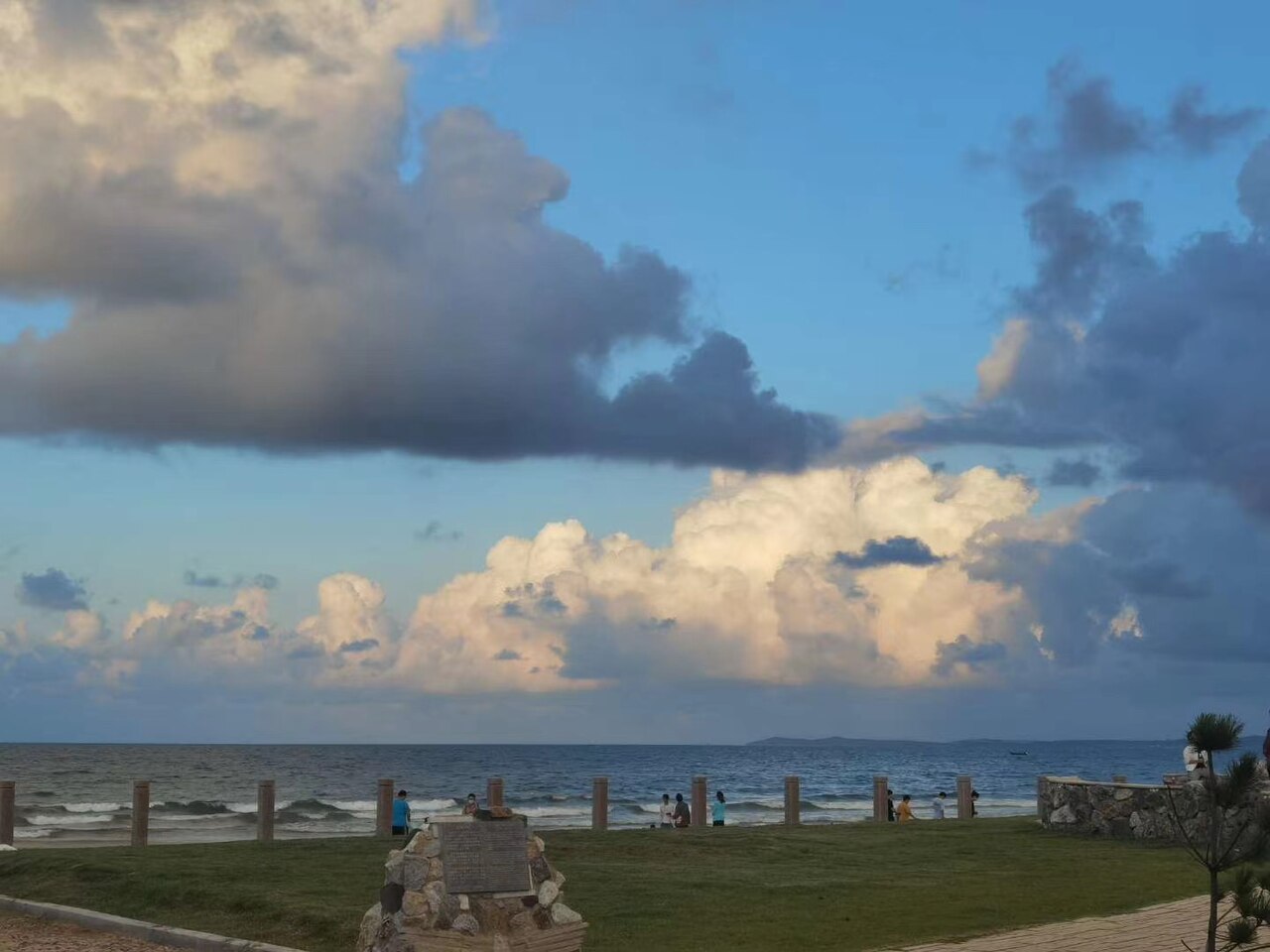
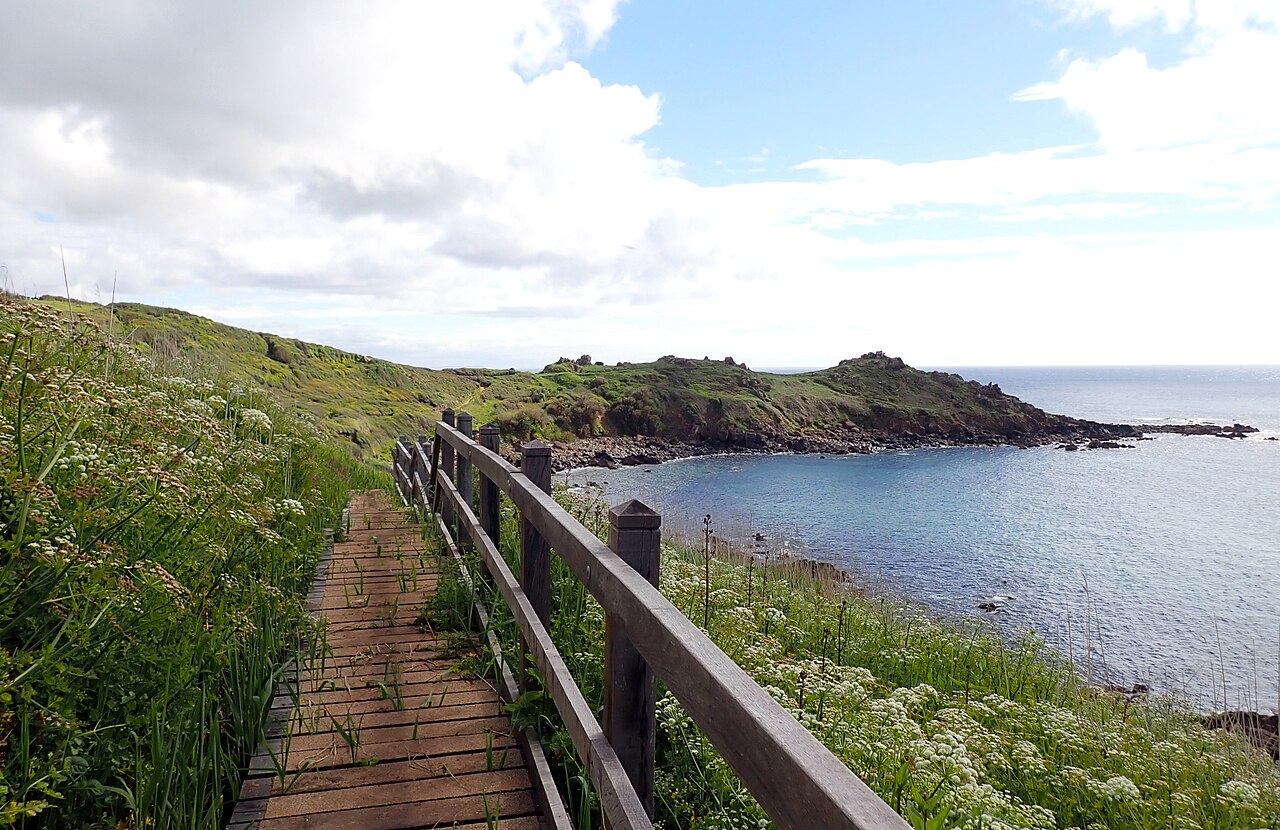
Photographs from the coast, and what other travellers wrote afterwards.

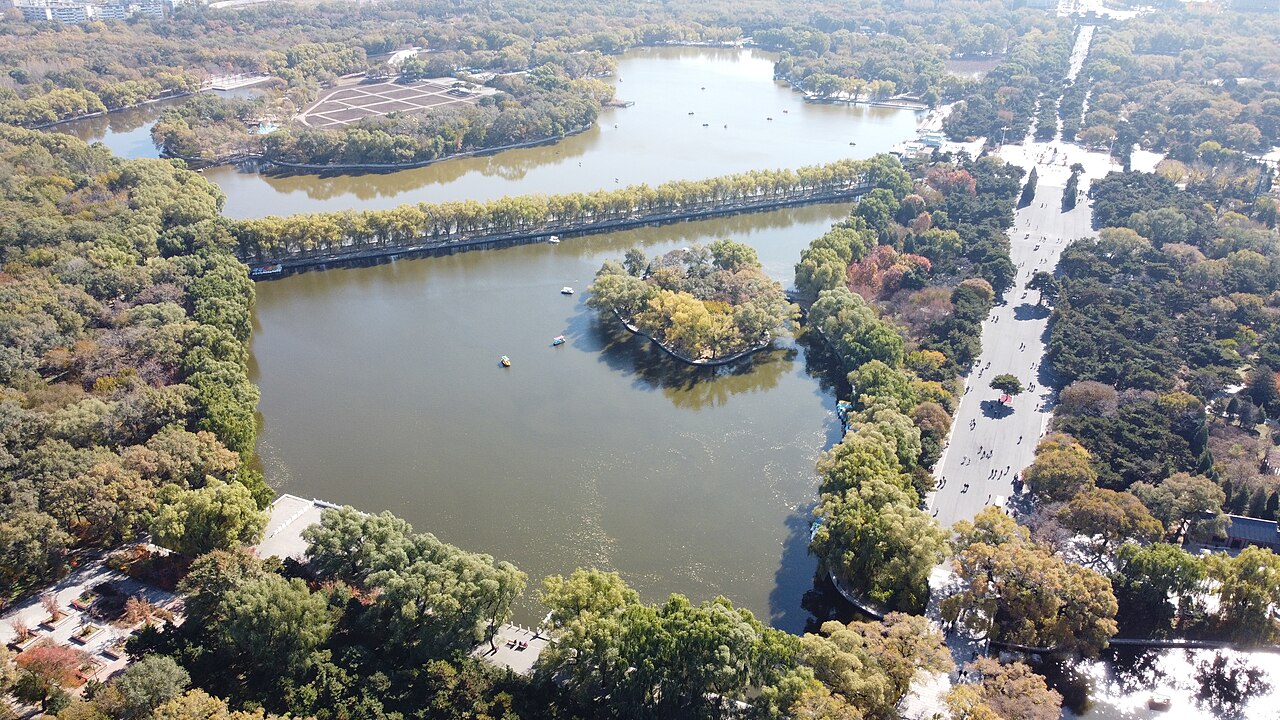
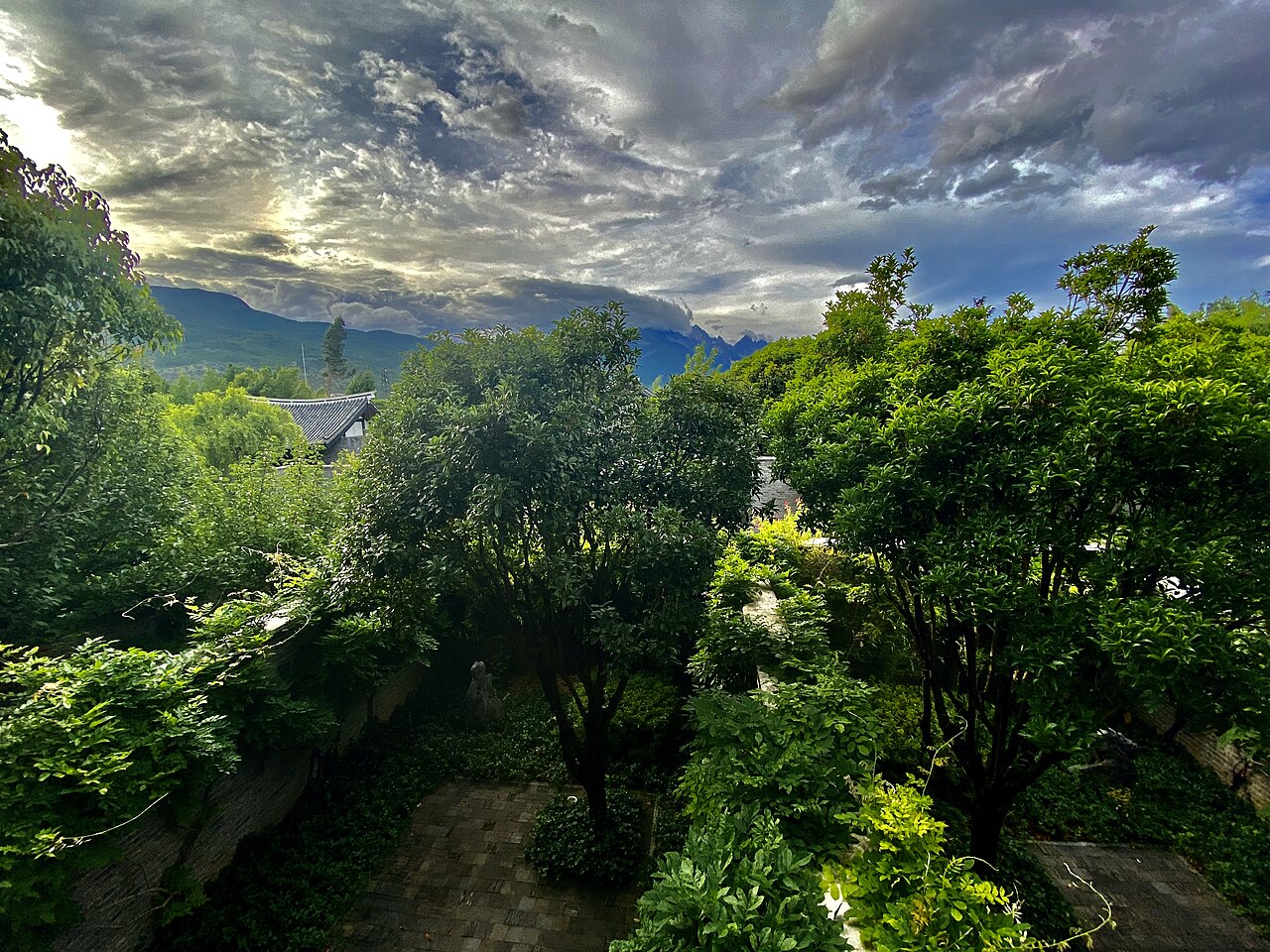
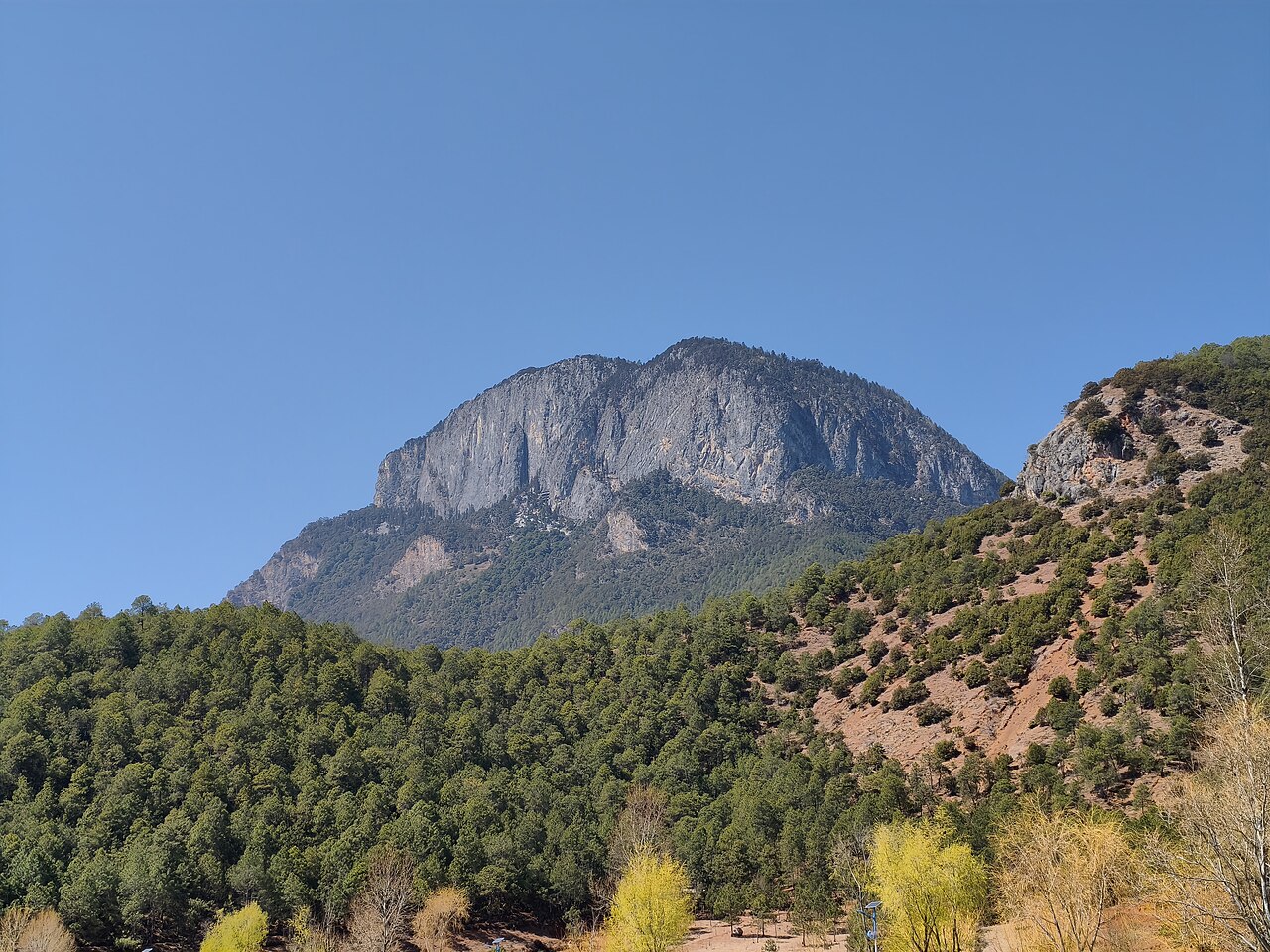
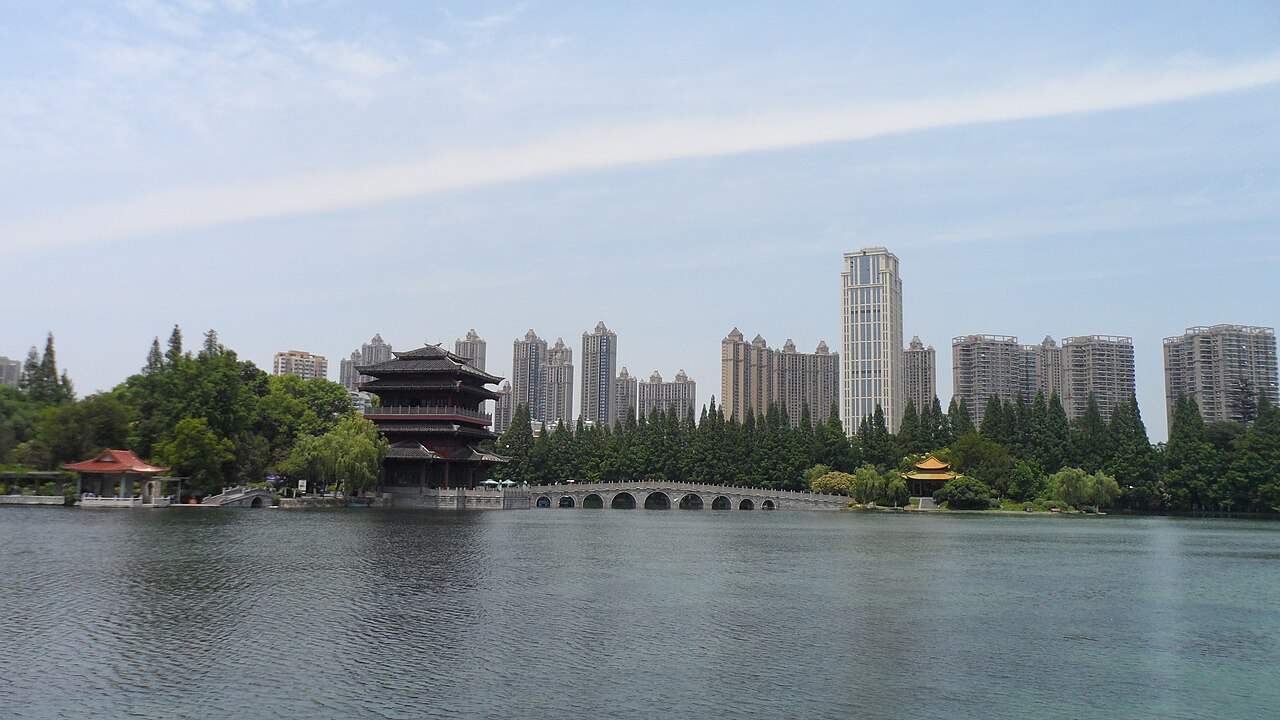
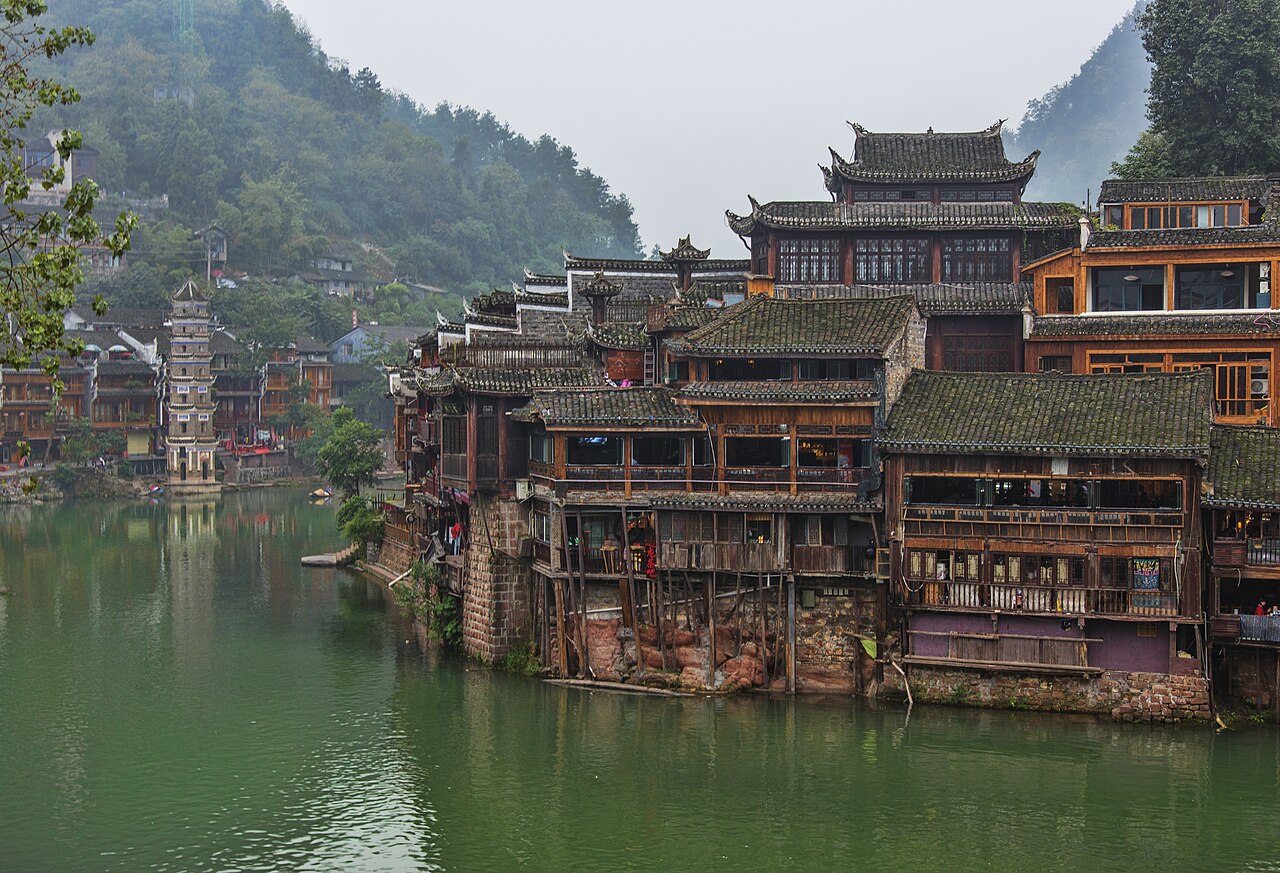
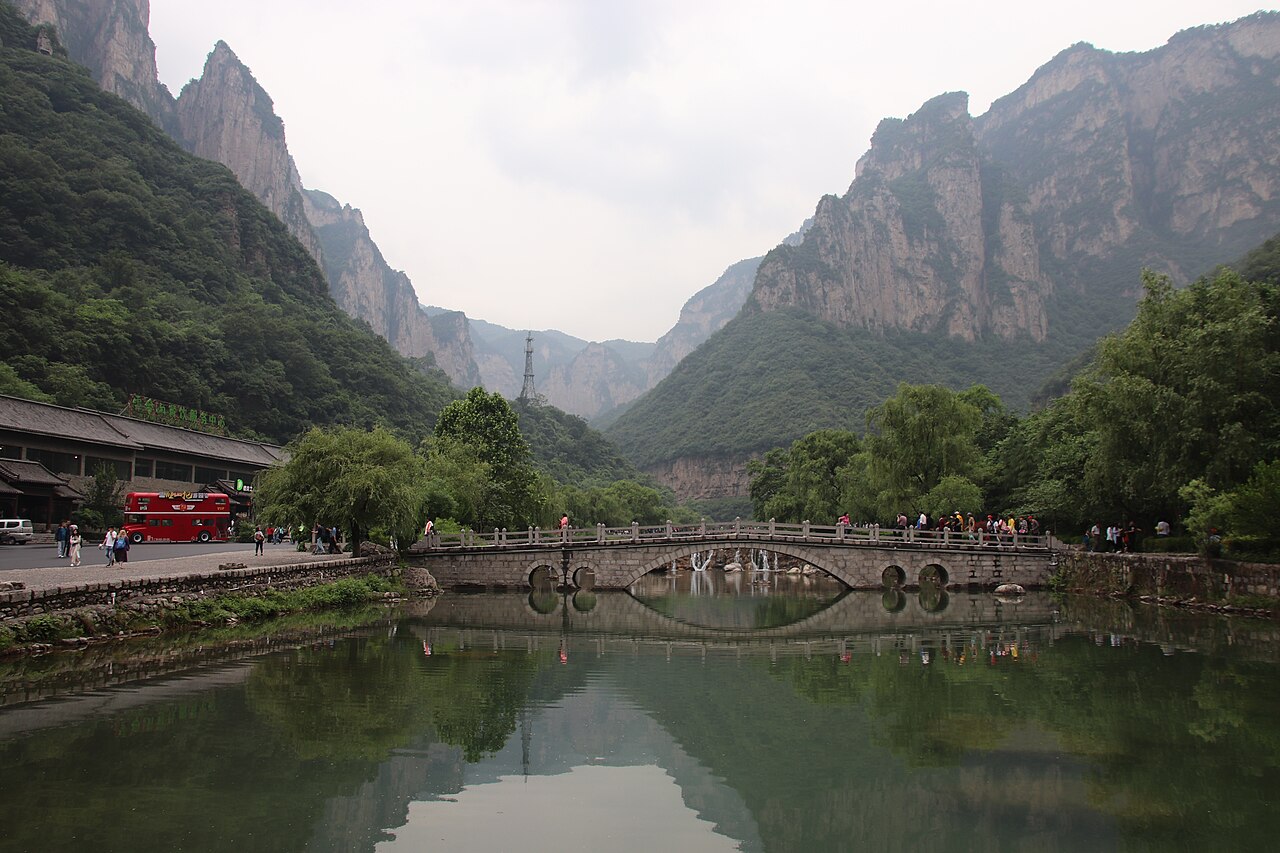
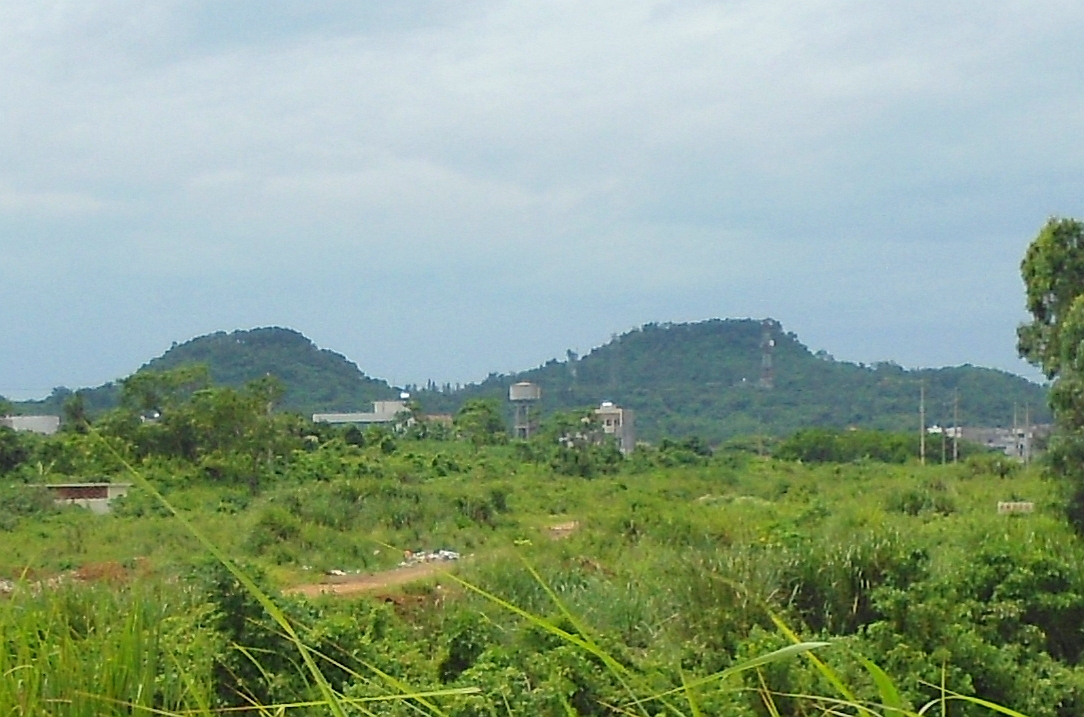
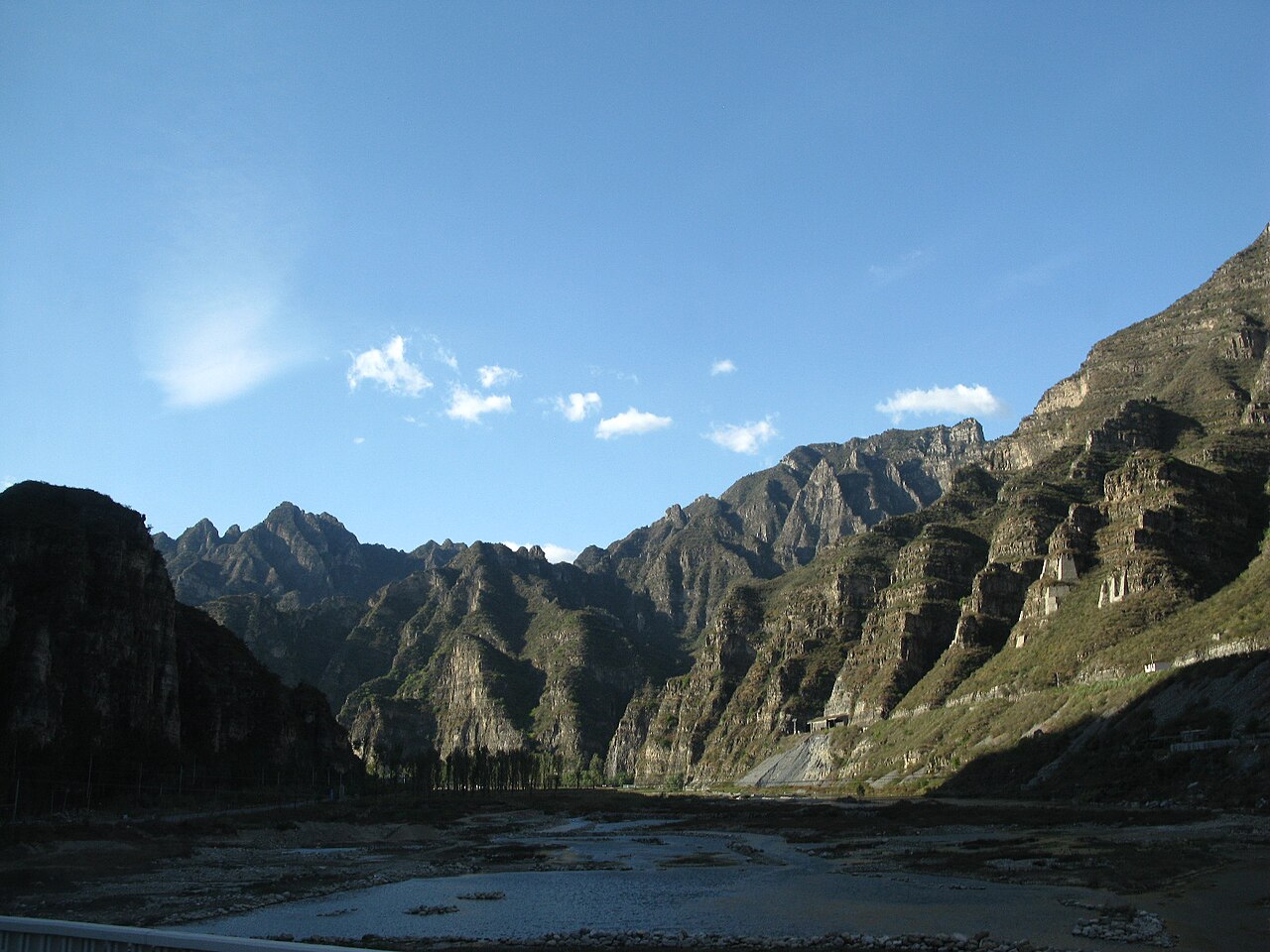
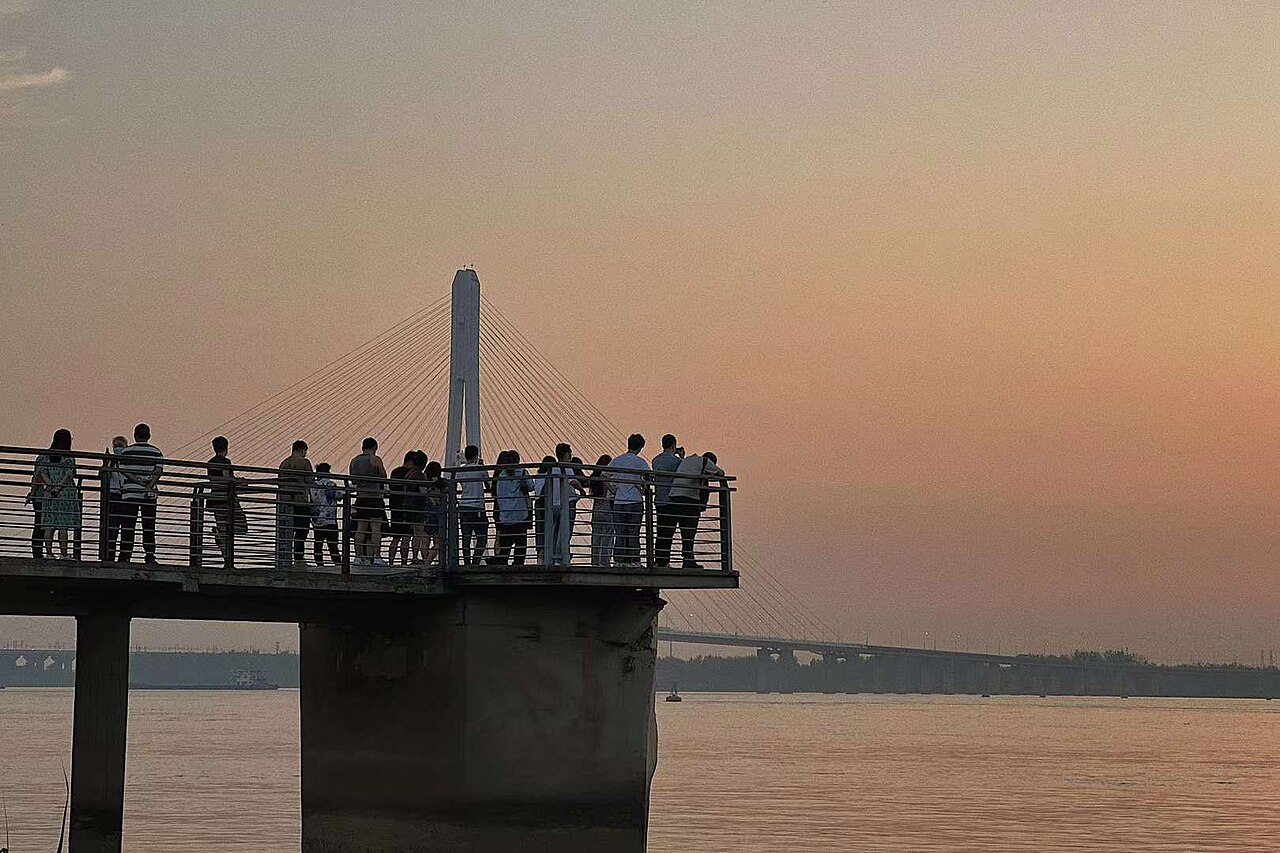
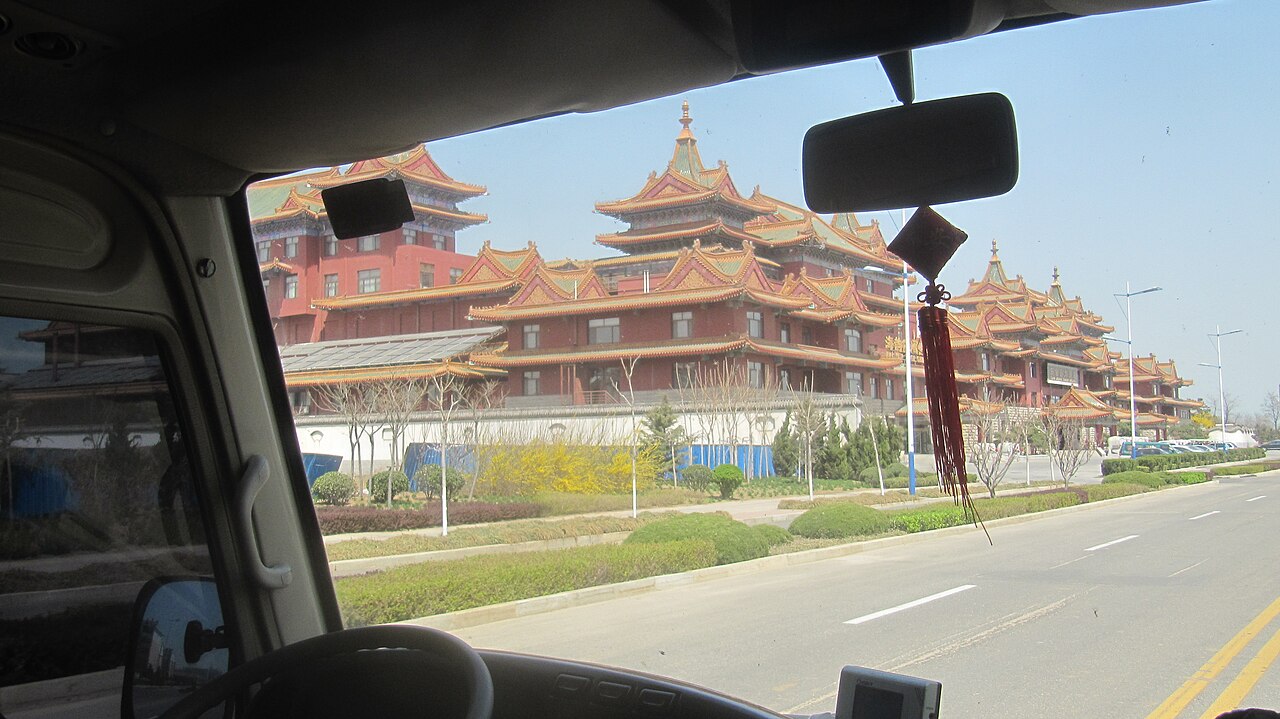
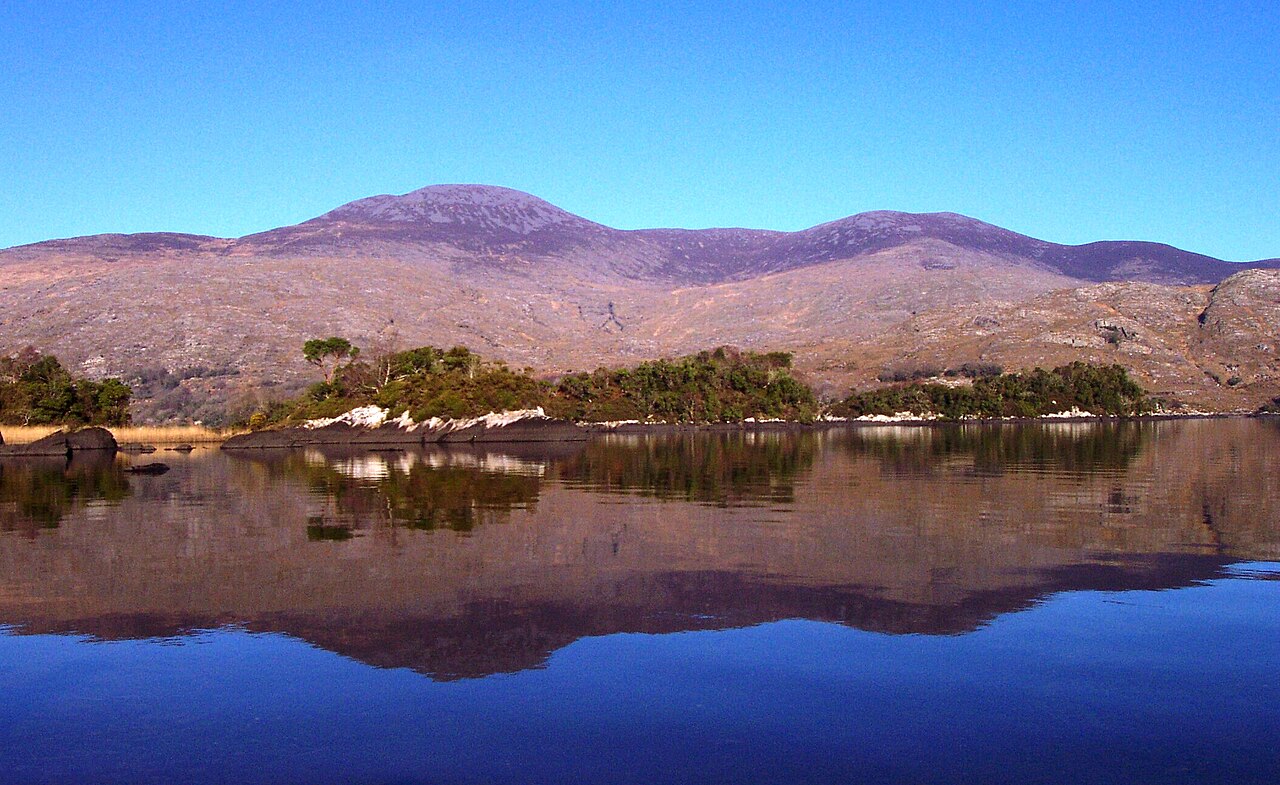
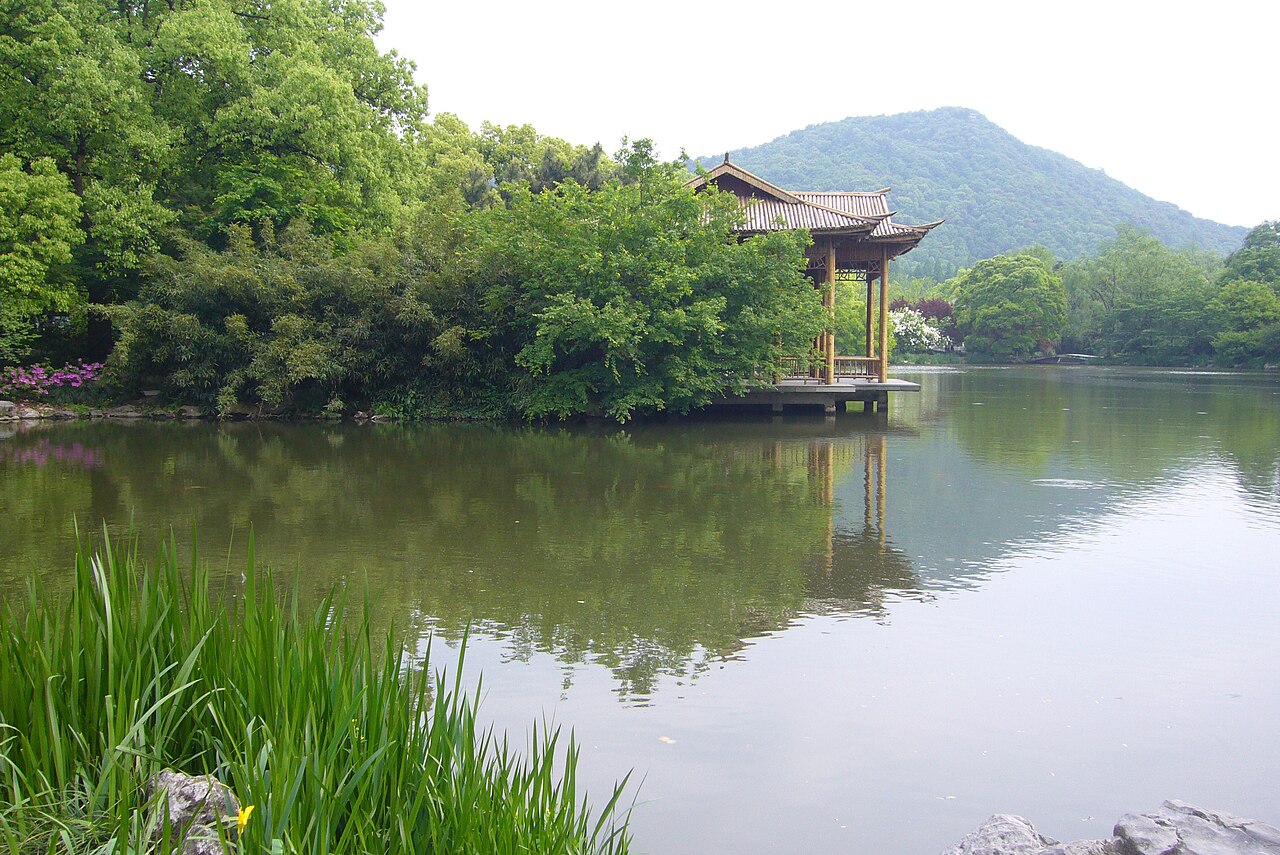
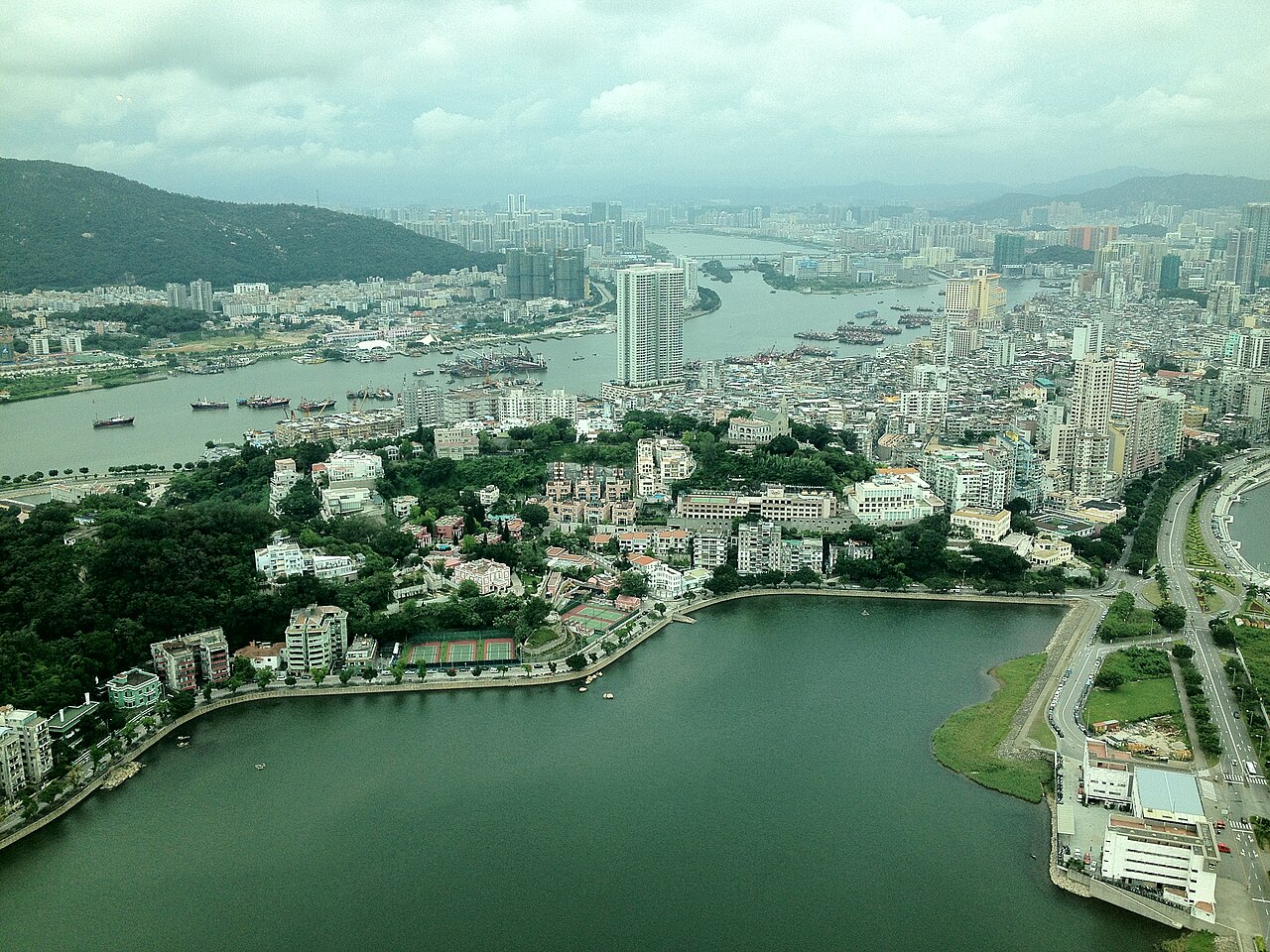
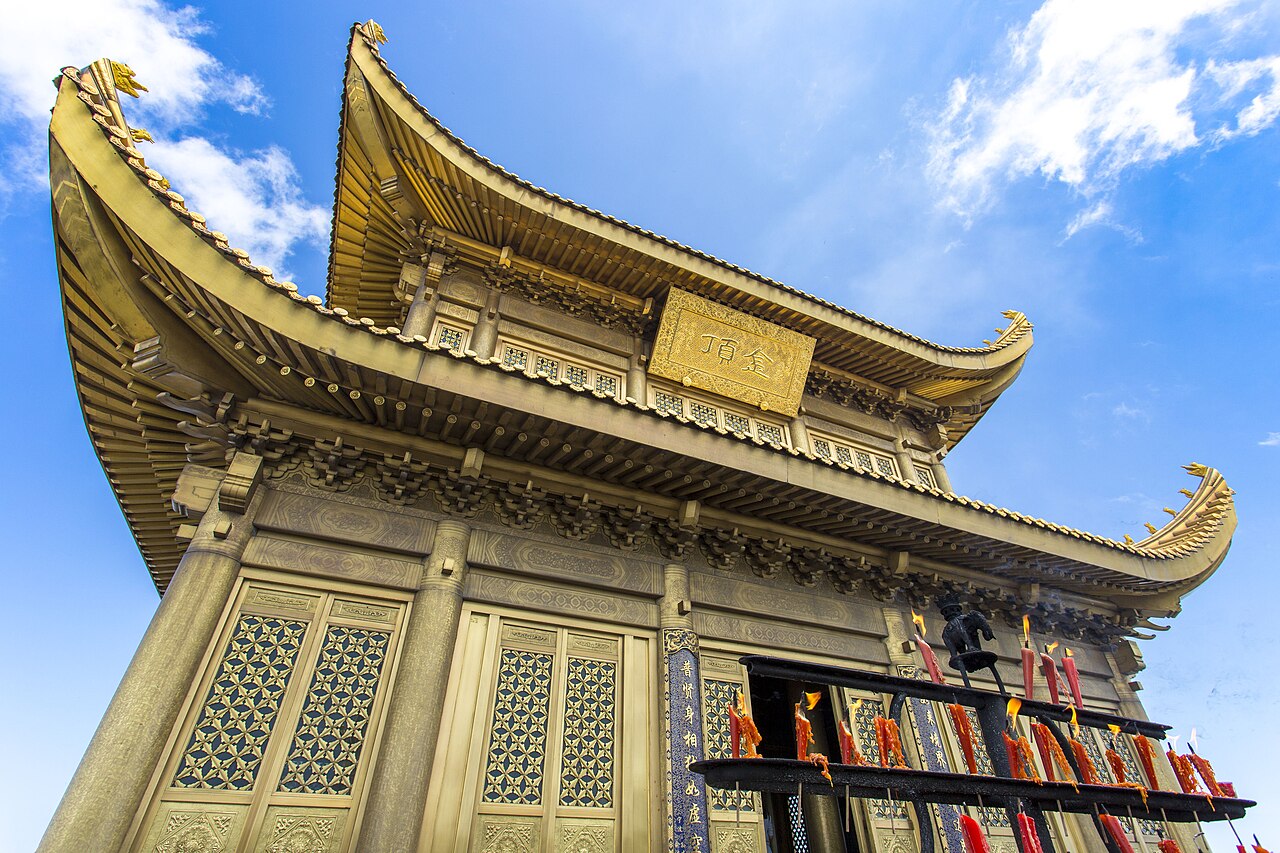
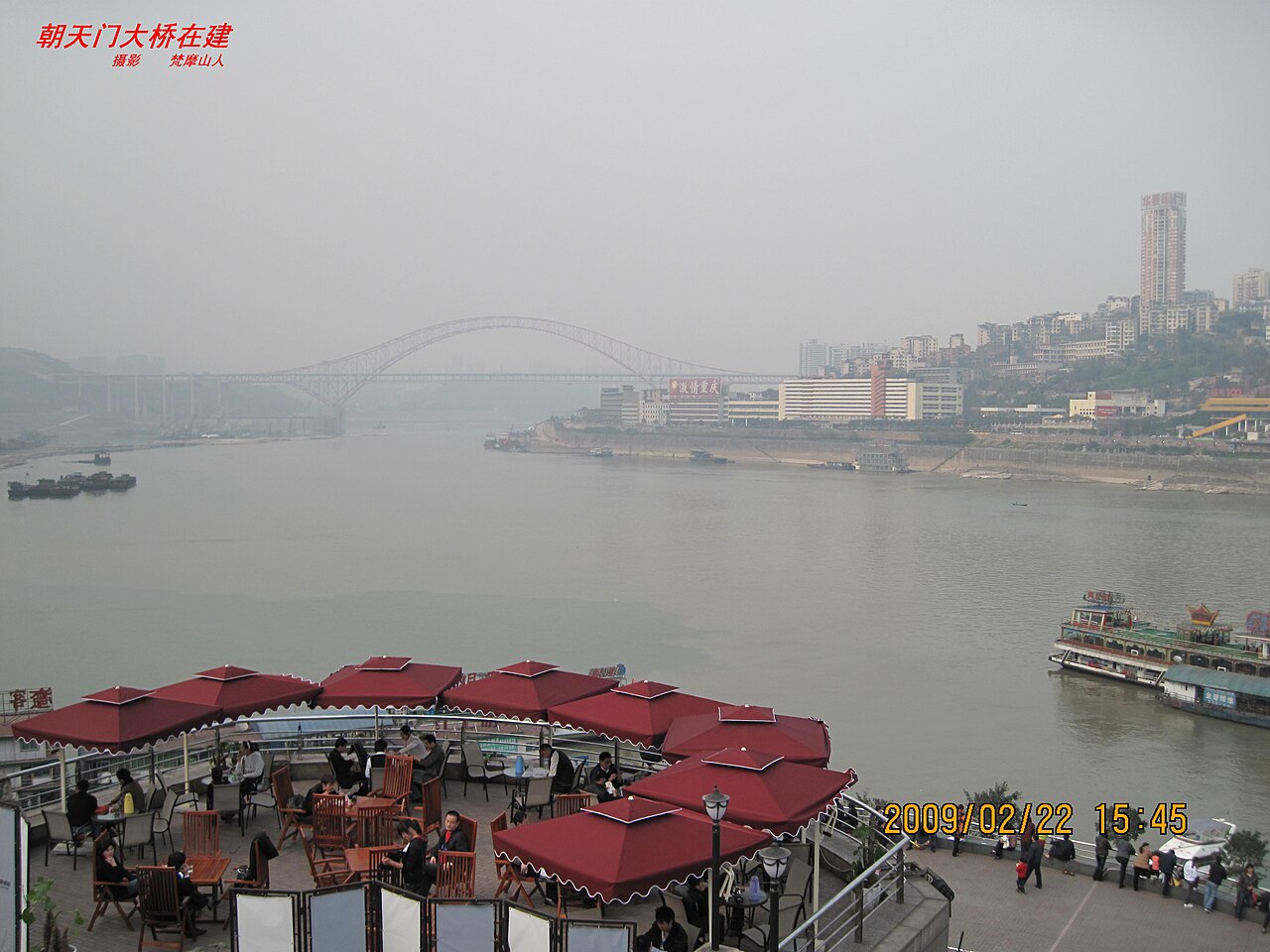
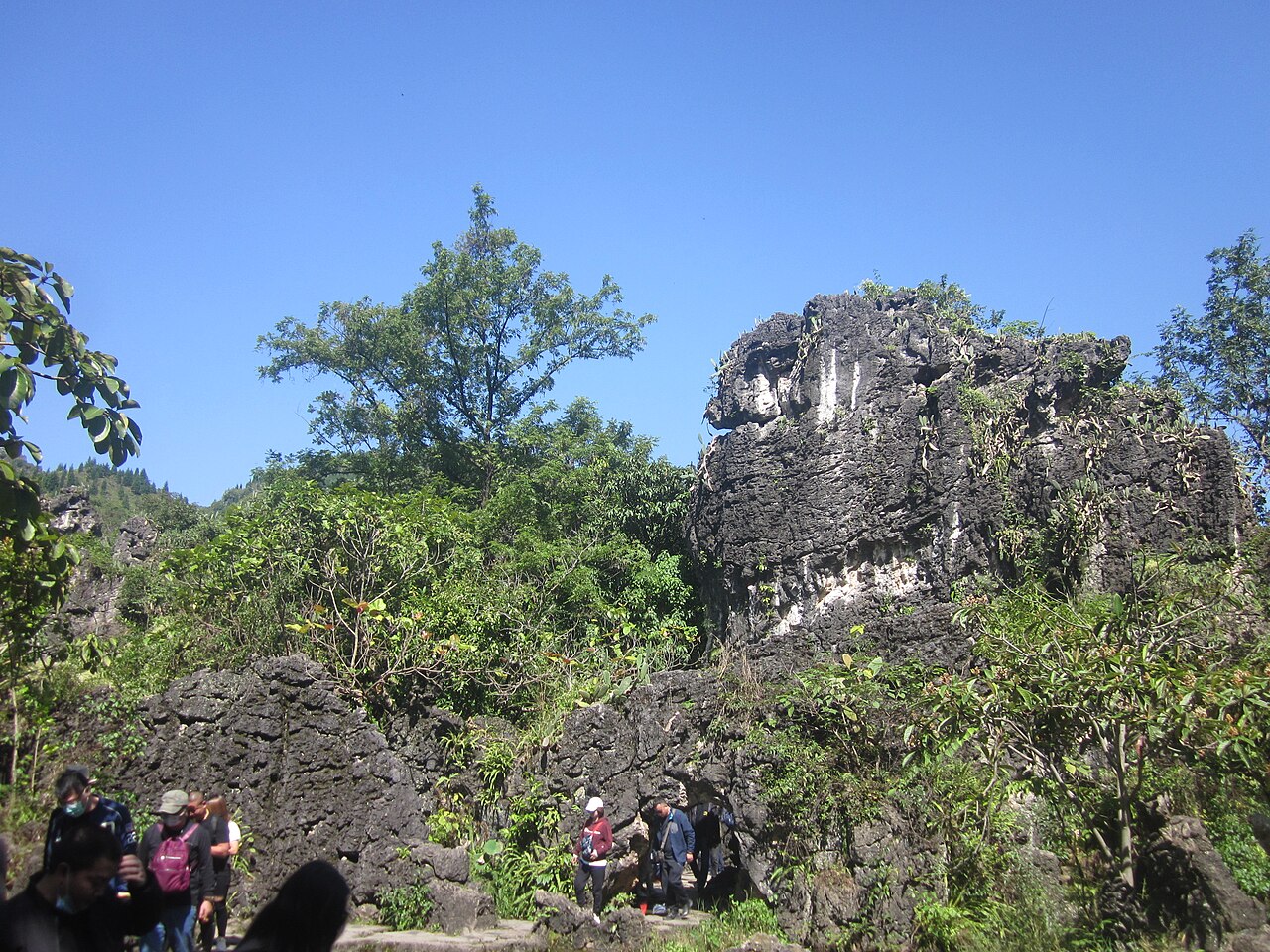
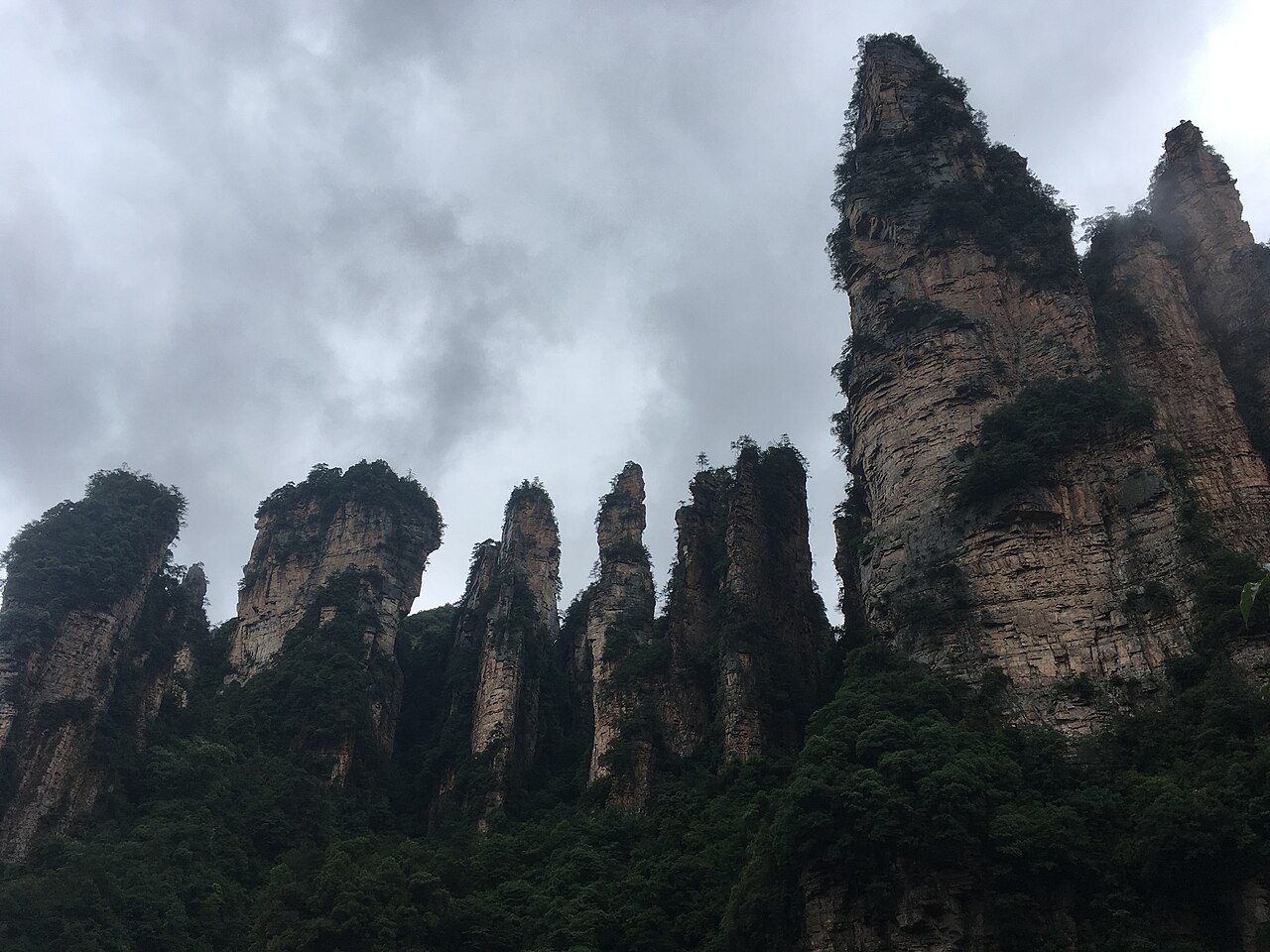
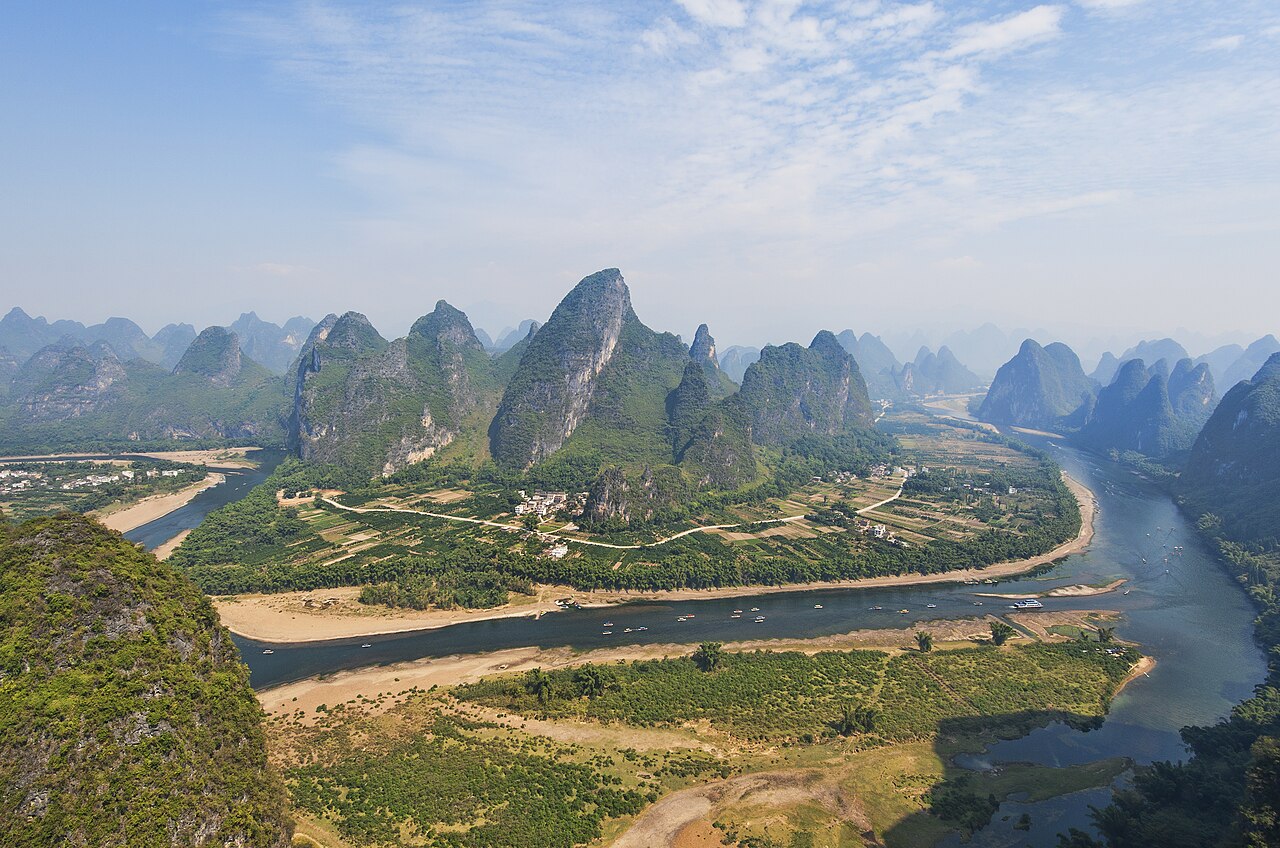
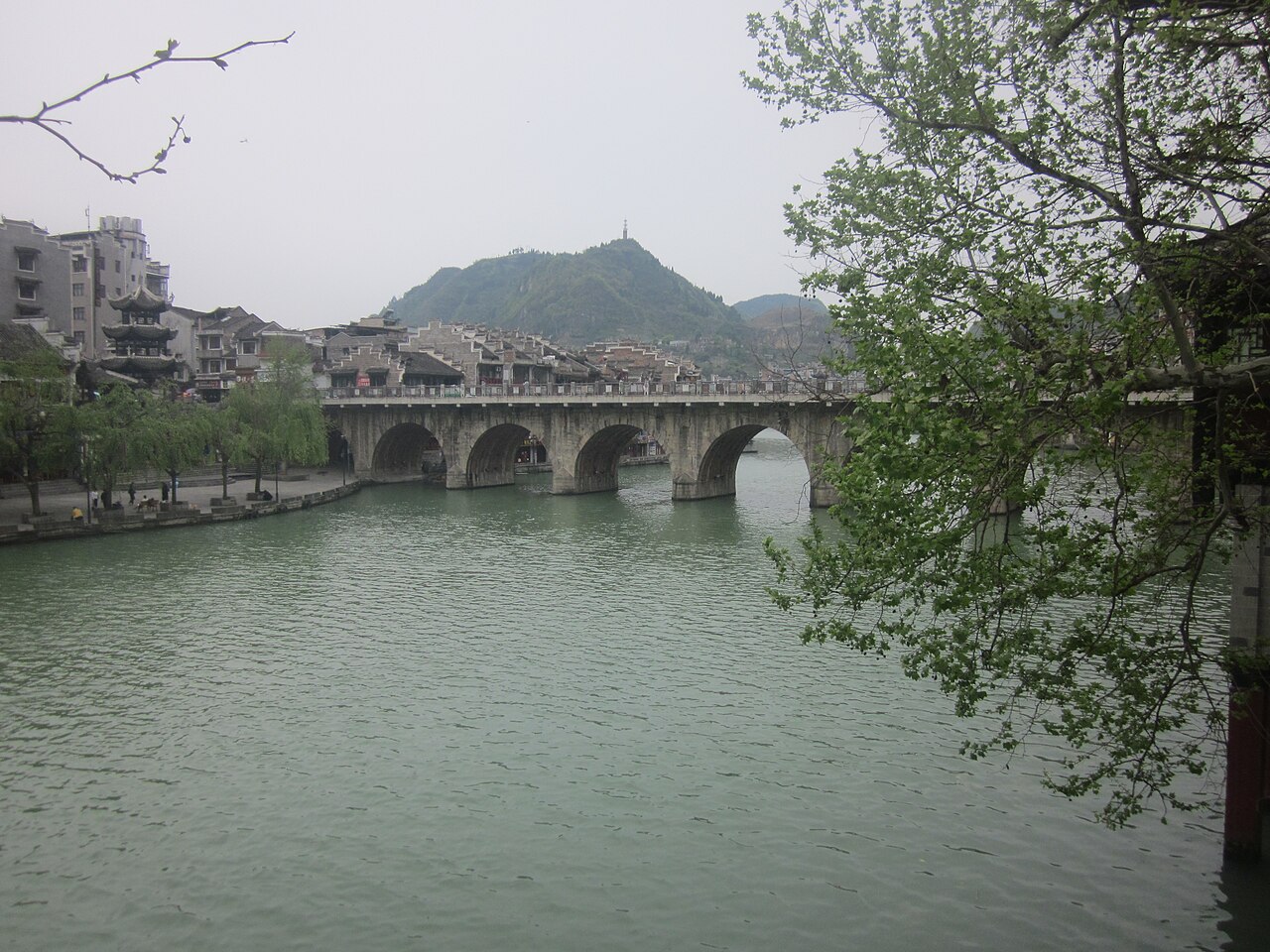
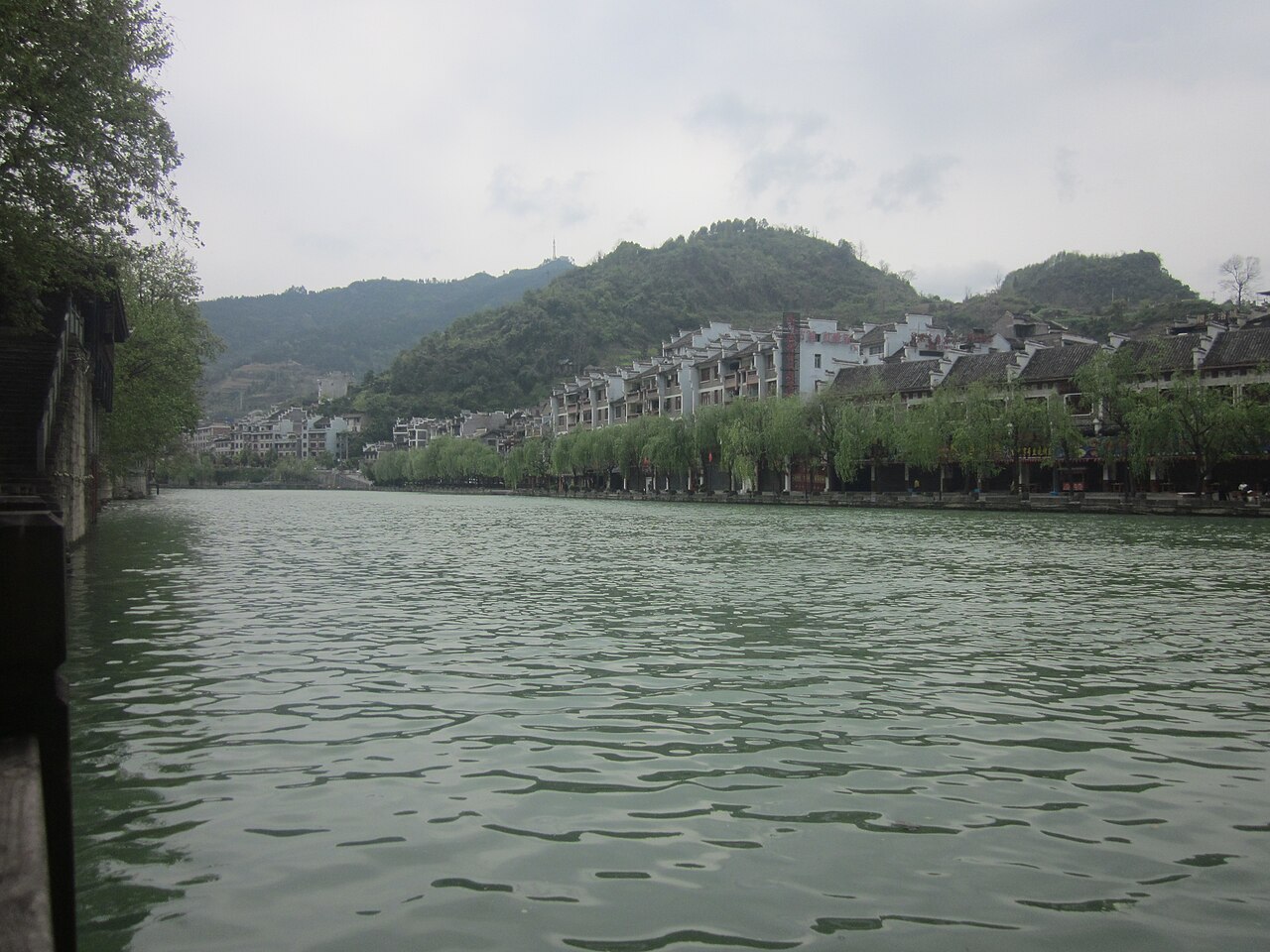
The Wuyang River curving through Zhenyuan in its signature S-shape
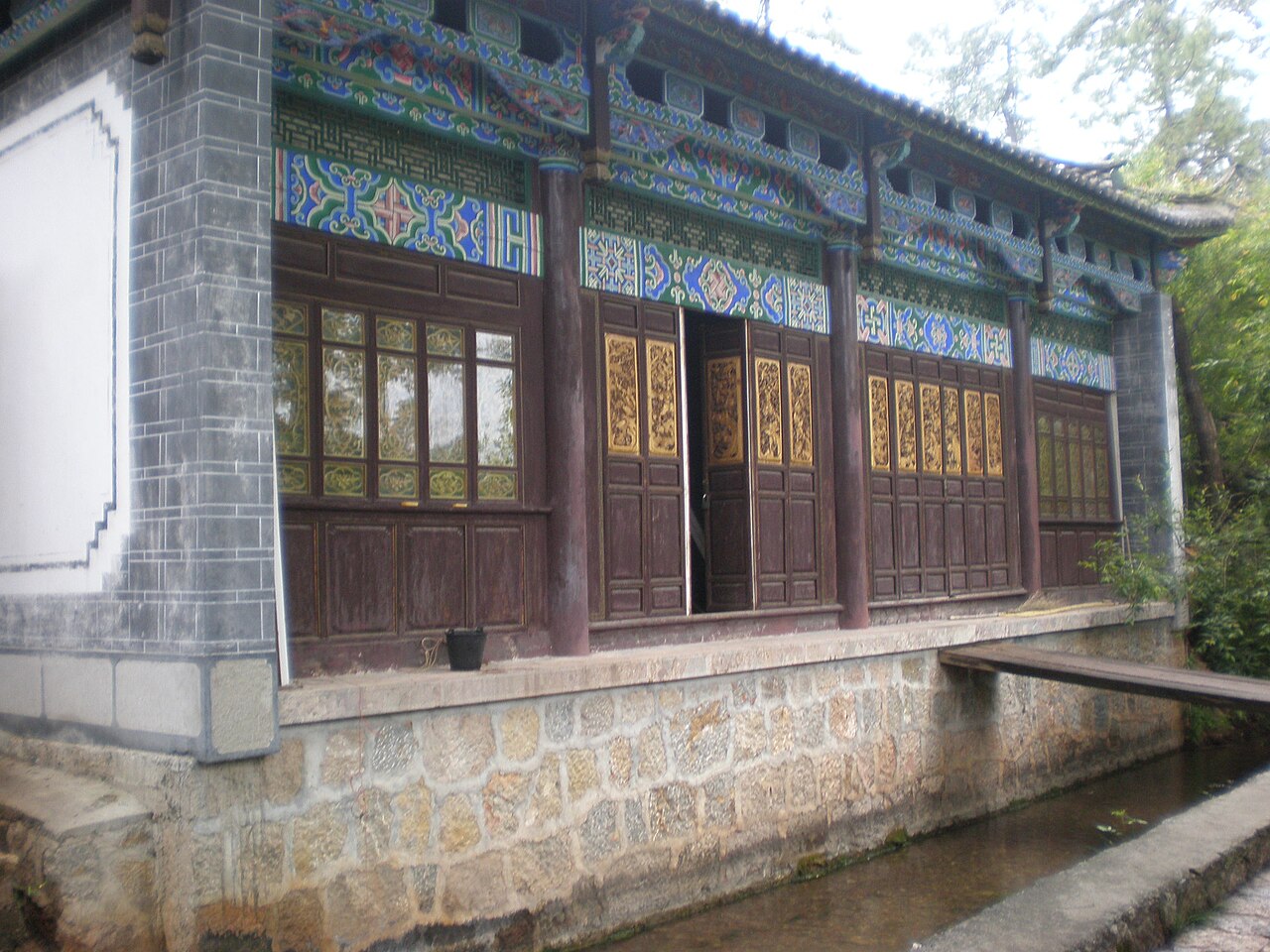
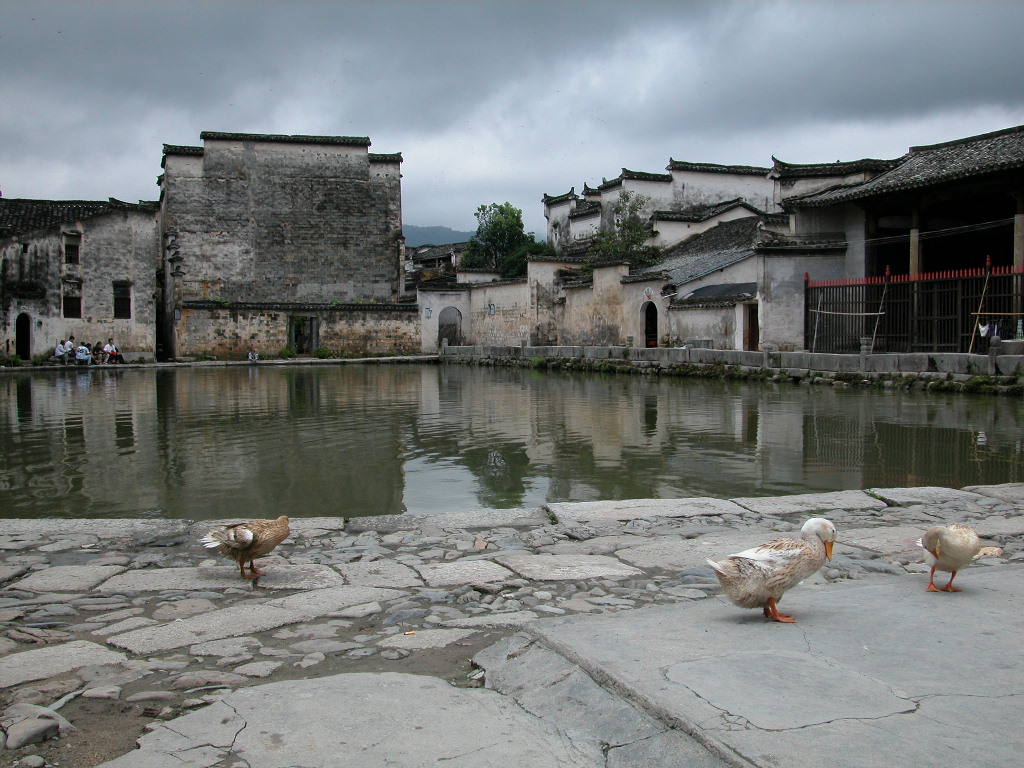
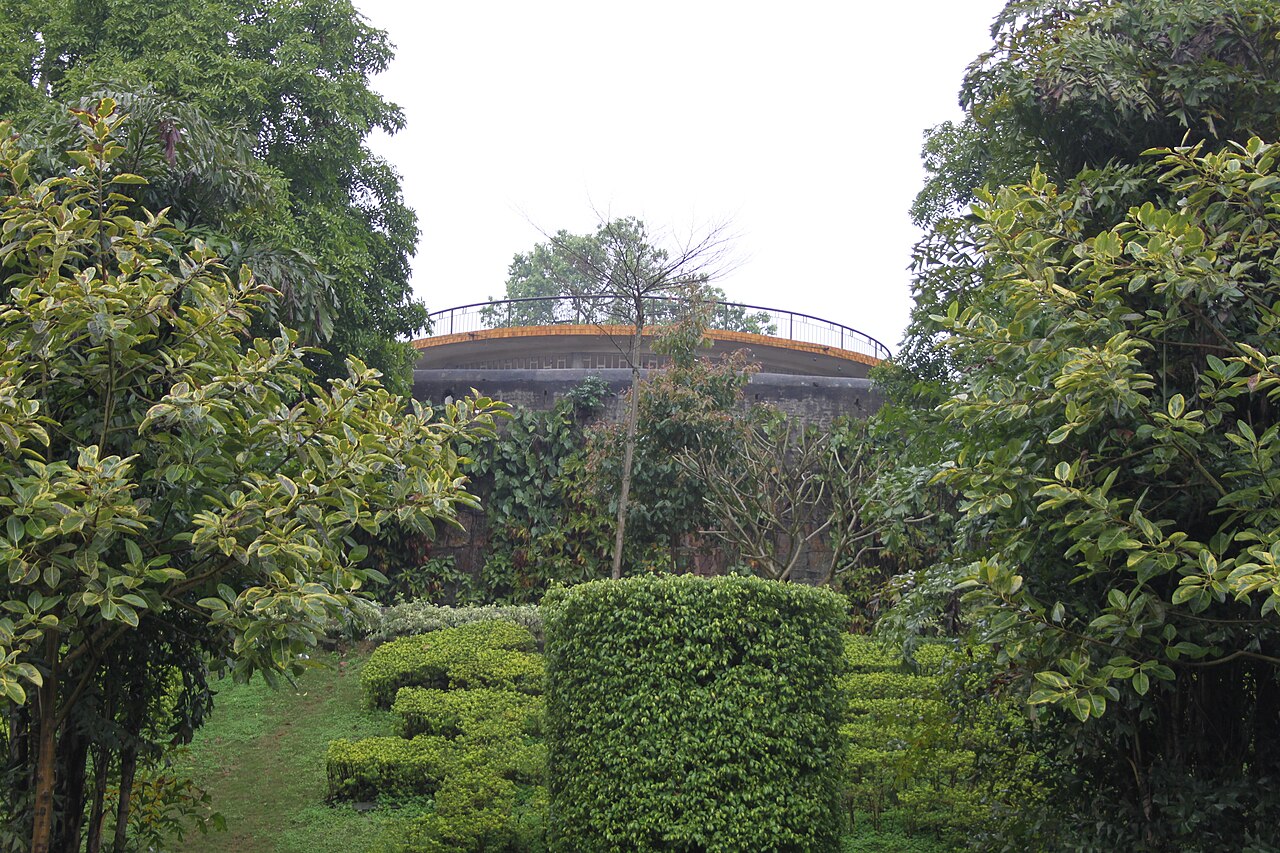
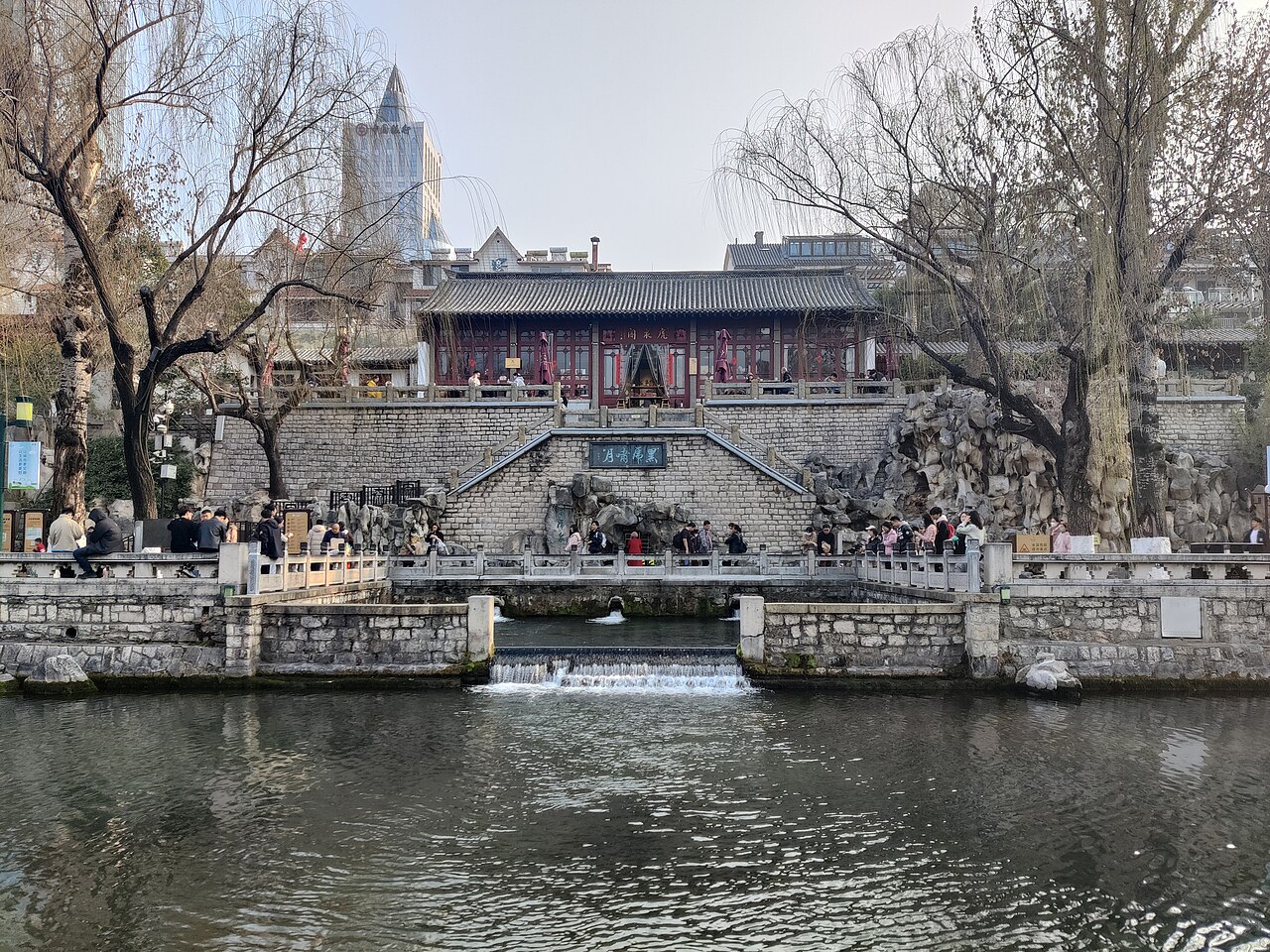
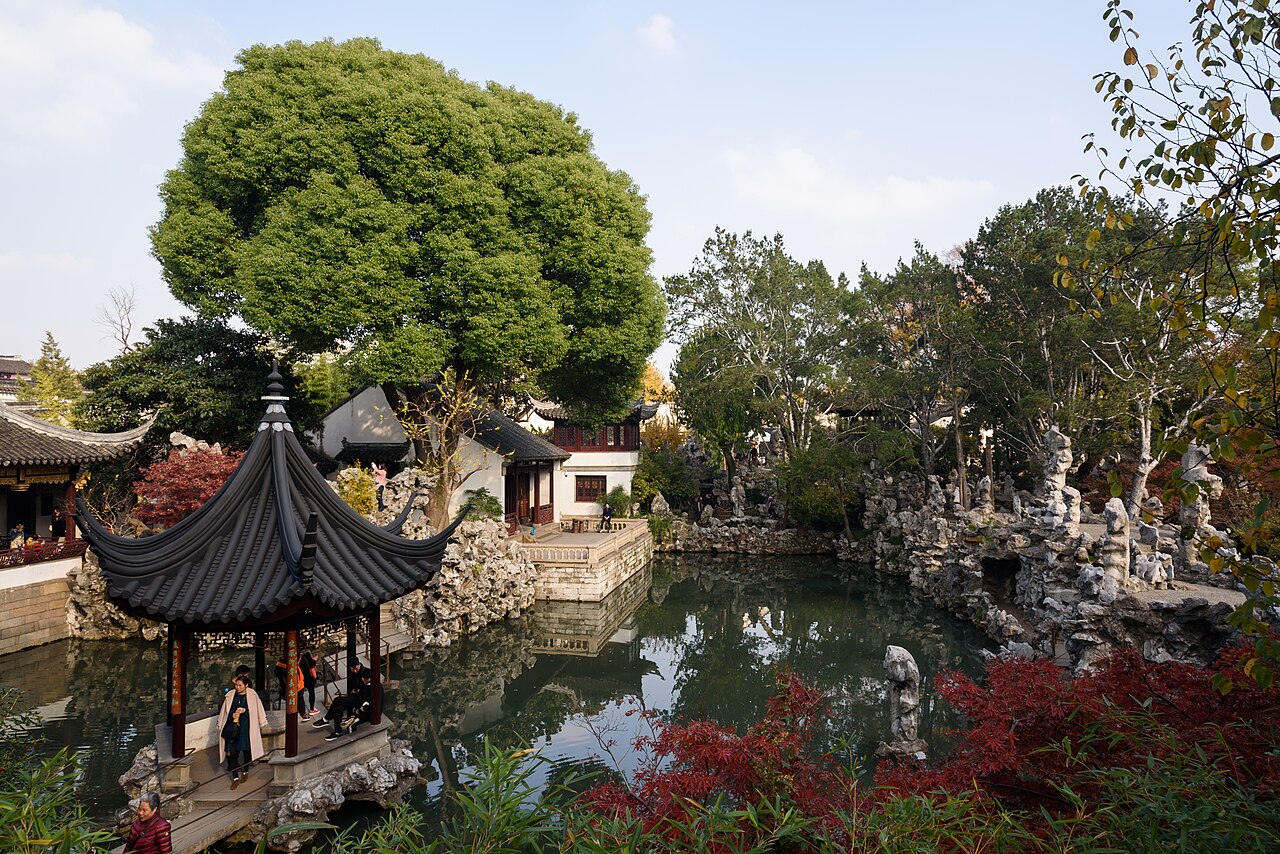
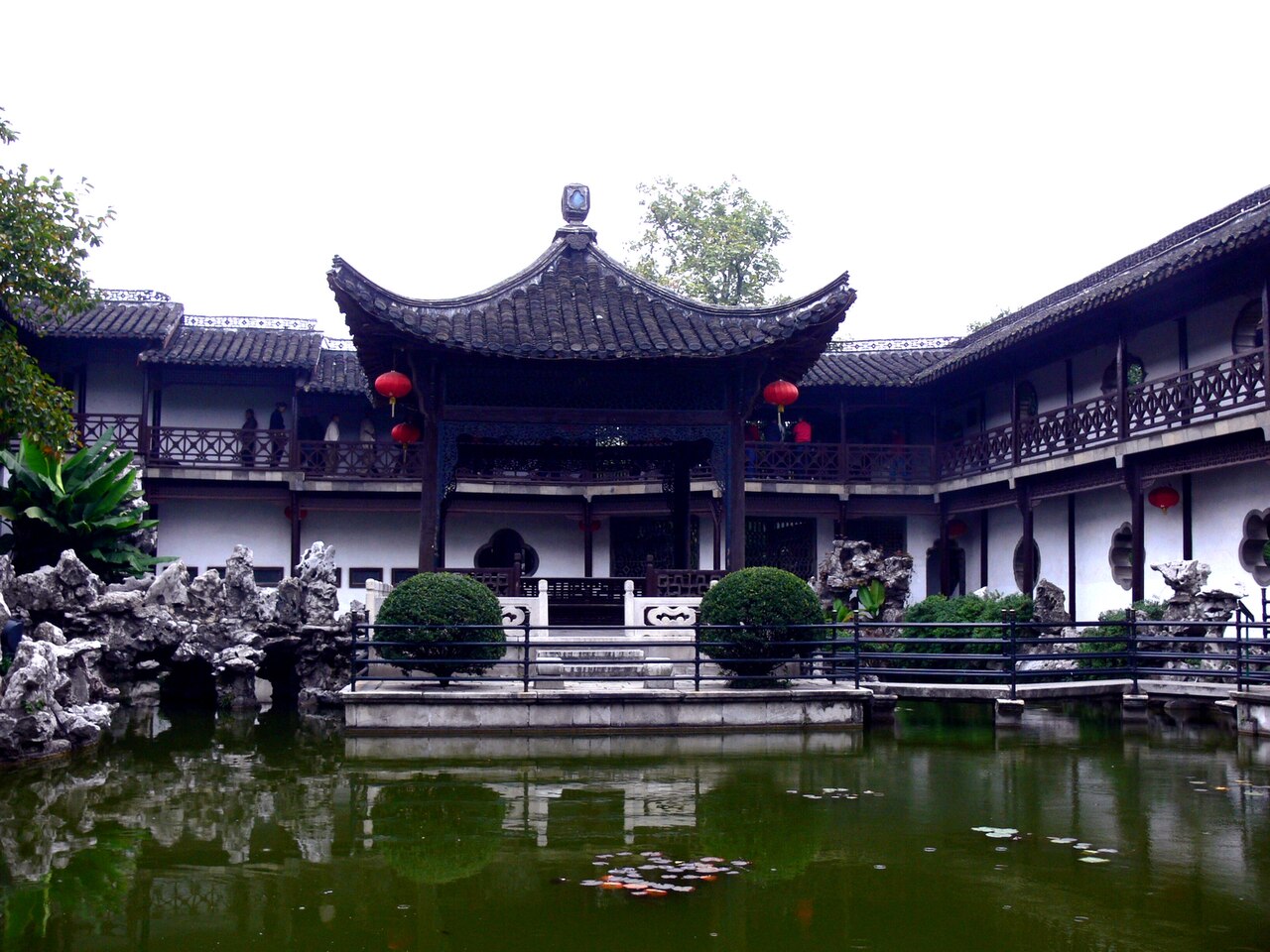
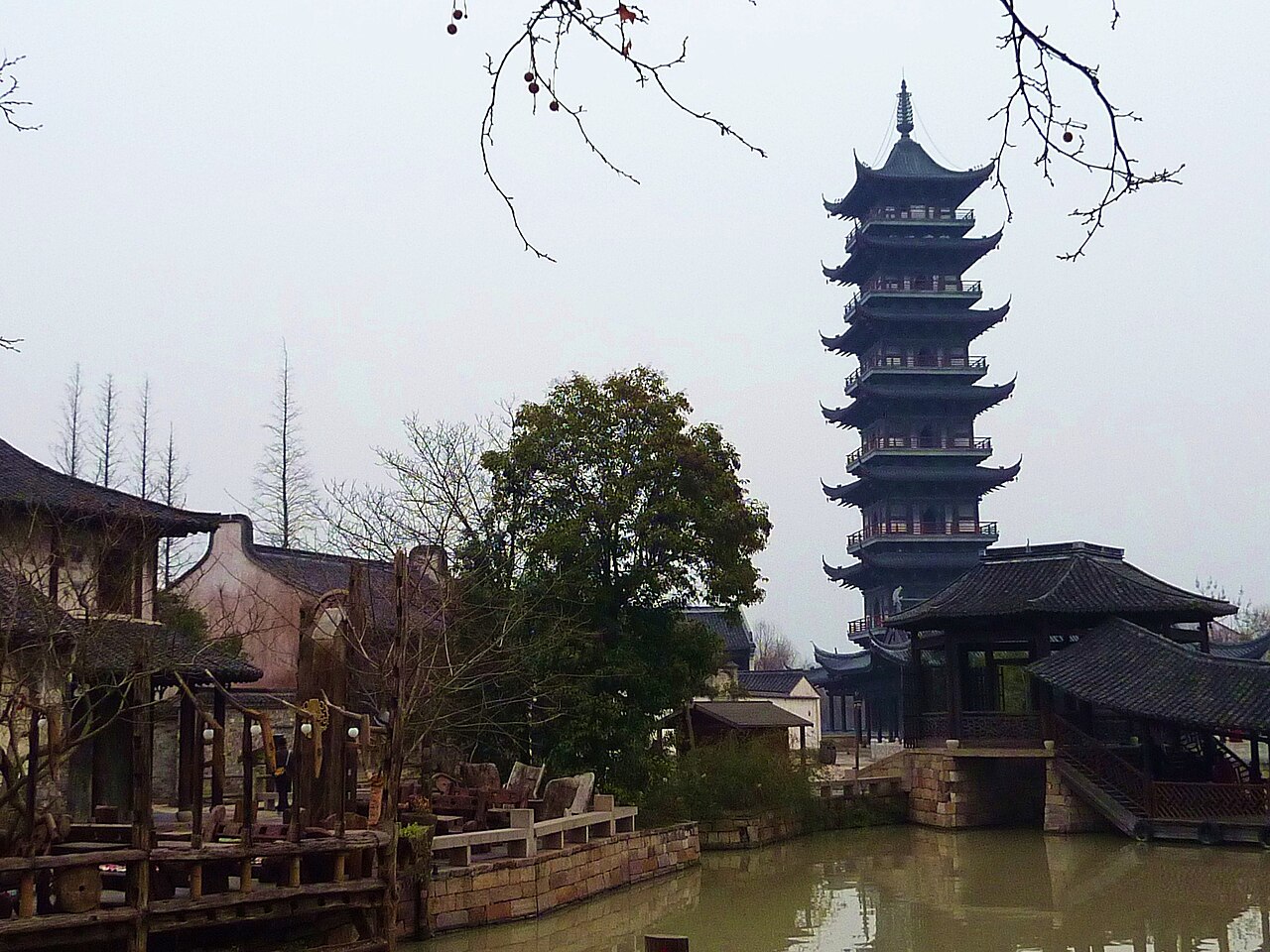
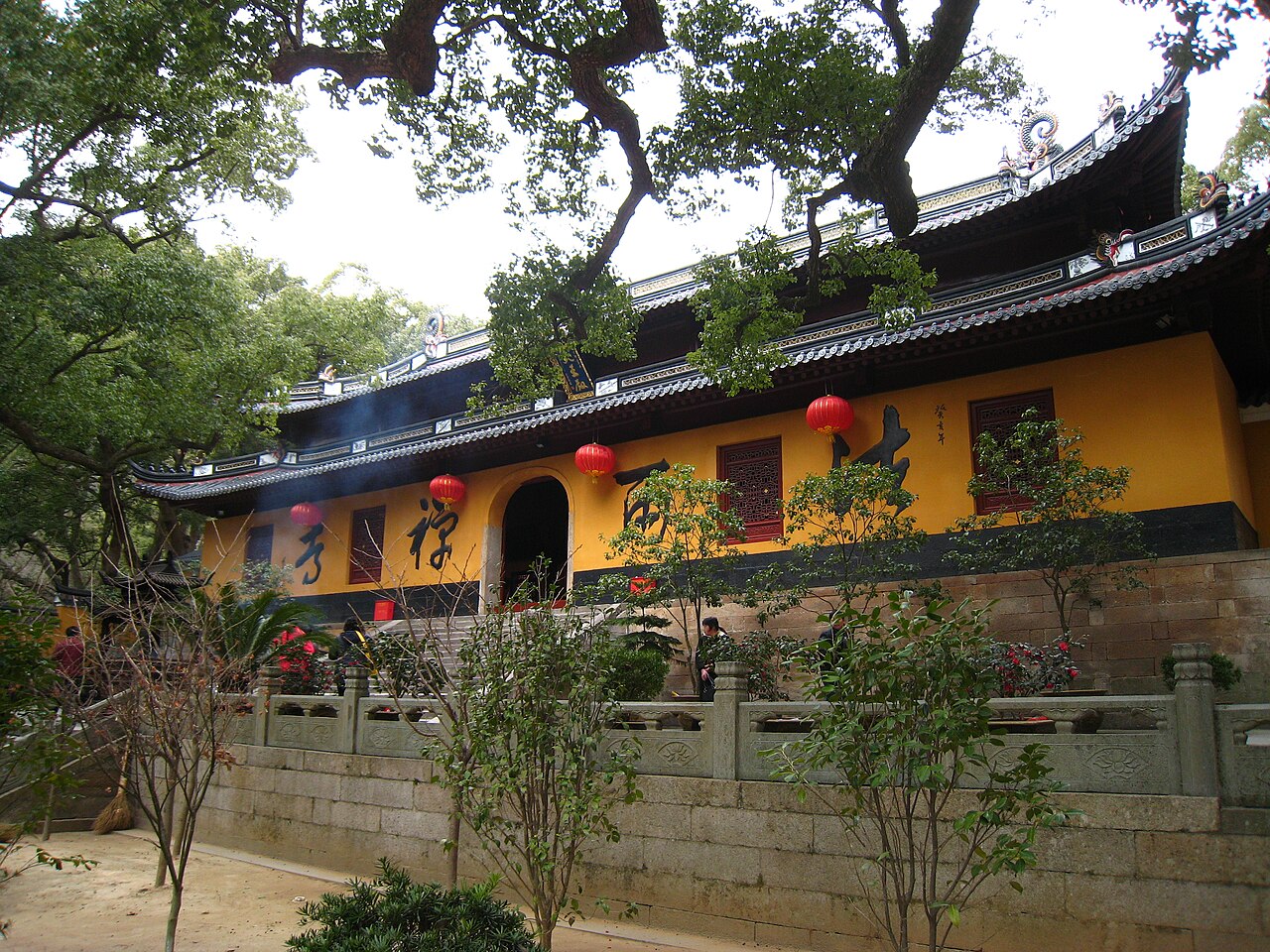
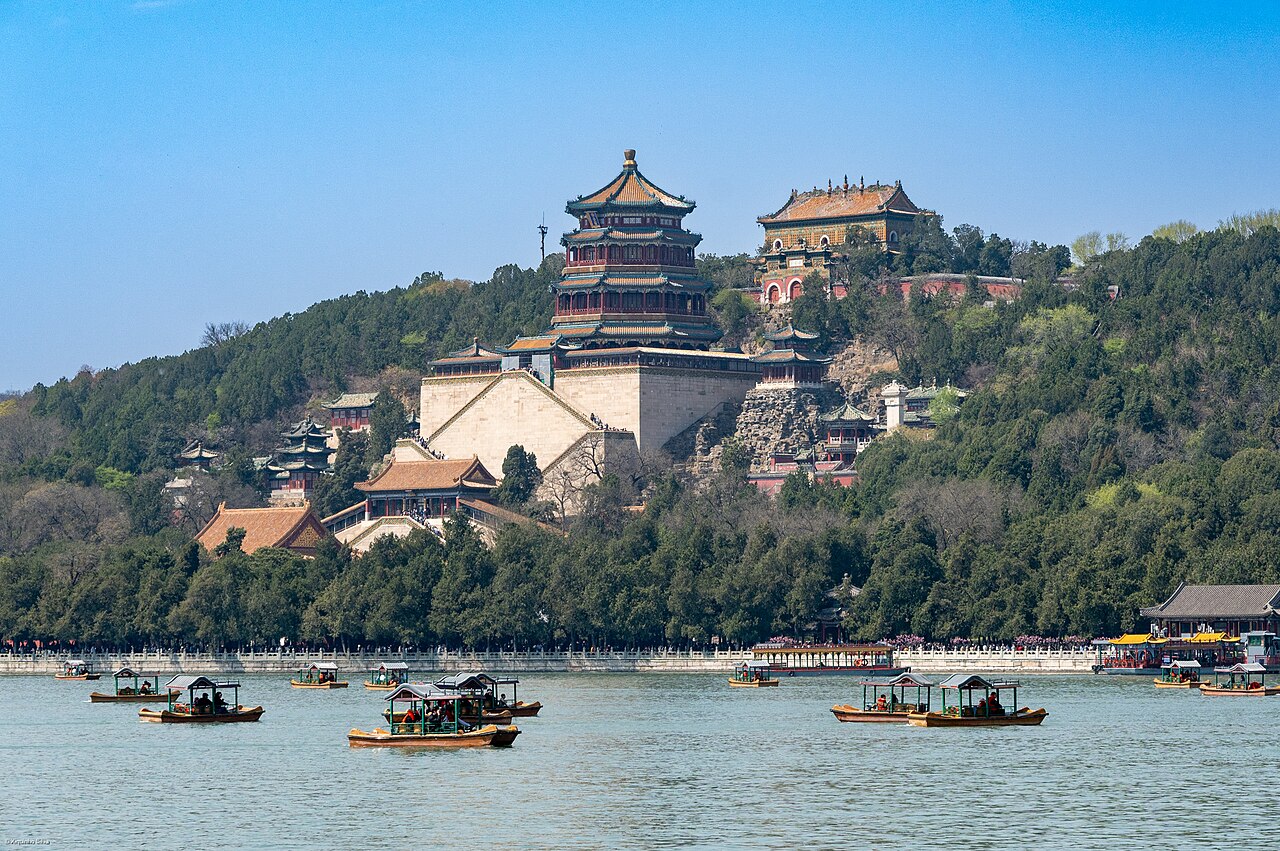
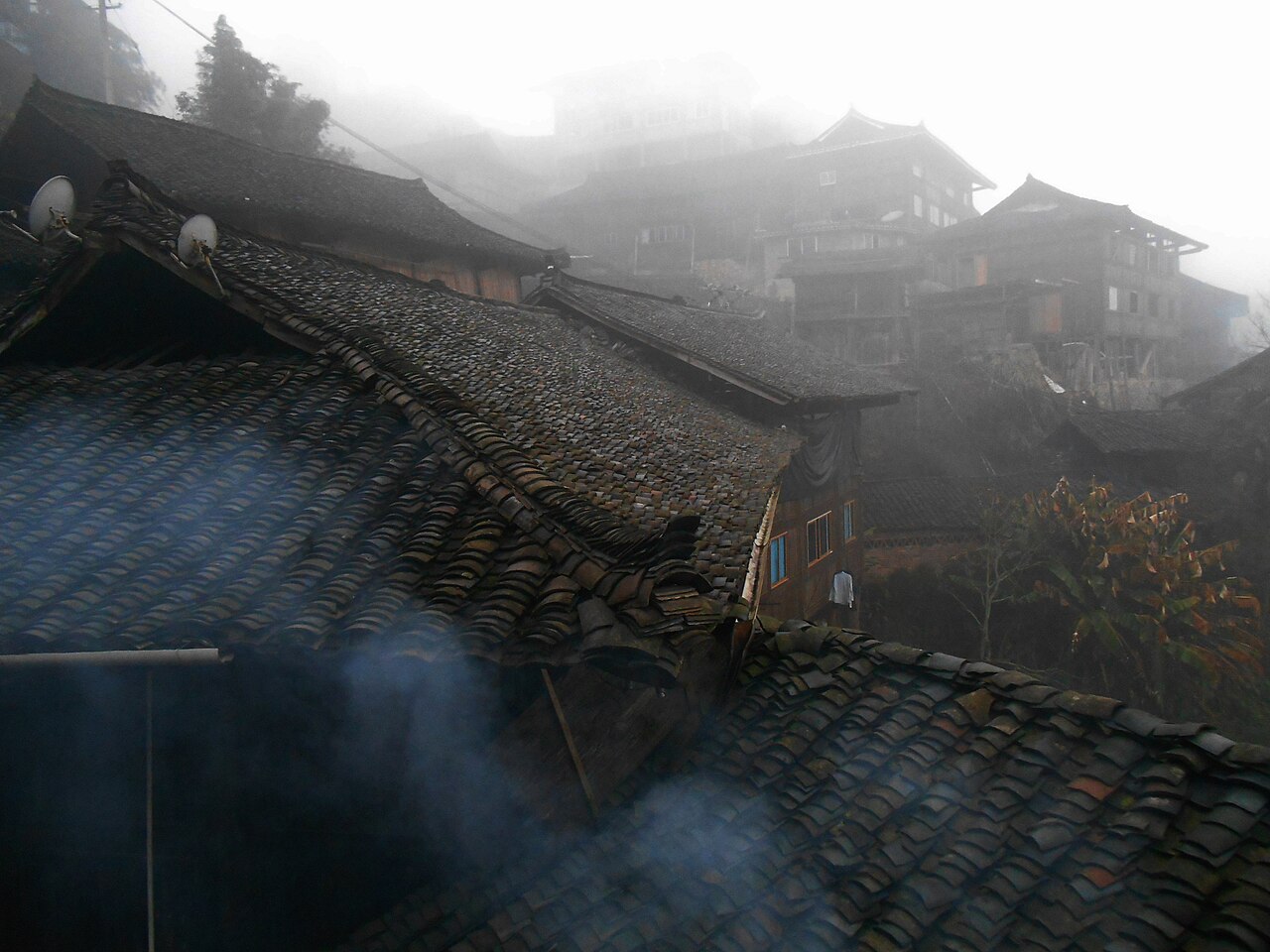
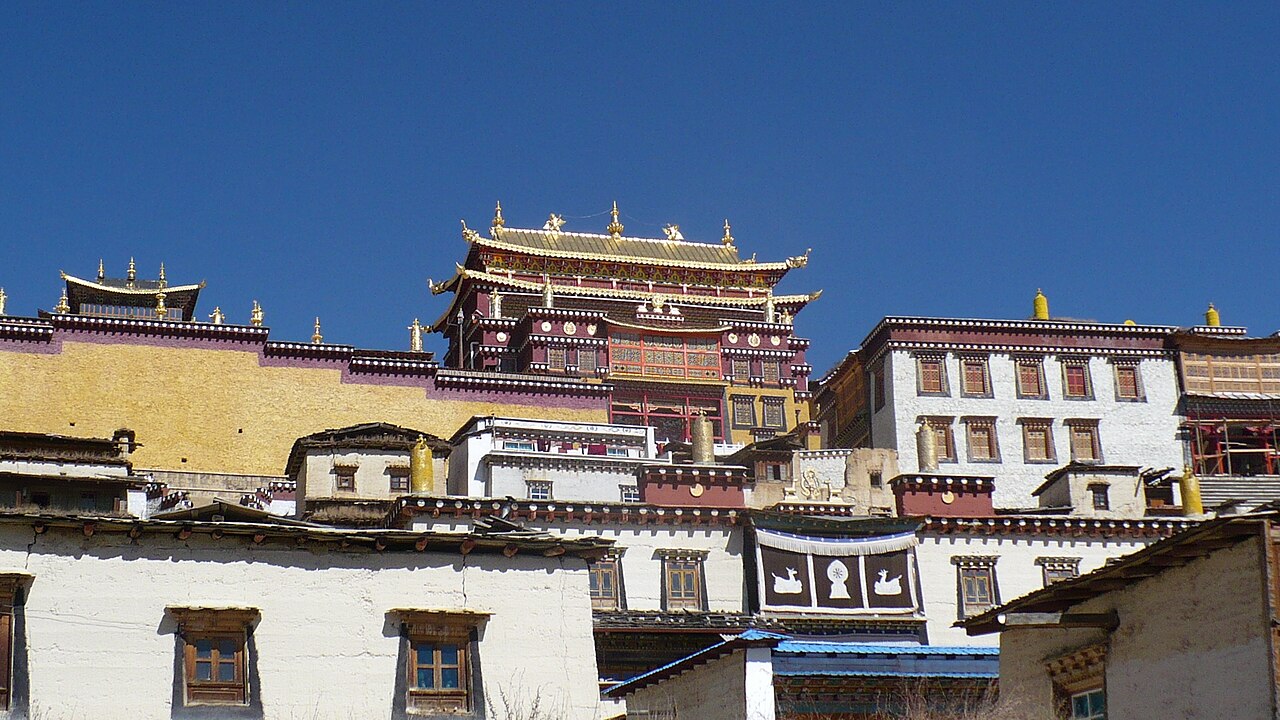
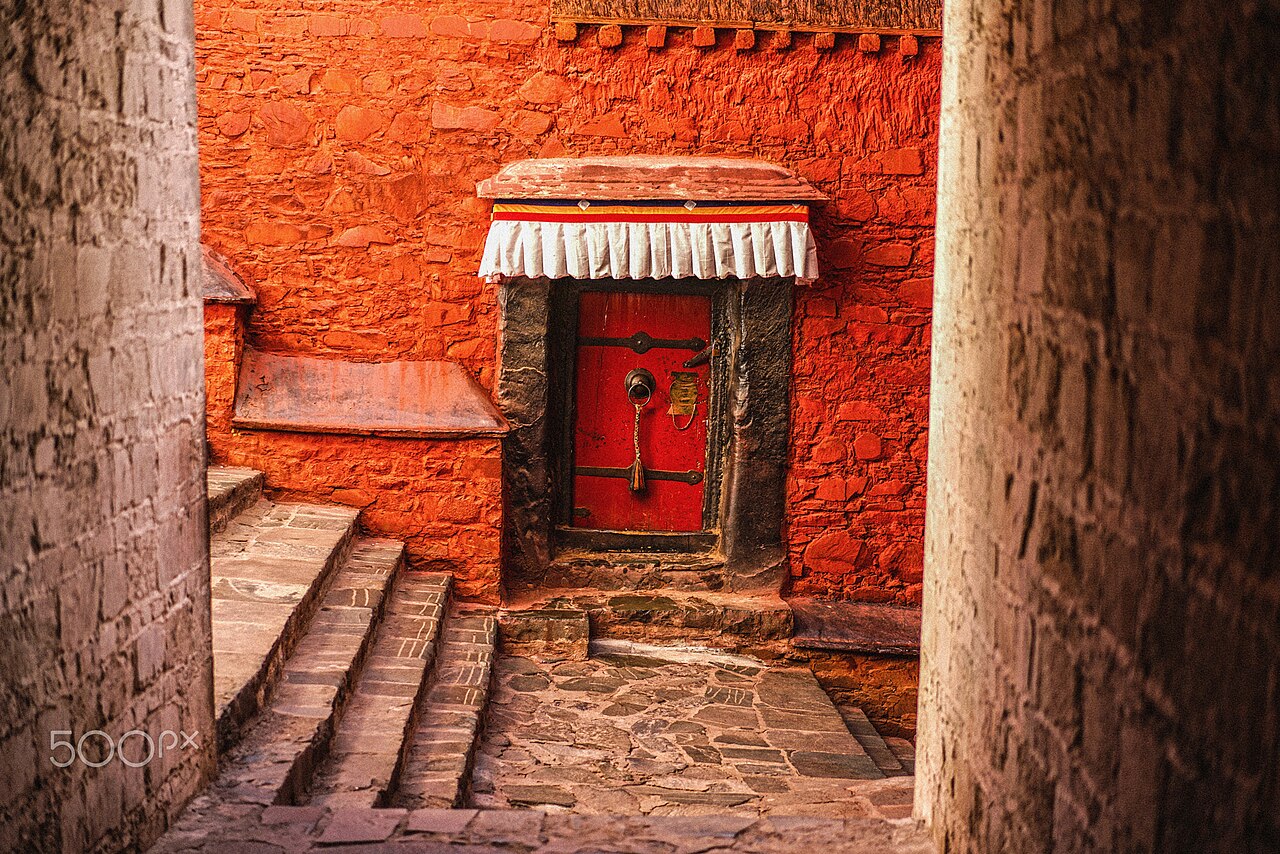
Qinglong Cave's temple complex clinging to the cliff face
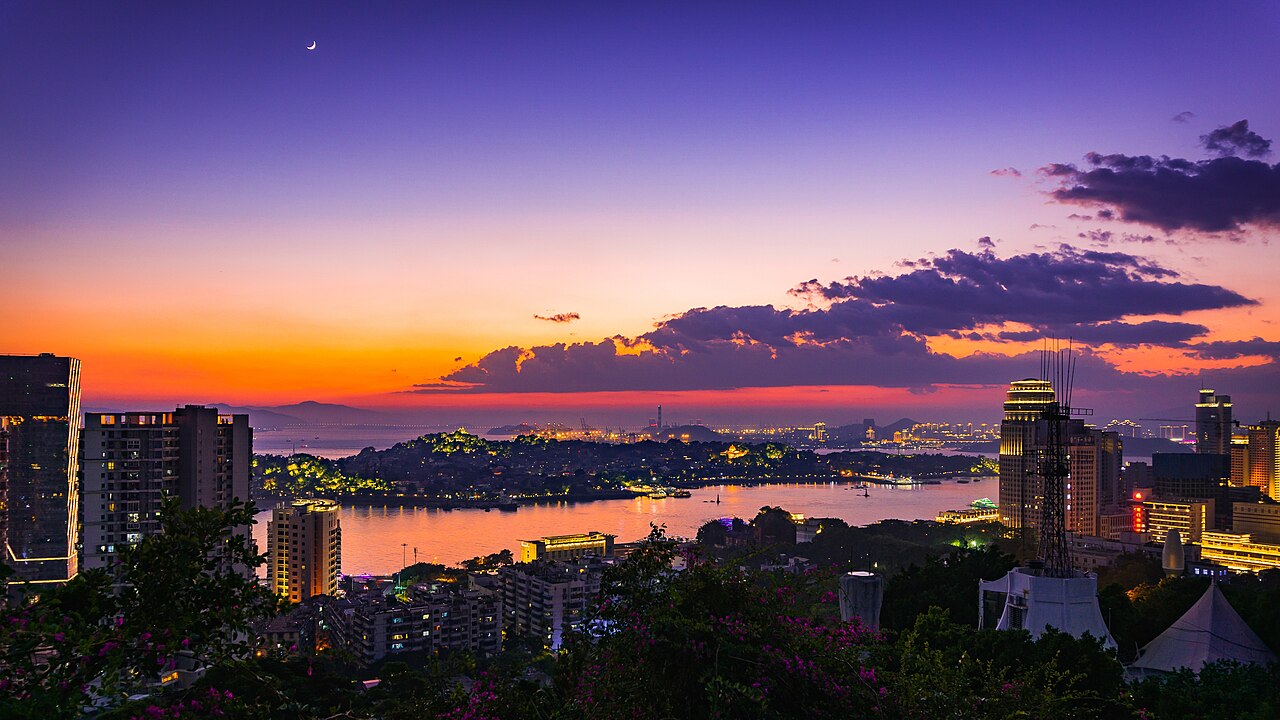
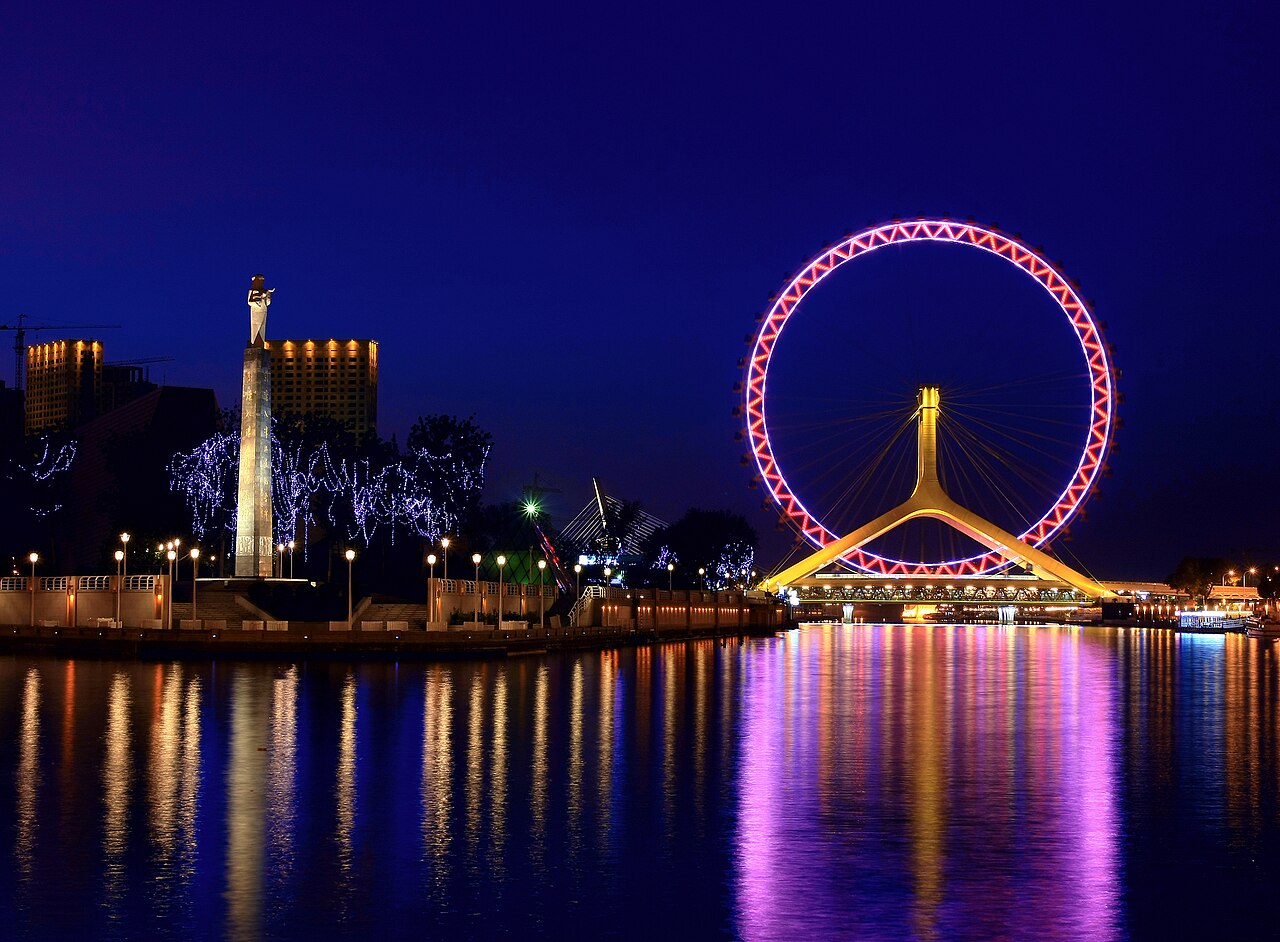
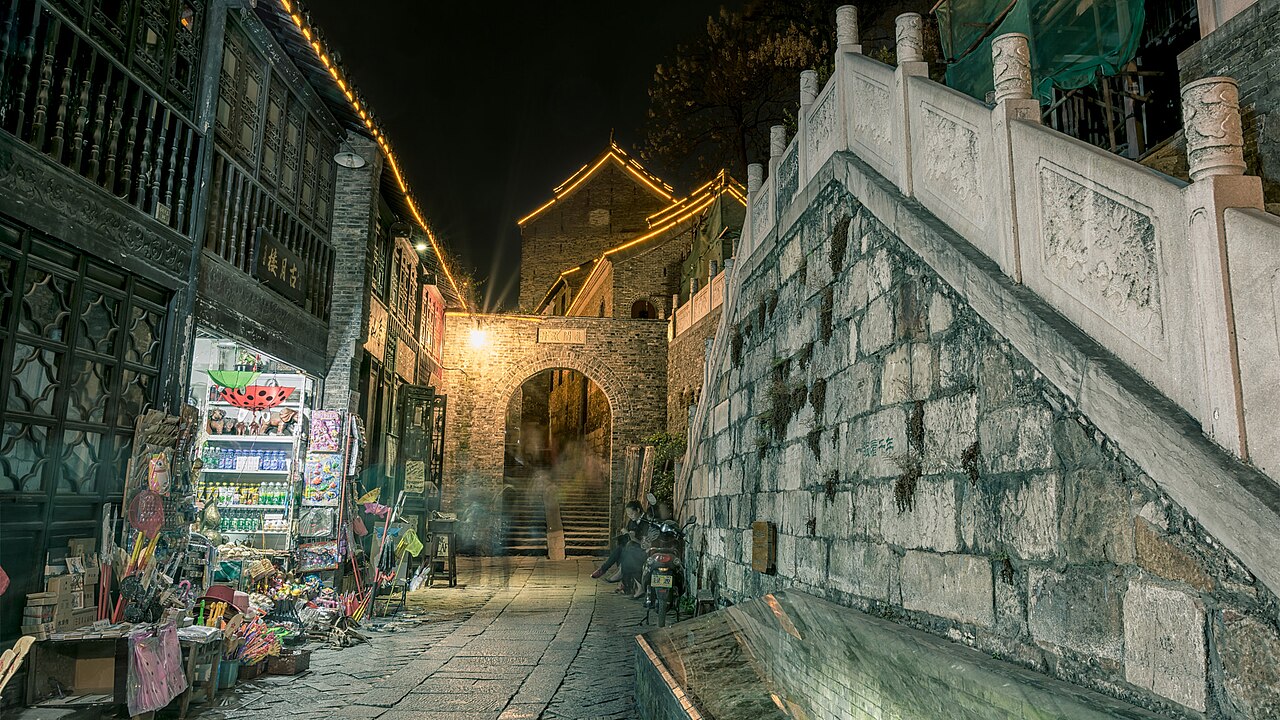
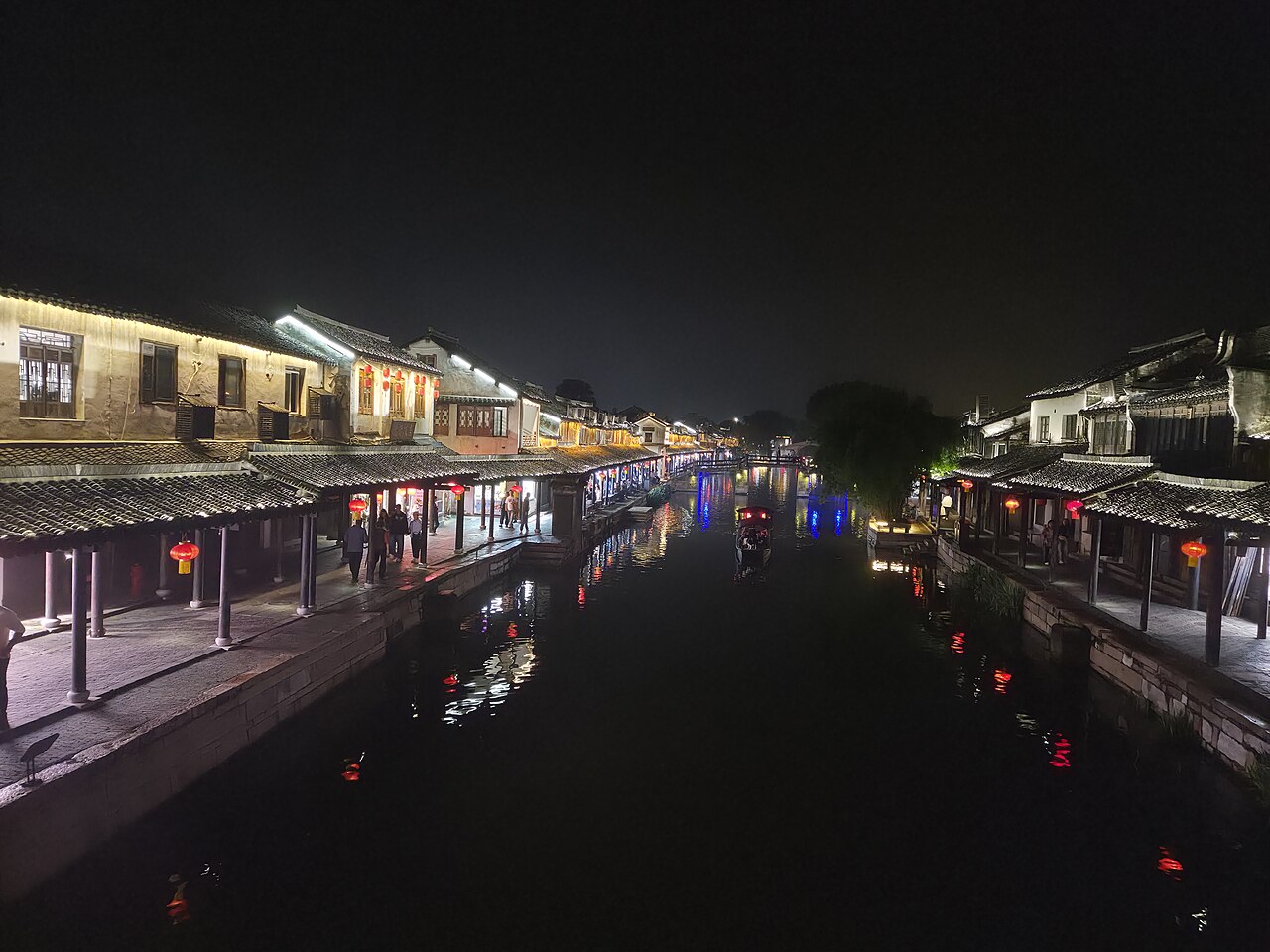
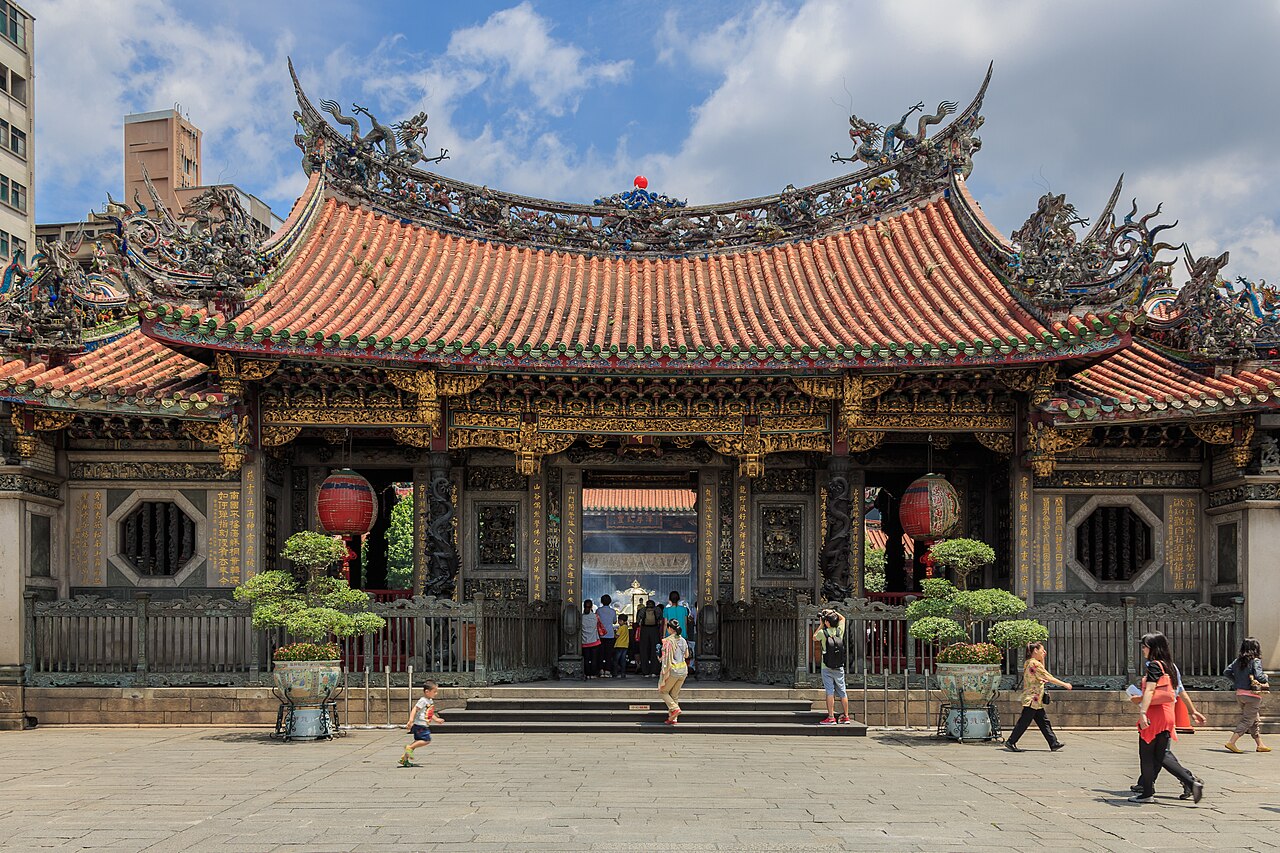
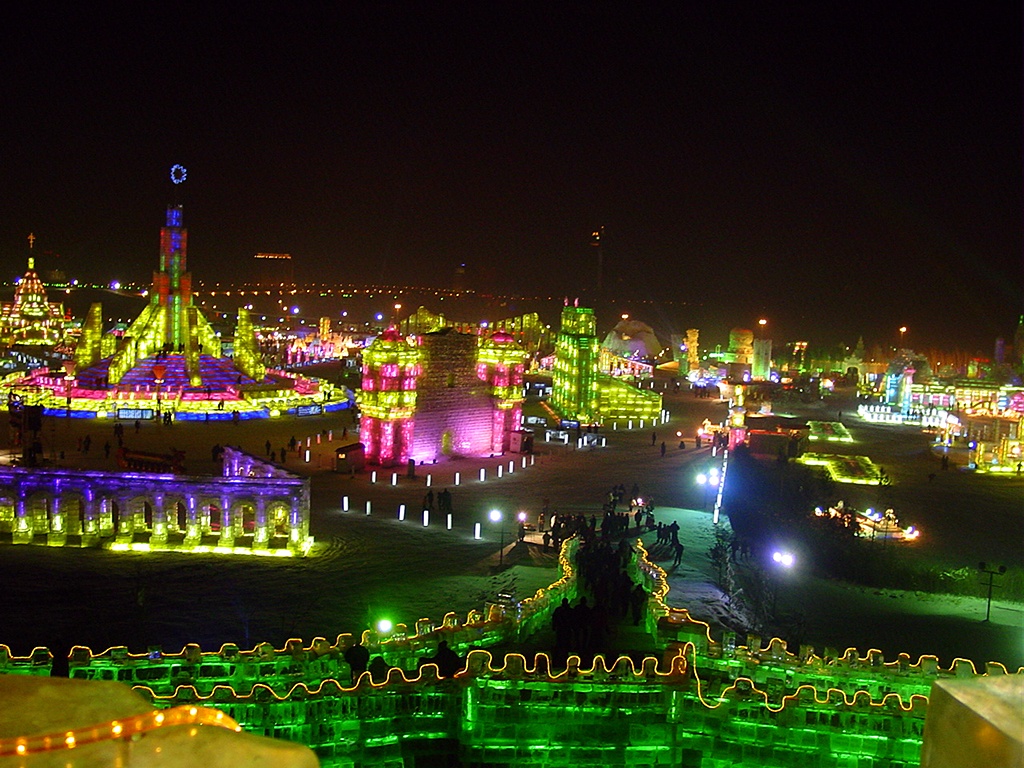
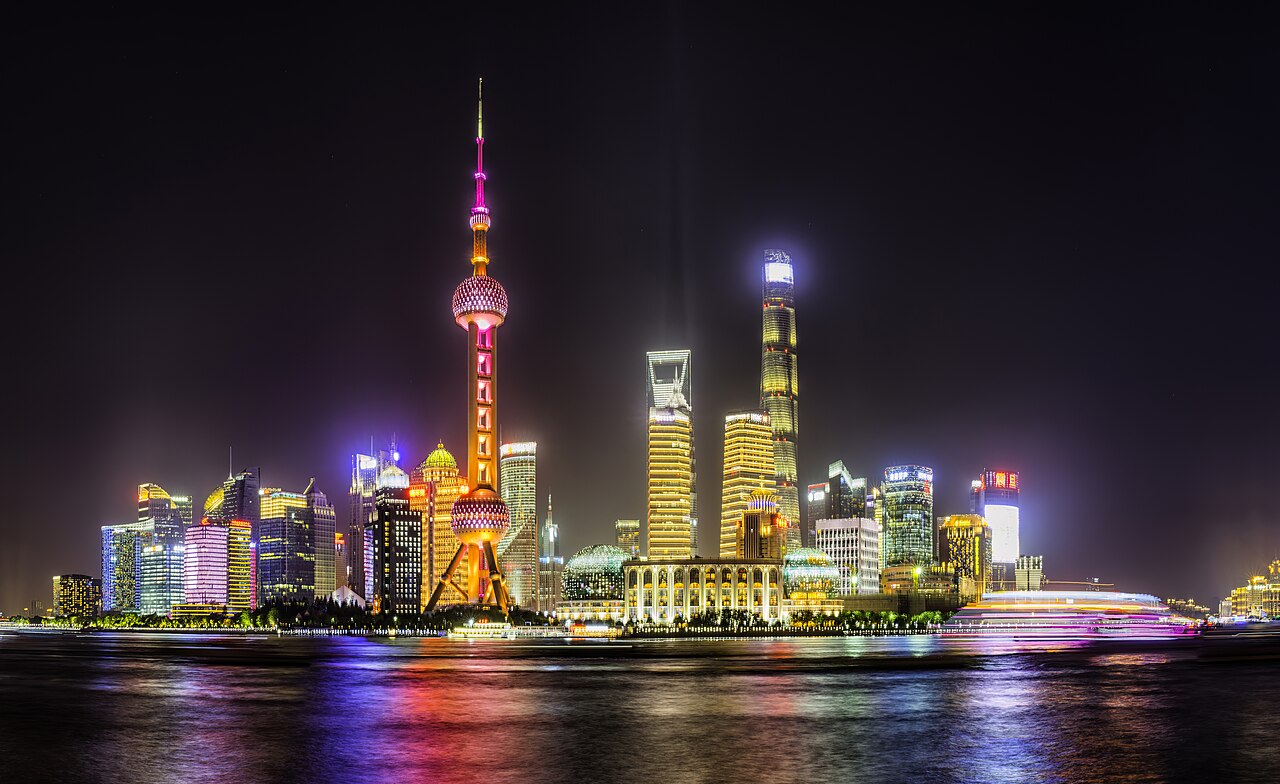
Night lights along the riverfront embankment
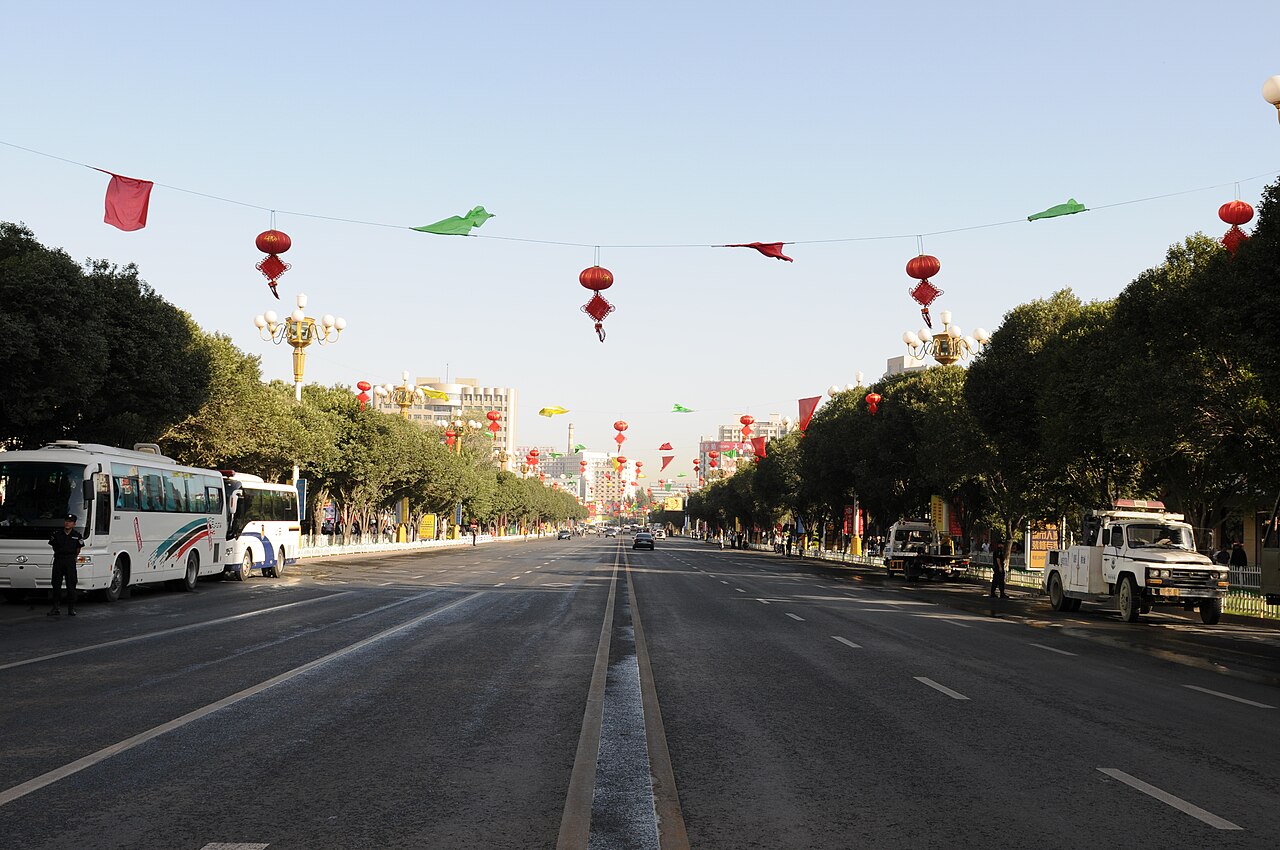
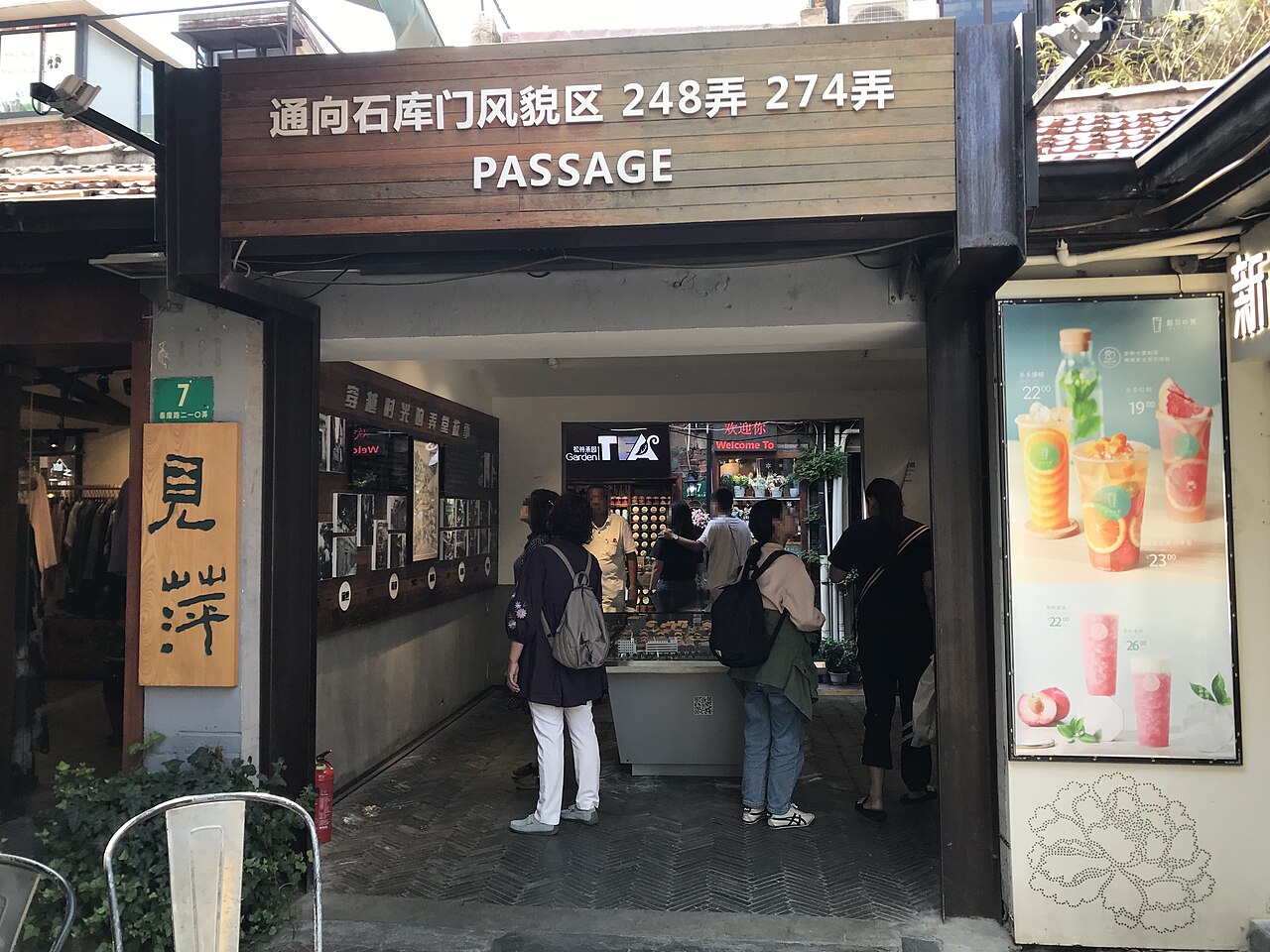
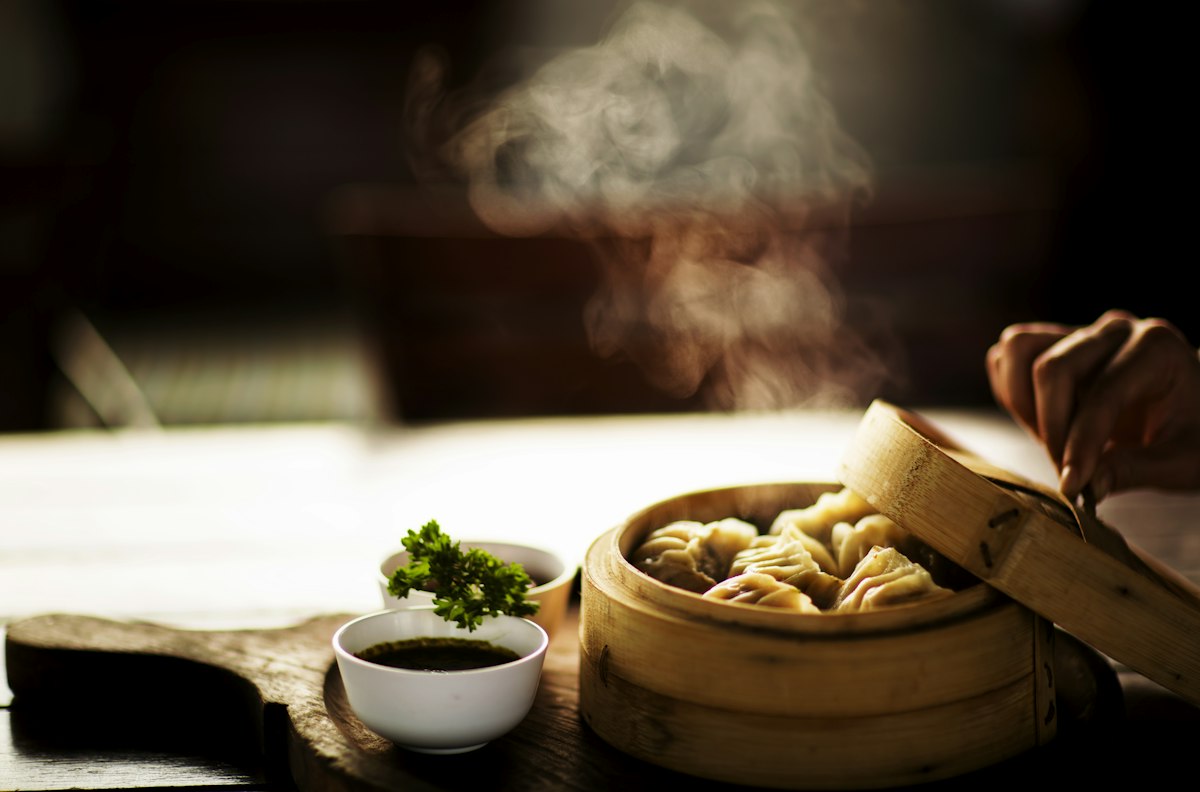
Sour fish hotpot, Zhenyuan's signature dish

Zhenyuan has a kind of beauty that does not shout at you — it seeps in quietly, like the green Wuyang River flowing through the town, washing away everything flashy and leaving only what matters.

Sue Su Mo, 'Taoyuan: Zhenyuan'

Early morning in Zhenyuan is completely still. Mist hangs over the river, an old man throws his fishing net, ducks paddle along the bank, and the mountains breathe fog. It feels like a real painting, not a tourist one.

Qianlv CB, 'National Day Trip to Zhenyuan, Fanjing Mountain and Fenghuang'

Step off the train in Zhenyuan and within ten minutes you are standing on a stone embankment watching the Wuyang River slide past in a deep jade green, mountains rising on both banks like folded screens. The old town spills along the water in a lazy S-curve, its wooden houses stacked up the hillside, its lanes so narrow that two people pass with a nod. This is not a theme park reconstruction — people actually live here, hanging laundry over the river and frying fish in doorways.

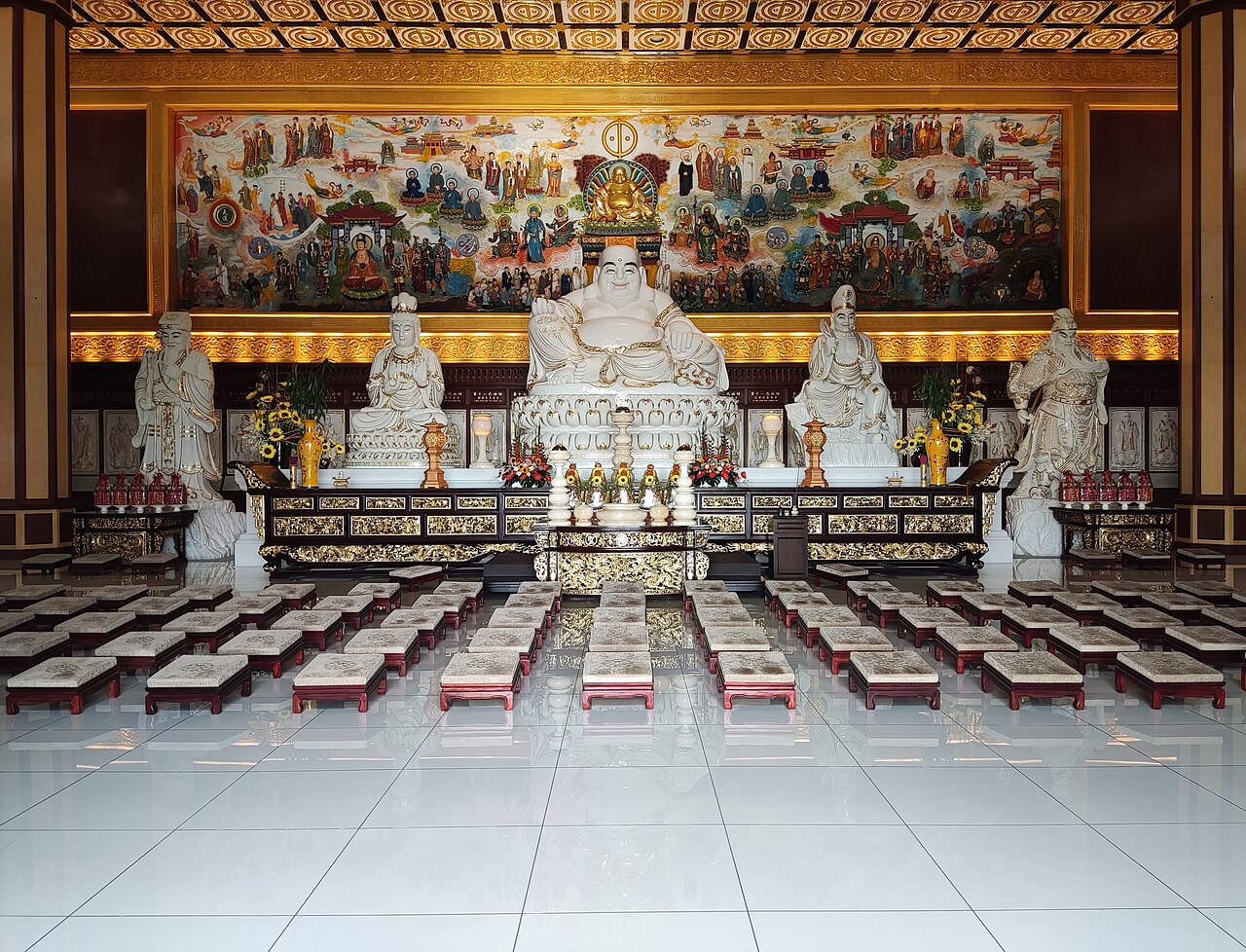
The town earned its nickname 'the lock of Yunnan and Chu, the gateway to eastern Guizhou' because every army that wanted to control the southwest had to take it first. That military past left behind walls, garrisons, guild halls and a strange mix of Buddhist, Confucian and Taoist temples packed into one cliff face. Qinglong Cave is the strangest of them all: a Buddhist hall housing a Taoist immortal, a Confucian shrine handing its best room to Laozi, a Taoist temple with Guanyin in the front.

Come evening, the whole riverfront lights up in gold and red, and the mountains go black against the sky. Take the 1-yuan ferry just to be on the water, or walk the embankment where families eat grilled fish at plastic tables and old men play cards under the trees. It is quiet, cheap, and stubbornly un-touristy compared with Guizhou's bigger names.

Zhenyuan

Don't leave without

Seven things that are worth rearranging a day for.

  1. Ride the 1-yuan ferry across the Wuyang River at night when the lights come on
  2. Look up at Qinglong Cave's temples hanging off the cliff above the water
  3. Walk the ancient lanes and spot the 'crooked doors and slanted paths' of the old houses
  4. Climb Shi Ping Shan for the full panorama of the S-shaped river and the town
  5. Eat a proper sour fish hotpot — white sour, red sour or chili sour, all worth trying
  6. Find the old Qing dynasty post office and send yourself a postcard

Highlights

Five reasons Zhenyuan deserves more than a day trip

A 2,000-year-old town folded into

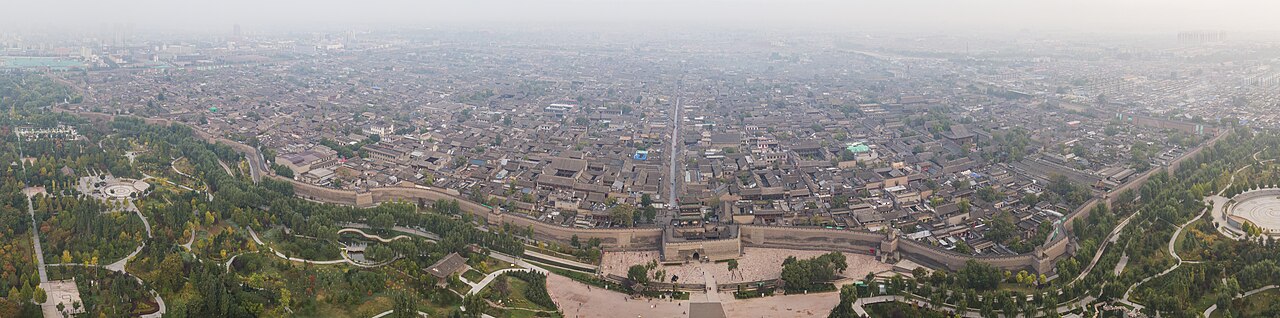
The Wuyang River cuts an S-curve straight through Zhenyuan, and the old town sits inside the loop with Shiping Mountain rising behind it — locals call the shape a taiji diagram. It has been a walled garrison and trading post for over two millennia, which is why you get ancient lanes, old wharves, guild halls and temples packed into a few walkable blocks instead of a rebuilt tourist set.
Qinglong Cave, a temple complex gl

Despite the name, Qinglong Cave is not a cave at all — it is a cluster of halls, pavilions and bridges pinned to the face of Zhonghe Mountain above the river. It is the rare place where Buddhism, Daoism and Confucianism share one compound, with a Buddhist hall housing the Daoist immortal Zhang Sanfeng and a Confucian shrine giving its top floor to Laozi. Entry is CNY 60, students half price, open 08:00–16:00.

A ferry ride that costs one yuan

Zhenyuan's little cross-river ferries take one minute and cost CNY 1 per person, which makes them the cheapest sightseeing on the river. At night, when the bridges, eaves and riverside houses are lit up, that single minute is the best-value view in town — far cheaper than the CNY 100 painted-boat cruise, though the cruise does last longer and includes folk performances.

Fish, sour soup and the local pick

Zhenyuan is a river town, so fish is the thing: sour-soup fish (suantang yu) made with fermented tomato broth, or tofu-pudding fish, both built on the Miao saying that you cannot go three days without sour food. Pair it with chennian daocai, a dark, intensely savoury preserved mustard green first made by Daoist priests at Qinglong Cave, and finish with ginger candy pulled in the shop doorway.

A WWII Japanese POW camp that stil

Heping Village is the only Japanese prisoner-of-war camp preserved in China, in use from 1939 to 1944 as the Second Japanese POW Camp of the Nationalist Military Commission, and now a free museum. It is a sober half hour that most visitors skip, and it sits a short walk from the old town on Heping Street. Open 08:00–17:30 in summer, 08:00–17:00 in winter.
Itineraries

Two ways to spend three days in Zhenyuan

The classic three days: town, rive

3 days days

The sensible first visit — one full day on foot in the old town, one day out on the Wuyang River, and a morning on the mountain for the view everyone photographs. Book your Wuyang River boat the day before and keep the third day flexible, because rain in Guizhou cancels river trips without much warning.

  1. Day 1

    Old town on foot, from Qinglong Ca

    Walk the riverside first thing, then climb into Qinglong Cave for the cliffside temples and the view back over the roofs. Cross Zhusheng Bridge, wander the ancient lanes to Tianhou Temple, and finish the afternoon on the old city wall.

    After dark, take the CNY 1 ferry across the river and back just to watch the lights come up on the water. Do not book the CNY 100 painted cruise unless you want the performances — the ferry gives you the same skyline for one yuan.

    Stops: Wuyang River promenadeQinglong CaveZhusheng BridgeAncient lanesTianhou TempleOld city wallNight ferry

  2. Day 2

    Wuyang River by boat, four hours r

    The drive out is under 30 minutes on a recently rebuilt road. Two hours on the boat plus about 30 minutes on the scenic walkway makes the whole excursion roughly four hours door to door.

    If you would rather stay in town, swap this for the Tiesi Stream valley, 4 km northeast of the old town, where the Longchi pool is a deep, still blue-green and the forest is genuinely quiet — CNY 50, open 08:00–17:30. It is billed as a mini Jiuzhaigou and that is close enough to be worth it.
    Stops: Wuyang River scenic areaBoat cruiseRiverside walkwayTiesi Stream (alternative)

  3. Day 3
    Shiping Mountain in the morning, t

    Climb Shiping Mountain for the full panorama of the S-bend and the Miao frontier wall on the ridge. Entry is CNY 30, but walk up before 08:00 and it is free — the single best money-saving trick in Zhenyuan.

    Come down, eat one last bowl of beef rice noodles, and catch an afternoon train. If you have a late departure, add Gaoguo River rafting instead: CNY 180, students half price, 4.8 km of river with a 200 m drop, about 2.5–3 hours on the water.

    Stops: Shiping MountainMiao frontier wallBeef rice noodlesGaoguo River rafting (alternative)

Three days with the countryside an

3 days days

For travellers who have already done the postcard route or want something less polished. You trade one river cruise for a rafting gorge and a Dong village that sees very few outsiders, and you keep the old town for the evenings when it is at its best.

  1. Day 1

    Same as the classic day one

    Walk the old town, see Qinglong Cave, cross Zhusheng Bridge and stay out for the night lights. There is no reason to rush this day — it is the core of the trip.

    Eat sour-soup fish at Miaoboma on Heping Street, a lane-side Miao-run place where mains run CNY 20–60 and locals eat there too.

    Stops: Wuyang River promenadeQinglong CaveAncient lanesMiaoboma sour-soup fish

  2. Day 2

    Gaoguo River rafting and Heping Vi

    Gaoguo River is about 90 minutes by car from the old town. Take the free 2 km shuttle or walk the gorge to the 108 m Guyudong waterfall — the tallest in Guizhou — or run the double raft, which is the reason most people come. Kids must be over 1.4 m to raft.

    Rinse off, then head to Heping Village in the late afternoon. The museum closes at 17:30 in summer, so do not leave it too late.

    Stops: Gaoguo River gorgeGuyudong waterfallWhitewater raftingHeping Village POW museum

  3. Day 3

    Wuyang River and Shiping Mountain

    Take the four-hour Wuyang River boat trip in the morning, come back for lunch, rest, then climb Shiping Mountain in the late afternoon light for the panorama.

    Finish with Tiesi Stream if you have energy left, or just sit by the river with a beer and watch the town light up one last time.

    Stops: Wuyang River cruiseShiping MountainTiesi StreamRiverside beer stalls

Sights

What is actually worth your time in Zhenyuan

Cliff temples

Qinglong Cave Ancient Architecture

A vertical maze of halls, shrines and covered walkways built onto the cliff above the Wuyang River, with the three faiths sharing the space in a way that would be odd anywhere else. Come in the morning for cooler air and fewer groups, and look back down at the river from the upper galleries — that is the shot of Zhenyuan you will actually keep.

Address
Zhonghe Mountain, east of Zhenyuan old town, Qiandongnan, Guizhou
Entry
CNY 60, students half price
Hours
08:00–16:00
Getting there
Walk along the river from the old town

Tip There are men in flowing robes around the complex who will invite you to burn incense for blessings at steep prices. If you are not religious, decline firmly; if you are, know that they are selling a service, not offering fellowship. This is one of the few genuine tourist traps in Qiandongnan.

River scenery

Wuyang River

The stretch downstream from Zhenyuan runs right through the town, green and slow, with willows over the water and the old houses stacked on the far bank. Further upstream, the scenic area proper packs in gorges that get compared to Emei for elegance, Qingcheng for quiet, the Three Gorges for drama and the Li River for beauty — a tall order, but the boat ride genuinely delivers.

Address
Qiandongnan Miao and Dong Autonomous Prefecture, Guizhou
Entry
CNY 20 scenic area, CNY 100 boat ticket
Hours
08:00–17:30
Getting there
One daily bus from Guiyang Tourist Transport Centre, or book a boat trip from Zhenyuan; the drive is under 30 minutes

Tip Budget four hours round trip from Zhenyuan: two hours on the boat, half an hour on the walkway, plus transfers. The in-town stretch is free and lovely at night, so you do not have to pay for the cruise to see the river.

Panorama

Shiping Mountain

The ridge directly behind the old town, and the only place to see the full S-bend of the Wuyang River and the town inside it. There is a stretch of Miao frontier wall on top, modest but genuinely old, and the view over the tiled roofs is the one every guidebook uses.

Entry
CNY 30
Discount
Free if you start up before 08:00
Best time
Late afternoon for the light, early morning for the free entry
Location
Directly behind Zhenyuan old town

Tip Go early and you save the CNY 30 and get the ridge to yourself. Wear shoes with grip — the steps are uneven and Guizhou rain makes stone slick fast.

History

Heping Village (Japanese POW Camp

The only preserved Japanese prisoner-of-war camp in China. Between 1939 and 1944 this was the Second Japanese POW Camp of the Nationalist Military Commission, and it held more Japanese prisoners for longer than any other camp south of the Yangtze. It is now a free museum, quiet and well labelled, and it explains a side of the war that most foreign visitors have never encountered.

Address
South section of Heping Street, Zhenyuan, near the old CPC branch site
Entry
Free
Hours
08:00–17:30 summer, 08:00–17:00 winter
Phone
0854-3610516

Tip Pair it with the former residence of Zhou Dawen, a free courtyard house nearby that was also the underground CPC branch office — same street, same opening hours, no extra cost.

Nature walk

Tiesi Stream

A forested valley 4 km northeast of the old town with odd limestone caves and the Longchi pool, a still, bottomless-looking basin of deep blue-green that earned the place its "little Jiuzhaigou" nickname. It is the best half-day escape when the river boats are cancelled by rain.

Address
4 km northeast of Zhenyuan county town
Entry
CNY 50
Hours
08:00–17:30
Best for
Hiking, photography, rainy-day backup

Tip The walk in is shaded and cool even in midsummer, but the paths get muddy after rain. Bring the grippy shoes you already packed for Shiping Mountain.

Food

Five things to eat in Zhenyuan (and one you should drink)

Sour fish soup (酸汤鱼 / suan tang yu

The dish this town is judged by. Guizhou sour soup comes in three shades — white sour fermented from rice water, red sour from wild tomatoes, and chilli sour from pickled peppers — and Zhenyuan leans red: tomato-based, barely spicy, faintly sweet at the finish, with a whole river fish and vegetables cooked in it. The locals' pick is Miao Bo Ma Sour Soup House (苗伯妈酸汤馆) hidden in a back lane off Heping Street, phone 13508550873, roughly CNY 20–60 a head. A second reliable option is Old Town Red Sour Fish Restaurant (古城红酸汤鱼莊) on Lianhe Street, 15086213409 — the kind of place people who grew up here come back to for the taste they remember.

Bean-curd fish (豆花鱼)

Same river fish, but a pot of soft silken tofu is set into the broth and poached tableside. The tofu soaks up the sour soup and turns into the best thing in the bowl. Order it grilled over charcoal (豆花烤鱼) if you want the skin blistered and crisp instead of poached.

Rice tofu (米豆腐)

Nothing to do with soybeans. Rice is soaked overnight, ground to a slurry, cooked with a little alkali, then set and cut into slippery cubes with a taut thread. Zhenyuan's water is unusually good, so the cubes come out startlingly white and silky. Topped with chilli flakes, spring onion, sesame oil, soy, crunchy soybeans and peanuts — a bowl costs a few yuan and is the perfect mid-walk snack.

Three-flavour stinky tofu (三味臭豆腐)

The one thing you cannot leave without trying. Xinglong Street, No. 21 — the only shop in town that does it. The signboard couplet reads 'stinks to the nose, blooms in the mouth'. Crisp shell, molten inside, salty-savoury with a fermented tang that has nothing to do with the chilli-hot stinky tofu you get elsewhere.

Chennian daocai (陈年道菜)

Zhenyuan's signature preserved vegetable, made from big-leaf mustard greens and originally invented by the Taoist priests of the Qinglong Cave temple — hence the name, 'the Taoists' vegetable'. It is aged in jars until dark brown and intensely savoury, then steamed with pork belly. Buy a vacuum pack on Xinglong or Shuncheng Street to take home; it travels well and completely baffles your friends.

Where to eat

Four tables worth sitting at

Sour fish soup · local favourite

Miao Bo Ma Sour Soup House (苗伯妈酸汤馆

Tucked into a lane behind Heping Street, ten metres to the right of the Fujiale supermarket — no street frontage, no signboard shouting at you. 'Bo ma' is the Miao word for a married woman, and the owner is a Miao woman who cooks everything by hand with no additives. Locals eat here as often as visitors, which is the only review that matters.

Address
Heping Street, Zhenyuan (10 m right of Fujiale Supermarket)
Phone
13508550873
Per person
CNY 20–60
Order
Red sour soup fish, one vegetable, rice
Tip
Cash is easiest; no English menu, point at what the next table has

Sour fish soup · nostalgic

Old Town Red Sour Fish Restaurant

On Lianhe Street, and the place people who grew up in Zhenyuan come back to for the taste of home. Portions are generous and the price is honest — the best value sour fish soup in the old town if you are feeding three or four.

Address
Lianhe Street, Zhenyuan
Phone
15086213409
Per person
CNY 30–70
Order
Red sour soup fish, bean-curd fish if you want both
Tip
Ask for less chilli if you are not used to Guizhou heat; they will adjust it

Street snack · the one shop

Three-Flavour Stinky Tofu (三味臭豆腐)

Xinglong Street, No. 21, and there is genuinely only one. Fried to order, five or six pieces a portion, eaten standing up with a toothpick. Worth queuing for.

Address
No. 21 Xinglong Street, Zhenyuan
Per portion
A few yuan
Hours
Daytime until they sell out
Order
One portion each — you will want a second
Tip
Eat it hot, straight from the fryer; it goes limp in a bag

Walk-up food · cheap eats

Tianhou Temple snack lane & rivers

The lanes between the old alleys and the Tianhou Temple sell home-made snacks from people's front doors — including the local peanut-stuffed zongzi, sticky rice dumplings with a green tint in the rice, one yuan each. Riverside restaurants on both banks all run roughly the same menu, so the only real difference is the price list: read it before you sit down, and when in doubt pick whichever place is full of Chinese families.

Where
Old alleys near Tianhou Temple; both banks of the Wu Yang River
Peanut zongzi
CNY 1 each
Riverside beer
Cheap — sit and watch the boats go by
Rule
Menu first, then chair
Tip
Prices are negotiable in the old town, including on food

Where to sleep

Three bases: riverside, station-side, or a courtyard guesthouse

Best views · book ahead in holidays

Riverside guesthouses (舞阳河临河房)

Sleeping on the river is the whole point of Zhenyuan — you open the window onto the S-bend, the lit bridges and the青龙洞 cliff at night. It also costs the most and is the first thing to be marked up in peak season, so walk the street and compare three or four before you commit. Yu Jie Hotel (宇洁宾馆) at Tiesi No. 7 is a good benchmark: eight rooms, four with river-facing balconies, directly opposite Qinglong Cave, with Shibing Mountain behind and the Zhusheng Bridge beside it. River rooms CNY 180, street rooms CNY 160, 0855-5725808.

Typical river room
CNY 150–180 (more at National Day and Spring Festival)
Street-side room
CNY 80–160 depending on air-con and season
Book ahead
Yes for holidays; walk-ins fine mid-week
Trade-off
River rooms are quieter; street rooms are cheaper but noisy
Tip
Even in midsummer it cools down at night — if you can skip air-con, use it as a bargaining chip

Riverside inn · own restaurant

Weicheng Yuan Wharf Station (卫城垣码头

In the old town's Yangliu Bay, backed by the Ming city wall with its door on the Wu Yang River and its side facing the water. Twenty minutes on foot to Qinglong Cave. It runs its own kitchen, which matters after a long day of walking.

Address
Beside the Xiabeimen city-wall arch, Heping Street, Zhenyuan
From
CNY 150 standard room
Phone
0855-5725558
Walk to Qinglong Cave
About 20 minutes
Tip
Ask for a room away from the street if you are a light sleeper

Cheapest · best for early trains

Near the railway station (火车站附近)

Zhenyuan's station is a short taxi ride from the old town — a flat CNY 5 or so — and the hotels around it are plain but fine, with air-con and hot water. On a non-weekend night you can talk a decent standard room down to around CNY 50 without air-conditioning, which is not a fantasy, just a matter of patience. Ideal if you have an early departure, and you still get the night skyline: watch the lights from the old town, then taxi back.

Typical rate
CNY 50–120 off-peak
Taxi to old town
About CNY 5
Best for
Early trains, tight budgets, late arrivals
Downside
No river view, and you will be taxiing in and out
Tip
Holiday pricing in Zhenyuan is aggressive — compare, then bargain, and be ready to walk away

Getting around

Trains, boats and five-yuan taxis

Train (arriving)

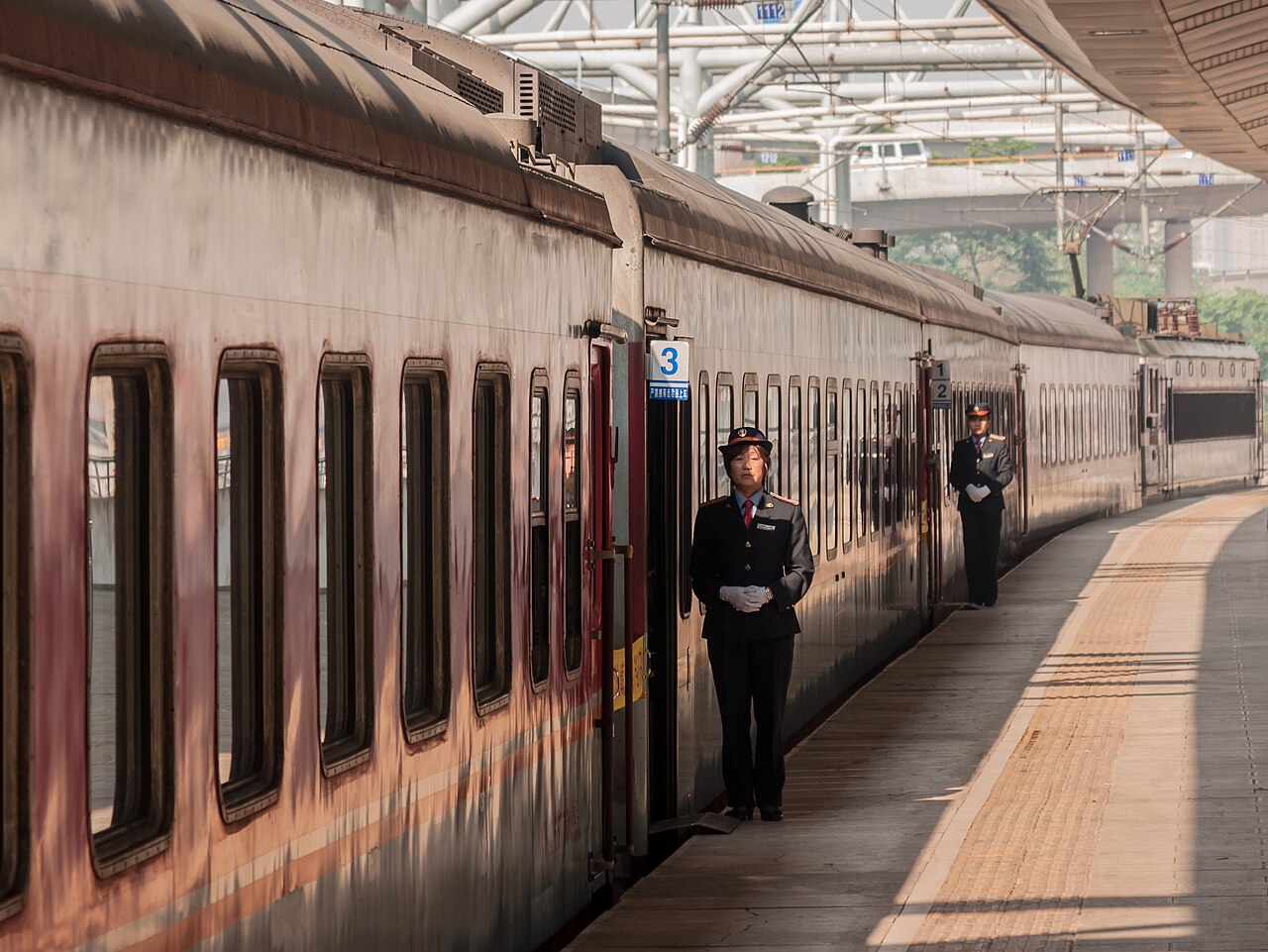
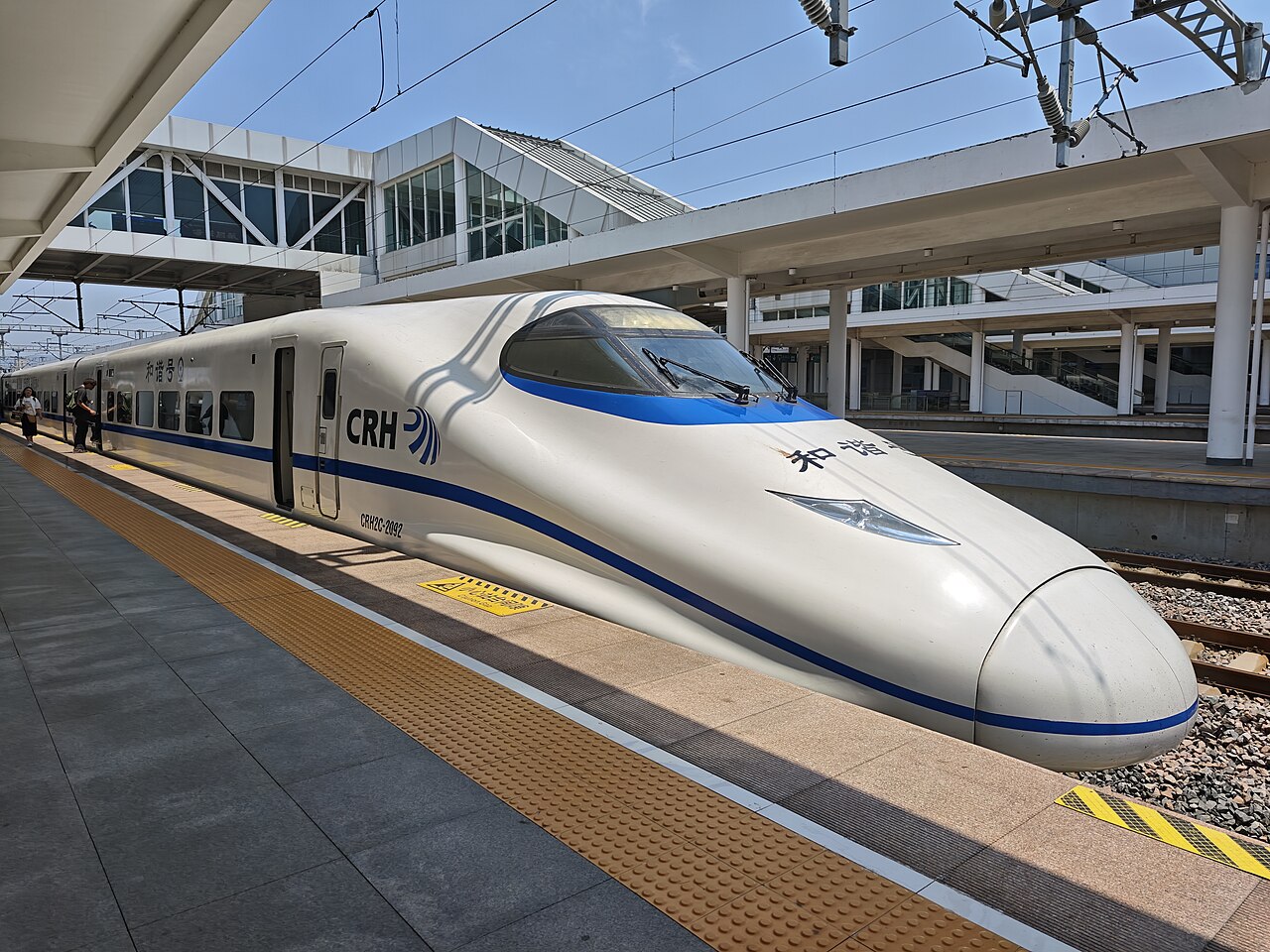
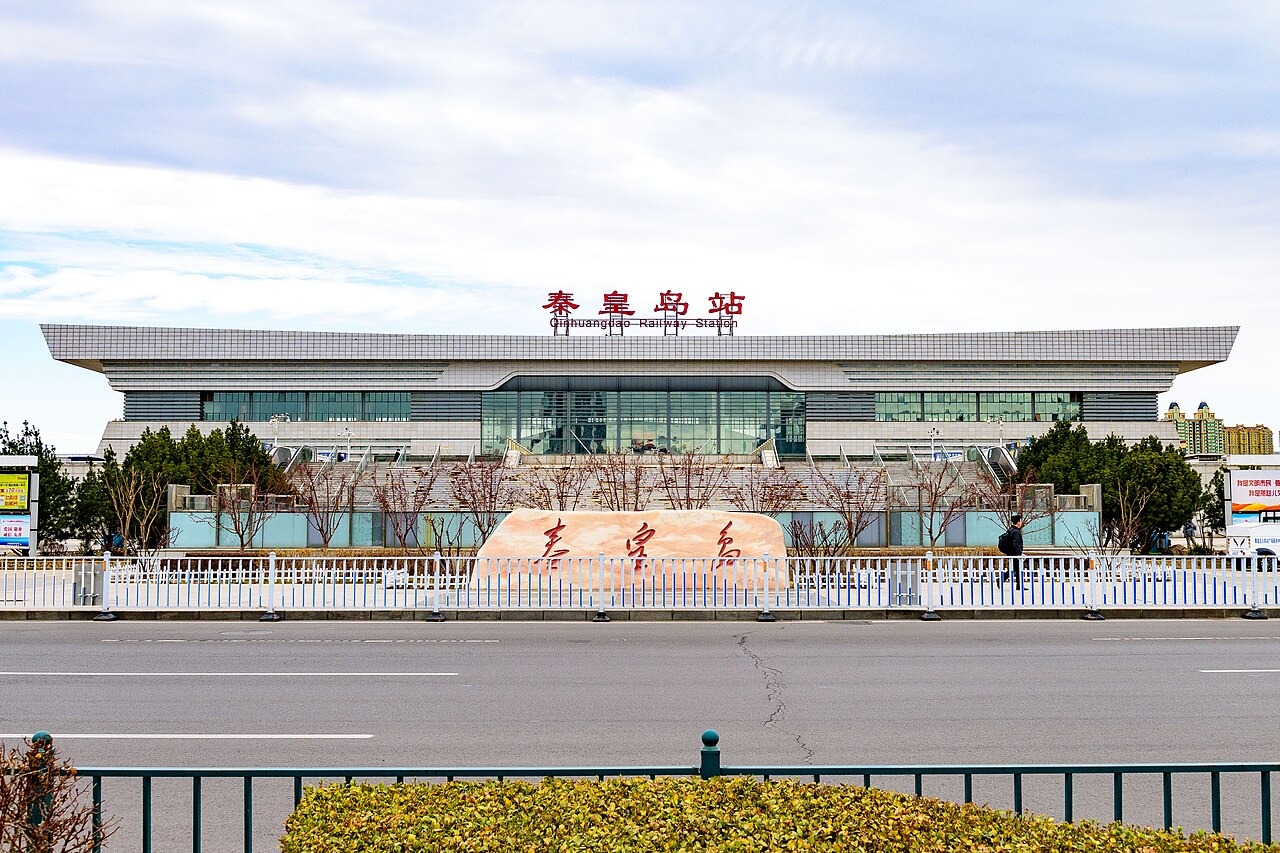
Zhenyuan sits on the Shanghai–Kunming line, and the station is the reason most people can reach this town at all. Trains from Guiyang and Kaili are frequent and cheap; the station is 3 km from the old town, and a taxi in costs about CNY 10.

Guiyang to Zhenyuan
Roughly 3.5–4 hours by conventional train; several departures daily
Kaili to Zhenyuan
About 1.5 hours — Kaili is the main hub for Xijiang Miao Village and Libo
Book on
12306 app or station counter; many services are passing trains with no reserved seats
Tip
Take an earlier departure and board early — on sold-out pass-through trains, standing is the default
Station to old town
Taxi CNY 10, or bus 1/2; last return taxis after the night lights are easy to find

Ferry crossing

Small piers line the Wuyang River through town. For CNY 1 per person you can cross by ferry in one or two minutes instead of walking the long way round the bend — and at night it doubles as the cheapest night-view cruise in China.

Fare
CNY 1 per person, per crossing
Duration
1–2 minutes
Best time
After dark, when the lights on both banks come on
Tip
Settle the price before boarding if you are carrying luggage or a bike

Sightseeing boat

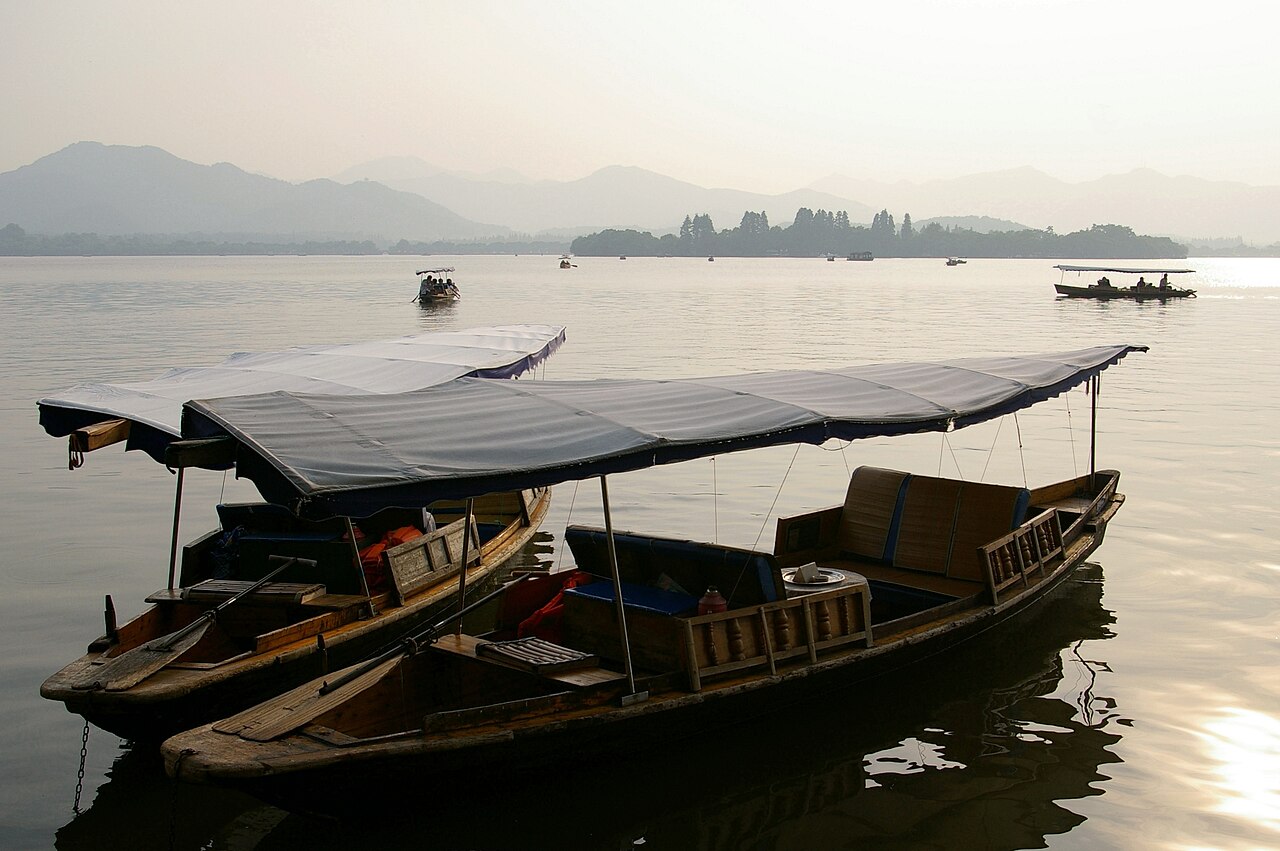
The official 'Ancient Town Water Tour' uses painted pleasure boats (28 seats), performance boats (35 seats), dragon boats (20 seats) and small fishing boats (4 seats) from a dozen restored old piers. Comfortable, scenic and noticeably more expensive than the ferry.

Boats
Painted boat 28 pax, performance boat 35 pax, dragon boat 20 pax, fishing boat 4 pax
Piers
Twelve restored ancient wharves along the river
Extras
Local snacks on board, Miao and Dong folk singing
Verdict
Do one crossing for the atmosphere; use the CNY 1 ferry for everything else

Taxi & walking

Anywhere in the town centre is about CNY 5 by taxi, though drivers here often quote per person rather than per car — agree the total before you get in. The old town itself is entirely walkable, and walking is how you find the alleys.

Typical fare
CNY 5 within town
Quoting habit
Often per head, not per car — confirm the total first
Old town
Fully walkable; the river, alleys and wharves are all on foot
Self-driving
Not recommended — narrow, steep, winding mountain roads that turn slick in the rain

Shopping

What to carry home from Zhenyuan

Qingjiu liquor

Guizhou has brewed good liquor for centuries, and Zhenyuan's Qingjiu is aged in natural limestone caves cut into the karst. Crystal clear, heavily aromatic, sweet on the finish. Buy it in the two pedestrian streets — Xinglong Street and Shuncheng Street.
Tianyin tribute tea

Grown in Tianyin village in Duping township and sent to the imperial court for over 1,200 years. The altitude, sunshine hours and soil do the work; the picking and hand-processing do the rest. A genuinely local buy, not a tourist-shop invention.
Chennian daocai

A preserved mustard-green pickle first made by the Daoist priests of the Qinglong Cave temple, hence the name. Dark brown, strangely fragrant, and superb steamed with pork — it is the one Zhenyuan speciality that travels well in a suitcase.

Ginger candy

You will smell it before you see it: sweet, sharp, drifting down the old street. Shopkeepers stretch the candy on an iron hook by the door, pulling and looping it in a performance that is half theatre, half sale. Buy it still warm — crisp outside, chewy within.

Practical

The things that actually matter

Zhenyuan is small, cheap and low-risk. The two things that will genuinely improve your trip are waterproofing and the willingness to haggle. Both apply all year round.

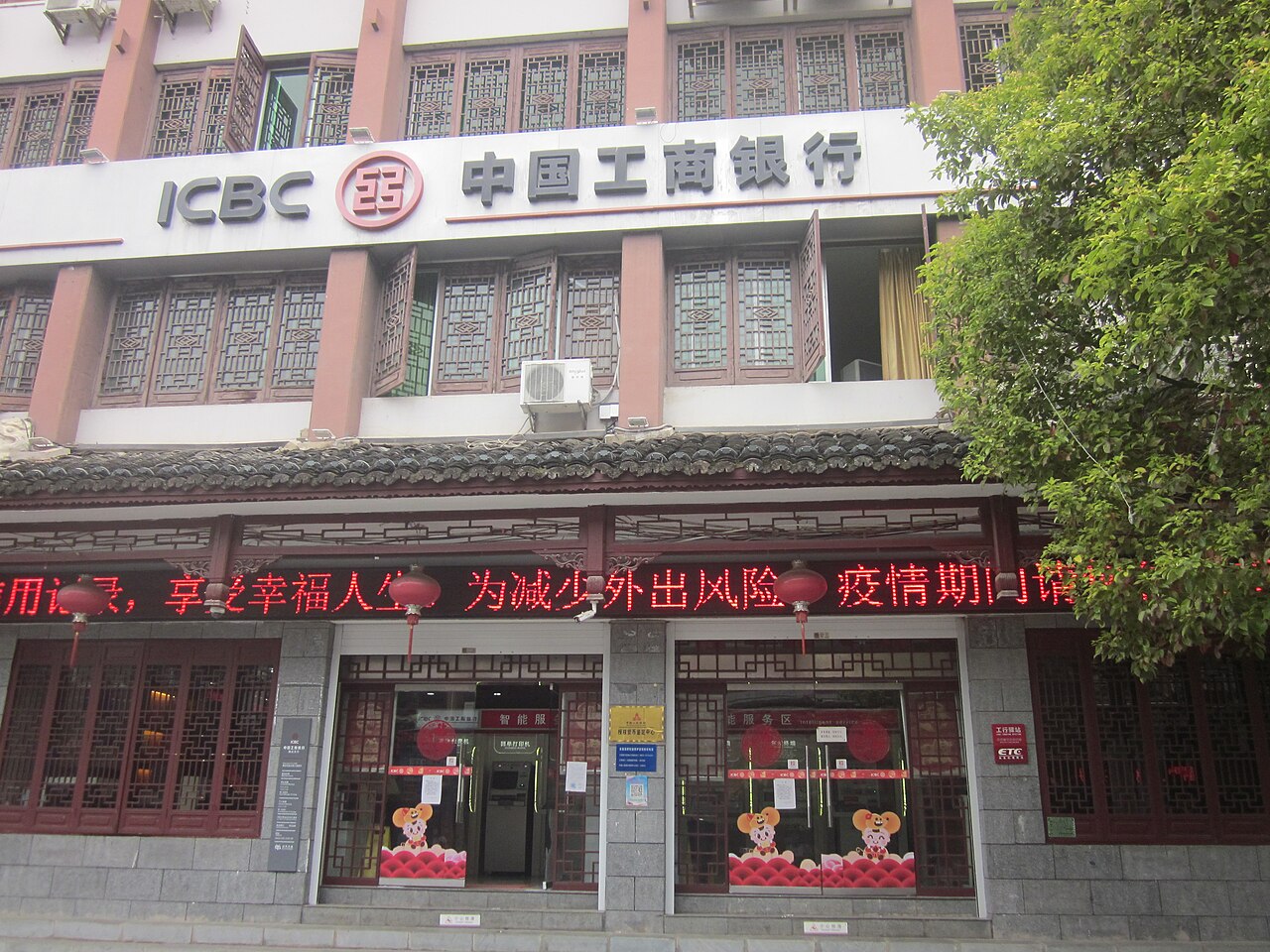
MoneyRural Credit Cooperative and Postal Savings Bank branches are the easiest to find — bring a card for one of those. ICBC is here too, and bigger hotels and restaurants take UnionPay. Bank of China is not in town; you would have to go to Kaili. CNY 600–1,000 in cash comfortably covers two people for one or two days.
Weather & packingSubtropical and wet, average 16.4°C, mild in winter and cool in summer. But 80% of the rain falls from May to October, so bring an umbrella plus rain covers for your pack and camera. Nights are cold even in summer — pack a warm layer. Non-slip walking or hiking shoes are essential; the lanes are wet stone.
Cash vs cardCash still rules for small guesthouses, ferries, snacks and taxis. Cards work at larger hotels and restaurants only. Agree on taxi fares before departure, and expect to bargain on accommodation in peak season.
Opening hoursQinglong Cave 8:00–16:00; Tiexi 8:00–17:30; Gaoguo River 9:00–16:00; Tianhou Palace and the old town sights generally 8:00–17:30 in summer and 8:00–17:00 in winter. Shining Screen Mountain is free before 8am — go early for the panorama anyway.
Altitude & healthZhenyuan sits low, so altitude is a non-issue. Bring diarrhea medicine and motion-sickness pills — Guizhou's mountain roads are a rollercoaster, and buses hurtle around blind bends. Eat and drink cautiously on your first day if your stomach is sensitive.
Emergency numbersZhenyuan County People's Hospital, Wuyang town, 0855-5723518. Zhenyuan County Post Office, Xinglong Street, Wuyang town, 0855-5722261. Peace Village (Heping Cun) reception, 0854-3610516.
Watch out forZhenyuan is one of the few places in Qiandongnan with a real tourist trap, and it is religious. At Qinglong Cave, smiling men with an air of cultivation will invite you to burn incense and pray — at a steep price. If you are not religious, refuse firmly; if you are, remember they are not of your faith. Also: bargain for everything — food, lodging, transport, souvenirs.

Background

Why a garrison town on a river became a cultural maze

A town built for war, made rich by

Zhenyuan exists because of its position. Sitting where the Wu River cuts through the mountains, it was the choke point on the road between the central plains and Yunnan — the old saying goes that to hold Yunnan and Chu you must hold Zhenyuan, and to reach Guizhou you must first guard Zhenyuan. That earned it the nickname Key to Yunnan and Chu, Gateway to Eastern Guizhou. At its peak the garrison here numbered 28,000 soldiers, and the Four Officials Hall still honours Bai Qi, Wang Jian, Lian Po and Li Mu, the four generals of ancient China. From the Ming and Qing dynasties it grew into the political, military and commercial centre of eastern Guizhou, with eight great guild halls and twelve opera towers, some of which survive. Later it became the birthplace of China's heavy industry: the Qingxi Ironworks, a joint-stock venture set up under Li Hongzhang and Zhang Zhidong's Self-Strengthening Movement, predates the Hanyang works by three years, and its No. 1 steel ingot is still kept in town.

Three religions in one wall of roc

The Qinglong Cave complex is the clearest expression of Zhenyuan's character: a Buddhist cave where the Daoist immortal Zhang Sanfeng is honoured, a Confucian hall that gives its best room to Laozi, and a Daoist shrine whose first chamber belongs to Guanyin. Nobody here insists on a single doctrine. About 40 percent of the population belongs to one of 22 ethnic minorities — Miao, Dong and Tujia among them — which is why the food, the festivals and the villages around town feel so distinct. Look for the Dushu Dragon Boat Festival on the 25th to 27th of the fifth lunar month, the Liuyueliu Eating New Festival on the sixth day of the sixth month with its bullfighting and horse racing, and the Tujia Suona Festival on the eighth day of the eighth month, when a hundred suona horns play at once. The climate is mild all year — an average of 16.4°C, no harsh winter, no scorching summer — but 80 percent of the rain falls between May and October, so pack a rain cover for your bag and camera.

Further reading

What to watch, read and listen to before you go

TV series

River Like Blood (金耳环)

Directed by Wang Jun, written by Hai Yan, 30 episodes, 2007

Filmed on location in Zhenyuan. A family saga that follows a boy into adulthood as he searches for the truth about his family, with the Jian River and the town's riverside streets standing in for his hometown. Watch it and you will recognise the ferries, the old lanes and the evening light on the water before you arrive.

Book

The Scholars (儒林外史)

Wu Jingzi, Qing dynasty, 56 chapters

Three chapters of this classic satirical novel are set in Zhenyuan, describing the manoeuvres of General Tang and the Miao leader Bie Zhuangyan against the backdrop of local life. The book is also the source of the famous story of Fan Jin passing the imperial exam. Read those three chapters and the town's strategic weight suddenly makes sense.

Book

Yu Qiuyu's Journey Through Qiandon

Yu Qiuyu

A rare case of a major Chinese writer devoting a whole set of essays to one region. The photographs are as much the point as the prose, and it is a good primer on the Miao and Dong villages around Zhenyuan before you head out to Baijing or Gaoguo River.

Music

Beautiful Zhenyuan (美丽镇远)

A Youduo

A Miao singer's love letter to the town — sweet, unhurried, and the perfect soundtrack for the drive in. If you are self-driving, queue it up as you come down the mountain road. For something rawer, try Tian Ge Shen Yun by Qiandongnan's indigenous singers, a collection of Miao and Dong songs recorded in the villages.

The questions visitors ask us most about Zhenyuan, answered plainly.

Frequently asked questions

Prices and practical details are reviewed every month by our Beijing team and updated the day a rule changes.

Is Zhenyuan worth visiting, and how many days do I need?

Yes — one full day covers the old town, Qinglong Cave, the ancient lanes and the night lights; two days lets you add a Wuyang River boat trip or Shi Ping Shan. Three days opens up Gaoguo River rafting and the Baojing Dong village. Most travellers find 1–2 days is the sweet spot.

How do I get to Zhenyuan from Guiyang or Kaili?

Trains are the easiest and safest way — Guiyang to Zhenyuan takes roughly 3–4 hours, and Kaili is the main transfer hub for onward connections to Xijiang and Libo. Driving is possible but the mountain roads are narrow, steep and slick after rain, so unless you are confident on switchbacks, take the train. From Zhenyuan station, a taxi into the old town costs about 5 yuan.

What is the best time of year to visit Zhenyuan?

April to October is best, though 80% of the annual rain falls between May and October, so pack a rain cover for your bag and camera. Summer is cool enough that you rarely need air conditioning. Winter is cold and the town's heating is basic, but you get far fewer crowds and more genuine local encounters. The Dragon Boat Festival in early summer is the liveliest time to be here.

What should I eat in Zhenyuan?

Sour fish hotpot is the dish — the sour broth comes in white (fermented rice water), red (wild tomato) and chili versions, and locals say skipping sour food for three days makes you stumble. Also try the three-flavour stinky tofu on Xinglong Street, rice tofu, Huaxi beef noodles, and the peanut-filled zongzi sold for 1 yuan on the old lanes.

Are there any tourist traps in Zhenyuan?

Yes — the main one is at Qinglong Cave, where well-dressed men approach visitors to offer incense and blessings at inflated prices. If you are not religious, decline firmly; if you are, remember they are not your fellow worshippers. Otherwise Zhenyuan is refreshingly free of scams, but always agree on taxi fares before you get in, since some drivers charge per person rather than per trip.

Do I need cash in Zhenyuan, and can I use cards?

Bring 600–1,000 yuan in cash for a couple's two-day stay — that covers everything comfortably. Rural credit unions and postal savings banks are easy to find, and larger hotels and restaurants take UnionPay cards, but there is no Bank of China in town (the nearest is in Kaili). Bargaining is expected on everything from rooms to souvenirs, so keep small notes handy.

Related reading

Related reading

Visas Do I Need a Visa for China? Requirements, Costs and How to Apply China's entry rules changed more in the last three years than in the previous twenty. Here is exactly who needs a visa, what it costs, how long it takes and which passports now walk straight through. 9 min read Visas China's 240-Hour Visa-Free Transit: Who Qualifies and How It Works Ten days in China with no visa application, no fee and no fingerprints — if you hold the right passport and leave for a third country. Here is the rulebook, port by port. 8 min read Money Paying in China: Alipay, WeChat Pay, Cards and Cash Roughly nine in ten urban payments in China now run through a phone. Set up two apps before you fly, carry a modest cash float, and you will never be stuck at a till. 8 min read Transport China's High-Speed Rail: How to Book, What It Costs, How Fast It Goes The fastest way to cross China is also the most pleasant. Here is how to book a ticket with a foreign passport, what the three classes actually give you, and how to survive a Chinese station at rush hour. 9 min read Planning Best Time to Visit China: Month by Month, Region by Region China is the size of Europe, so 'the best month' depends on where you stand. Here is the month-by-month answer for the north, the Yangtze valley, the south and the plateau. 8 min read Planning What to Pack for China: The Complete 2026 Checklist Twenty thousand steps a day, three climate zones and a phone that has to do everything. This is the list we give our own travellers, minus the things they never used. 7 min read Food Chinese Food Culture: Eight Cuisines, One Table There is no such thing as Chinese food. There is Cantonese, Sichuan, Hunan, Jiangsu, Zhejiang, Fujian, Anhui and Shandong — and knowing which one you are eating changes everything. 8 min read Traditions Chinese Tea Culture: Six Classes, One Pot, Two Fingers Tea in China is not a beverage category, it is a social technology: it fills silences, seals deals and sets the pace of a meal. Here is how to sit down in one and not look lost. 7 min read Traditions Chinese Festivals: The Calendar, the Dates and the Crowds Lunar dates mean the calendar moves every year — and two of the festivals move several hundred million people at once. Plan around them or plan into them, but never by accident. 8 min read Etiquette Chinese Etiquette: What Matters, What Does Not, and Why Most etiquette advice for China is either obvious or wrong. These are the dozen behaviours that actually change how you are treated, and the reasoning behind each. 7 min read

Tell us your dates.
We'll do the rest.

Free itinerary design, a revised plan within one working day, and nothing charged until you approve the final version.

  • Qinglong Cave (60 yuan, 8:00–16:00) is a cluster of temples clinging to a cliff above the river — not a cave at all, and the highlight of any visit.
  • Ferry boats across the Wuyang River cost 1 yuan per person and take 1–2 minutes — the cheapest night-time river cruise you will ever take.
  • A standard double room runs 80–150 yuan; riverside rooms cost more and peak-season prices spike hard, so bargain.

No spam. No sales calls. Just a real itinerary from a real person.