The Potala Palace
117 m, 13 storeys, over 1,000 rooms. Tickets are timed and limited — we book them as soon as your permit clears.
Tibet · Tibet Autonomous Region
The Tibet Autonomous Region opens at Lhasa, its capital: the Potala Palace, Jokhang Temple and the road west to Everest Base Camp at 5,200 m. Permits arranged. Private Tibet tours from US$279 a day.
The short version
The place itself
Lhasa is the capital of the Tibet Autonomous Region and, at 3,650 m, the highest city of its size on earth. The Potala rises 117 m above it — thirteen storeys of white and ochre that was the winter palace of the Dalai Lamas and is now a museum you enter on a timed ticket.
The practical reality dominates everything. Foreign visitors need a Tibet Travel Permit issued through a registered agency, and must travel with a licensed guide and vehicle. Independent backpacking is not possible, and that is not a technicality — it is how the region is administered.
What you get for the paperwork is a landscape and a religious culture with no equivalent in China. The Barkhor circuit at dawn, with pilgrims prostrating the full kilometre; Yamdrok Lake the colour of half-set turquoise; and the Friendship Highway running west to Everest Base Camp and the Nepali border.
Pins are plotted from real latitude and longitude on a 5° graticule. This is a schematic orientation diagram, not a political map — no boundaries are drawn.
117 m, 13 storeys, over 1,000 rooms. Tickets are timed and limited — we book them as soon as your permit clears.
The holiest shrine in Tibet, holding the Jowo Rinpoche statue. Walk the 1 km pilgrim circuit at dawn before the shops open.
Sera's monks debate in the courtyard each afternoon, clapping for emphasis — one of the most photogenic hours in Lhasa.
A turquoise sacred lake crossed at 4,790 m, then the Kumbum stupa at Gyantse on the road to Shigatse.
5,200 m, at the end of a two-day drive from Lhasa. You sleep at Rongbuk Monastery and watch the summit before sunrise.
A salt lake at 4,718 m north of Lhasa, with tented camps and the clearest night sky most visitors will ever see.
The Potala Palace, Everest Base Camp and prayer flags over the plateau — entered gradually by rail so the altitude does not hit you all at once.
From US$2,490/per person
View tourFive regions, one journey: imperial north, panda country, the karst rivers of Guilin and the skyline of Shanghai, with Hangzhou's West Lake.
From US$2,580/per person
View tourLhasa Gonggar (LXA) receives domestic flights from Chengdu, Xi'an, Beijing, Kunming and Chongqing, plus the Kathmandu service. Most visitors fly in; the alternative is the rail journey from Xining, which ascends gradually and is far kinder for altitude.
The Qinghai–Tibet Railway reaches Lhasa in about 22 hours from Xining, crossing Tanggula Pass at 5,068 m in daylight. We recommend it to anyone with the time.
Within the region, travel is by private vehicle with your guide. Distances are long and speed limits are strictly enforced — Lhasa to Everest Base Camp is two days.
| Month | Weather | Crowds | Verdict |
|---|---|---|---|
| January | 2°C / -12°C · bitterly cold, clear | Quiet | Avoid |
| February | 5°C / -9°C · bitterly cold, clear | Very busy | Avoid |
| March | 10°C / -3°C · bitterly cold, clear | Moderate | Good |
| April | 15°C / 3°C · bitterly cold, clear | Moderate | Good |
| May | 19°C / 8°C · bitterly cold, clear | Busy | OK |
| June | 22°C / 12°C · clear and mild | Moderate | Best |
| July | 23°C / 14°C · clear and mild | Busy | Best |
| August | 22°C / 13°C · clear and mild | Busy | Best |
| September | 19°C / 9°C · clear and mild | Moderate | Best |
| October | 14°C / 2°C · bitterly cold, clear | Very busy | Good |
| November | 7°C / -6°C · bitterly cold, clear | Quiet | Good |
| December | 2°C / -11°C · bitterly cold, clear | Quiet | Avoid |
Eight days is the standard: two nights in Lhasa to acclimatise, then the loop west through Gyantse, Shigatse and Everest Base Camp, returning to Lhasa. Six days covers Lhasa, Yamdrok and Shigatse without Everest. Add four if you arrive by rail from Xining.
Plan these days properly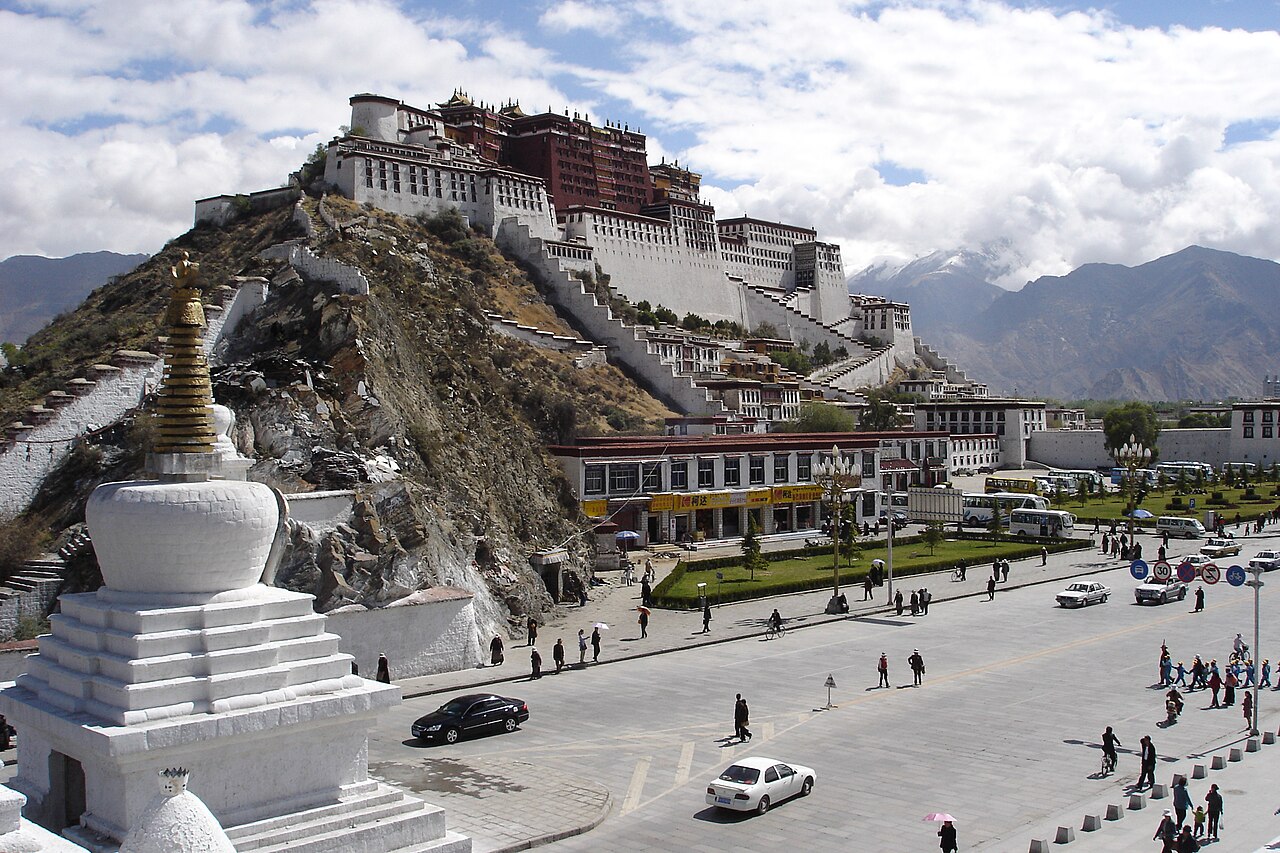
Lhasa, Tibet
National Tour Guide Certificate, English and Tibetan
★★★★★4.9156 reviews
Tsering Dorje was born in a village two hours from Lhasa, entered a monastery at thirteen and left at twenty-two, so he explains Tibetan Buddhism the way practitioners live it: what a full prostration costs, why you always walk clockwise, which chapels close on which days. He is also the most practical guide on the plateau. He carries oxygen, watches your walking pace, and will cut a visit short if your saturation drops.
At 5,200 metres he checked my oxygen, slowed the group down, and never once made me feel like a burden.
Marie L., France
 Visas
Do I Need a Visa for China? Requirements, Costs and How to Apply
China's entry rules changed more in the last three years than in the previous twenty. Here is exactly who needs a visa, what it costs, how long it takes and which passports now walk straight through.
9 min read
Visas
Do I Need a Visa for China? Requirements, Costs and How to Apply
China's entry rules changed more in the last three years than in the previous twenty. Here is exactly who needs a visa, what it costs, how long it takes and which passports now walk straight through.
9 min read
 Planning
What to Pack for China: The Complete 2026 Checklist
Twenty thousand steps a day, three climate zones and a phone that has to do everything. This is the list we give our own travellers, minus the things they never used.
7 min read
Planning
What to Pack for China: The Complete 2026 Checklist
Twenty thousand steps a day, three climate zones and a phone that has to do everything. This is the list we give our own travellers, minus the things they never used.
7 min read
 Traditions
Chinese Festivals: The Calendar, the Dates and the Crowds
Lunar dates mean the calendar moves every year — and two of the festivals move several hundred million people at once. Plan around them or plan into them, but never by accident.
8 min read
Peoples
China's Ethnic Minorities: 55 Groups, and Where to Meet Them
Roughly one in twelve people in China is not Han. Their languages, crafts and festivals are the least visited part of the country, and in several regions the most rewarding.
8 min read
Traditions
Chinese Festivals: The Calendar, the Dates and the Crowds
Lunar dates mean the calendar moves every year — and two of the festivals move several hundred million people at once. Plan around them or plan into them, but never by accident.
8 min read
Peoples
China's Ethnic Minorities: 55 Groups, and Where to Meet Them
Roughly one in twelve people in China is not Han. Their languages, crafts and festivals are the least visited part of the country, and in several regions the most rewarding.
8 min read
 Yunnan
 · 4 tours
Yunnan Province is entered through Kunming, its capital, and it is the most varied province in China — 25 of the country's 56 ethnic groups, snow moun
Yunnan
Yunnan · 4 tours
Yunnan Province is entered through Kunming, its capital, and it is the most varied province in China — 25 of the country's 56 ethnic groups, snow moun
 Sichuan
 · 2 tours
Sichuan Province is entered through Chengdu, its capital, and it holds more variety than any other province in China: giant pandas in the bamboo fores
Qinghai
Qinghai · 2 tours
Qinghai Province sits on the north-eastern edge of the Tibetan Plateau and is reached through its capital, Xining. It offers Qinghai Lake, Kumbum Mona
Sichuan
Sichuan · 2 tours
Sichuan Province is entered through Chengdu, its capital, and it holds more variety than any other province in China: giant pandas in the bamboo fores
Qinghai
Qinghai · 2 tours
Qinghai Province sits on the north-eastern edge of the Tibetan Plateau and is reached through its capital, Xining. It offers Qinghai Lake, Kumbum Mona
Lhasa, at 3,650 m in the south of the Tibet Autonomous Region. Lhasa holds the Potala Palace and the Jokhang Temple, and every itinerary begins here — both because the airport and railway terminate in the city and because you need two nights at altitude before travelling higher.
Yes. Foreign travellers require a Tibet Travel Permit issued through a registered agency, and must be accompanied by a licensed guide for the whole trip. We handle the paperwork as part of the booking and it is normally issued about 15 days before departure. You cannot apply independently.
Most people feel it for the first 24 hours — headache, breathlessness on stairs, poor sleep. Lhasa is 3,650 m. The fix is two quiet nights doing nothing strenuous, no alcohol and plenty of water. We carry oxygen in the vehicle and build every itinerary around gradual ascent.
Eight days for Lhasa, Yamdrok, Shigatse and Everest Base Camp with proper acclimatisation. Six days covers Lhasa and the lake road without Everest. Twelve or more if you travel overland from Chengdu or take the train from Xining.
May to October. September and October have the clearest skies and the best chance of a clean Everest view. July and August are warmest but bring afternoon rain and cloud. Winter is cold but workable, with far fewer visitors.
Free itinerary design, a revised plan within one working day, and nothing charged until you approve the final version.