A crossing point, and a name that means guarding it
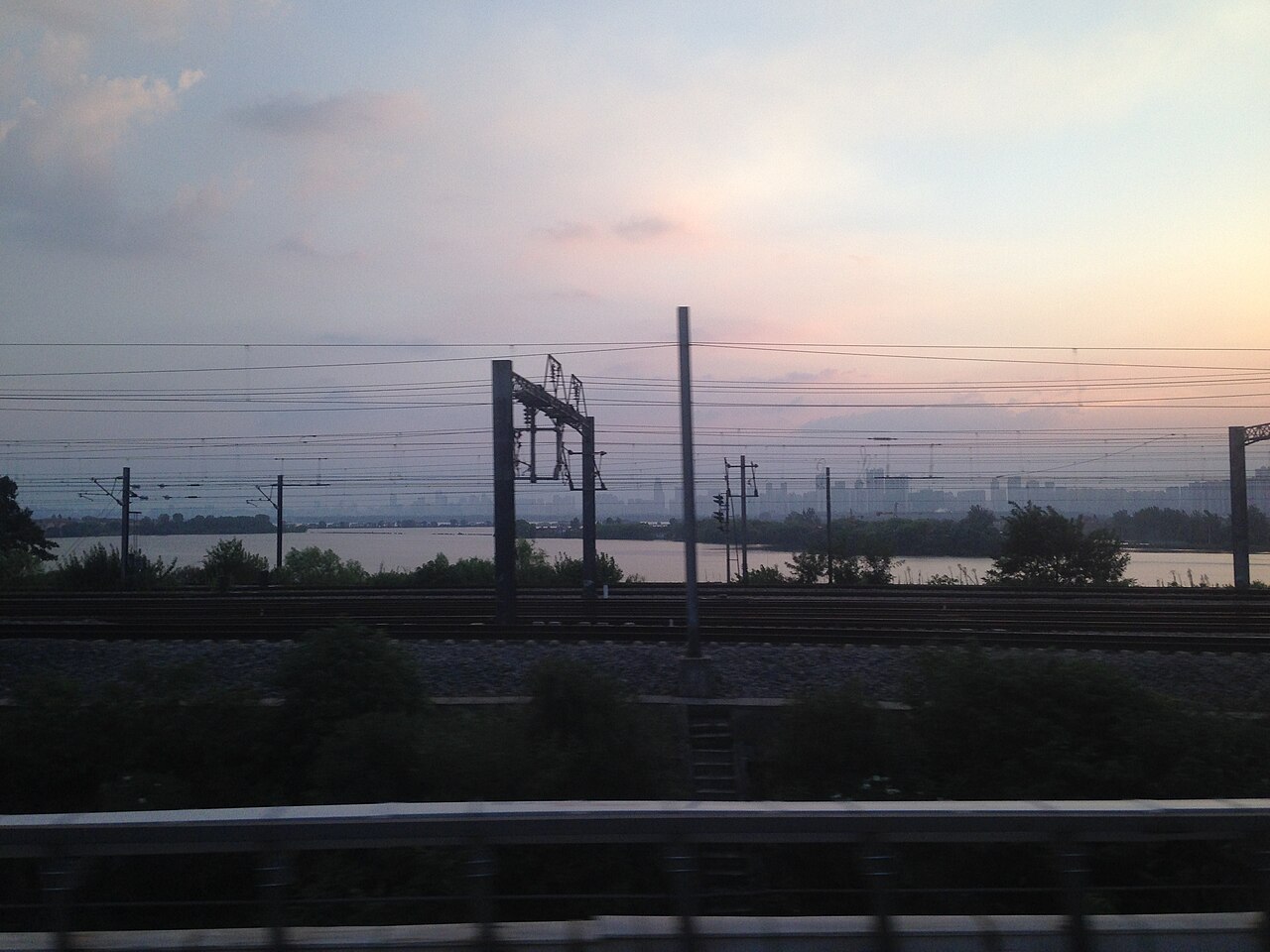
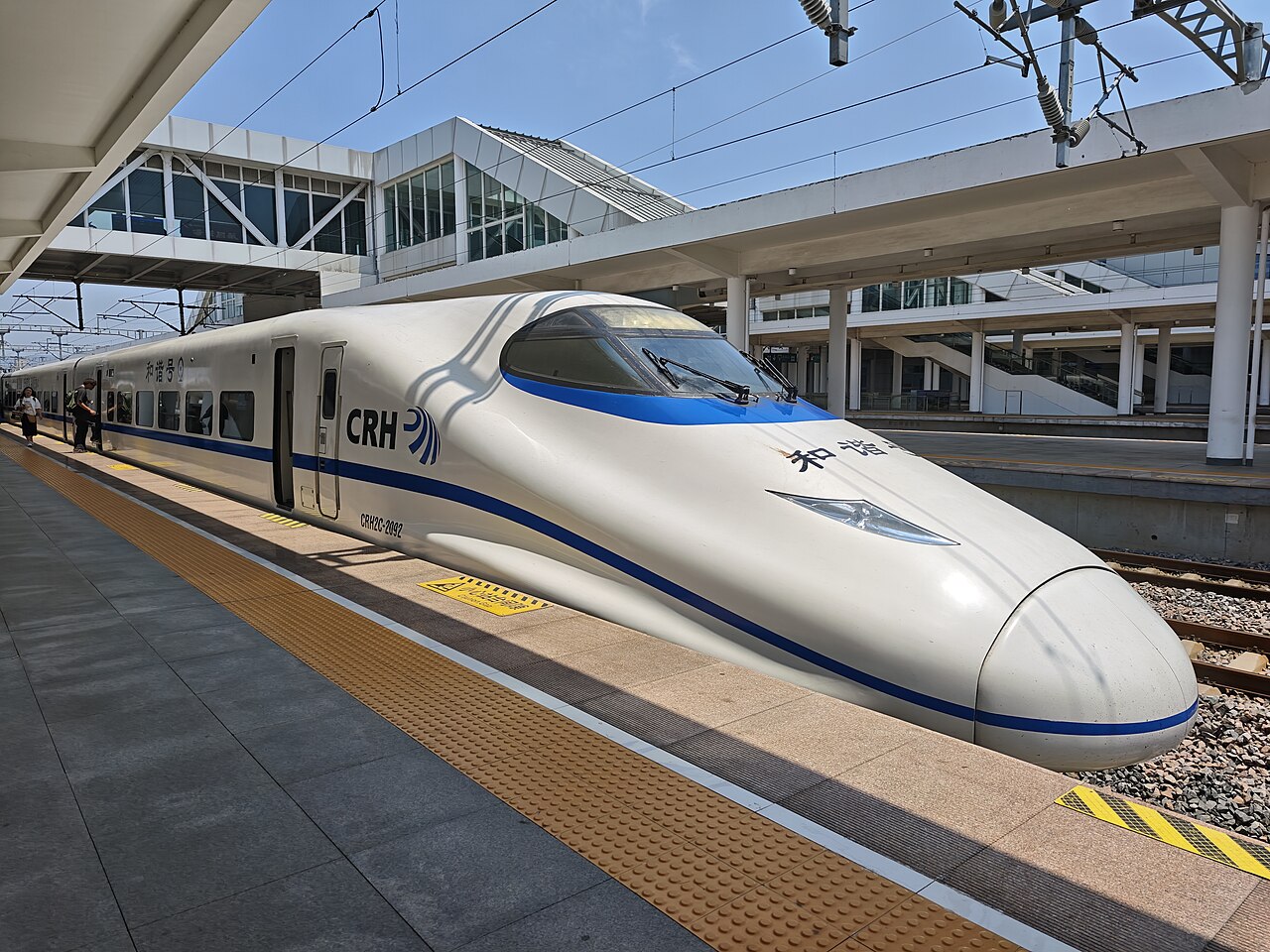
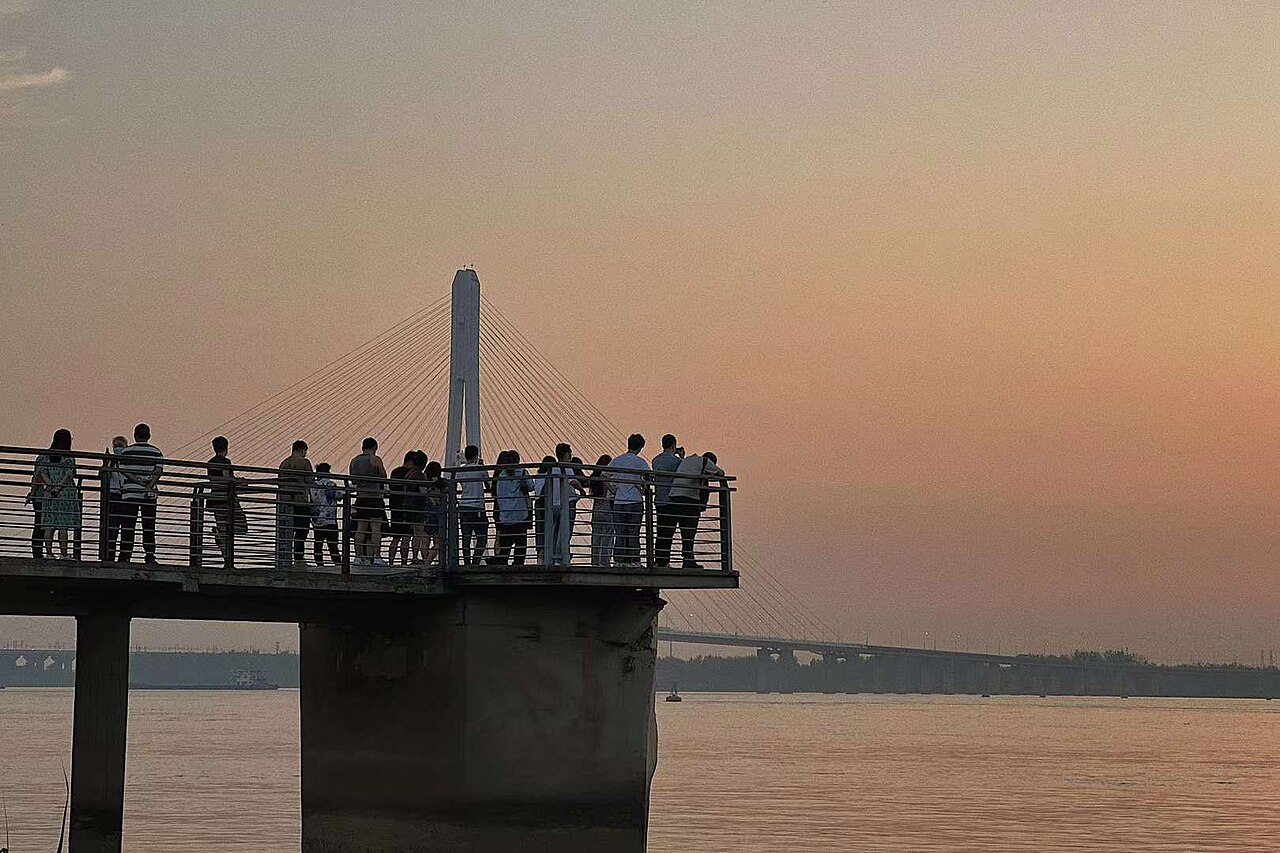
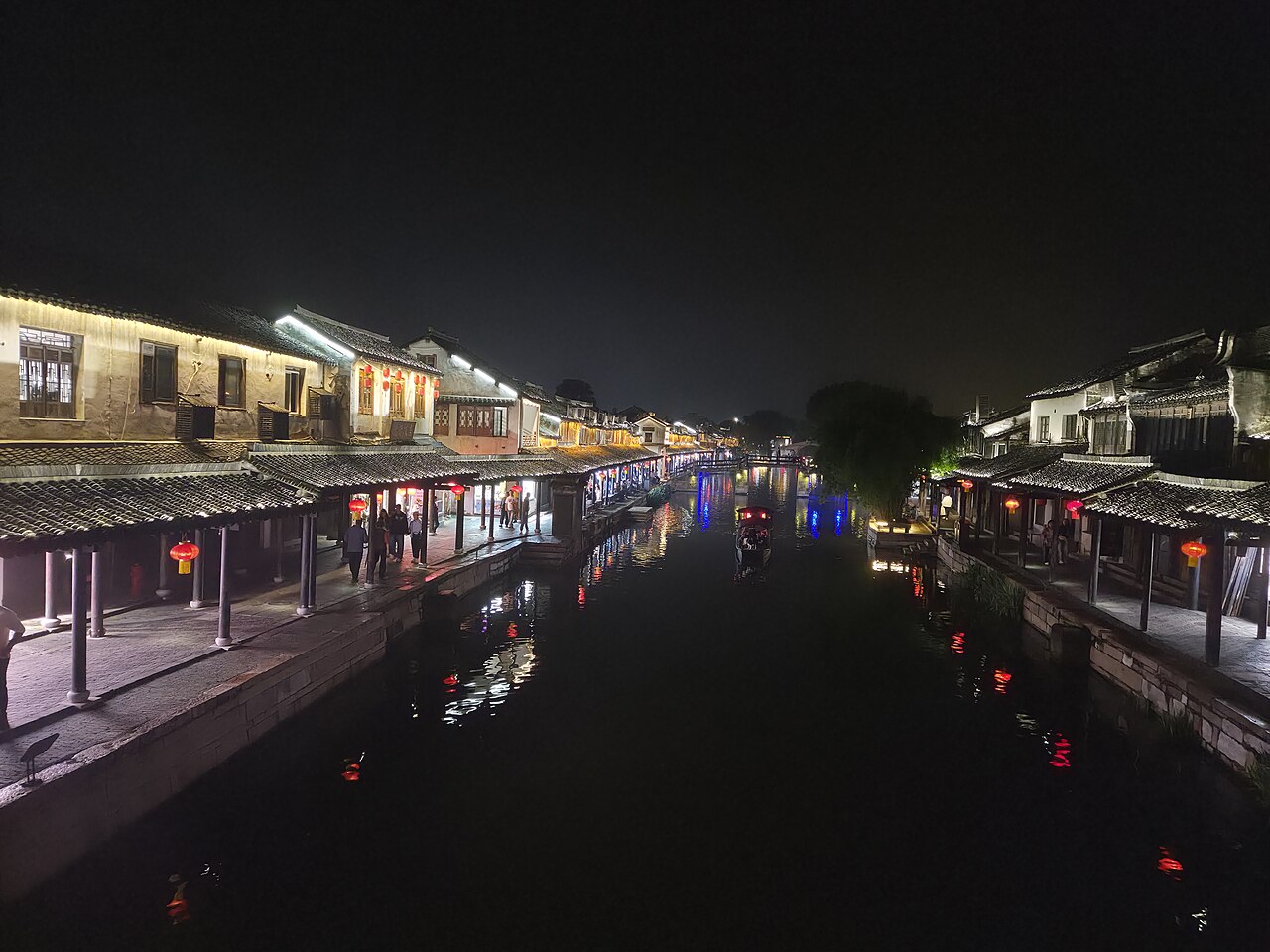
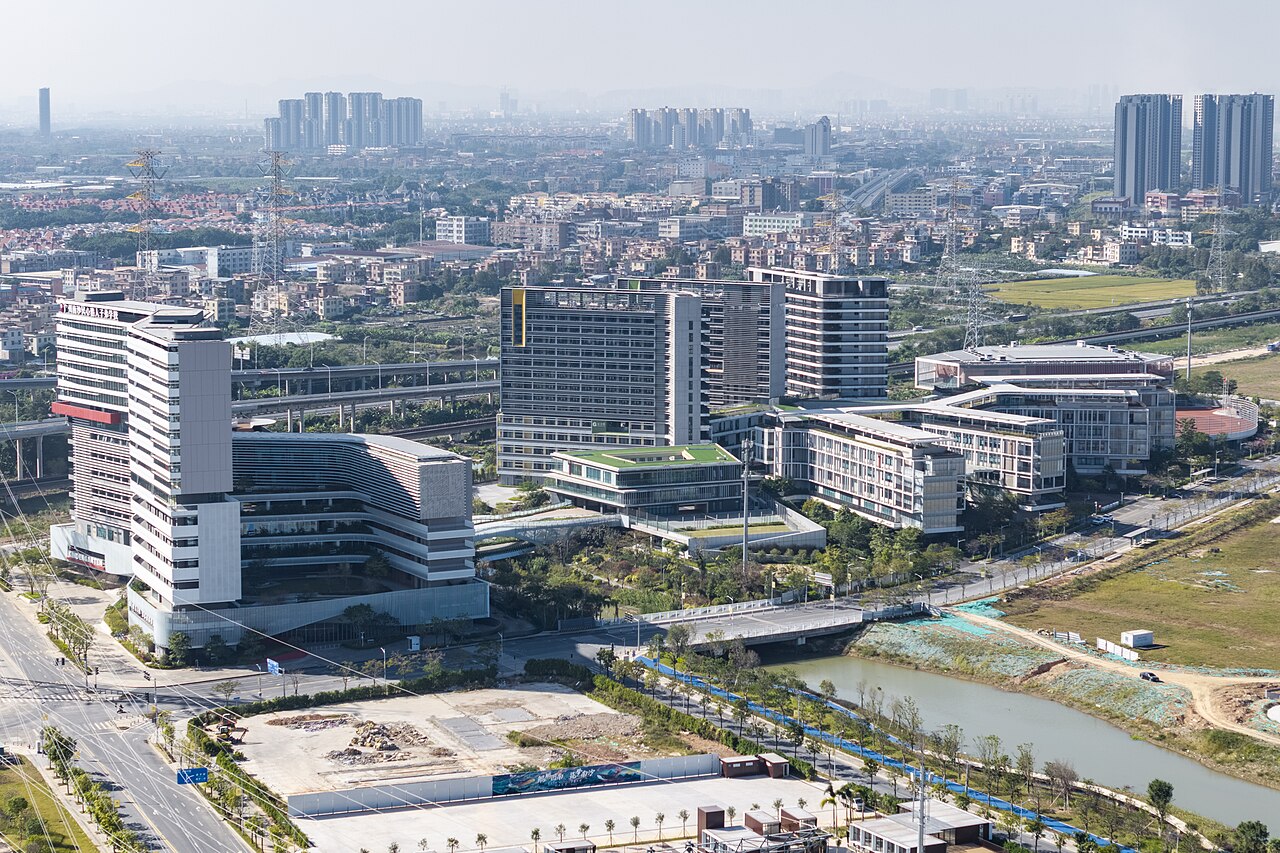
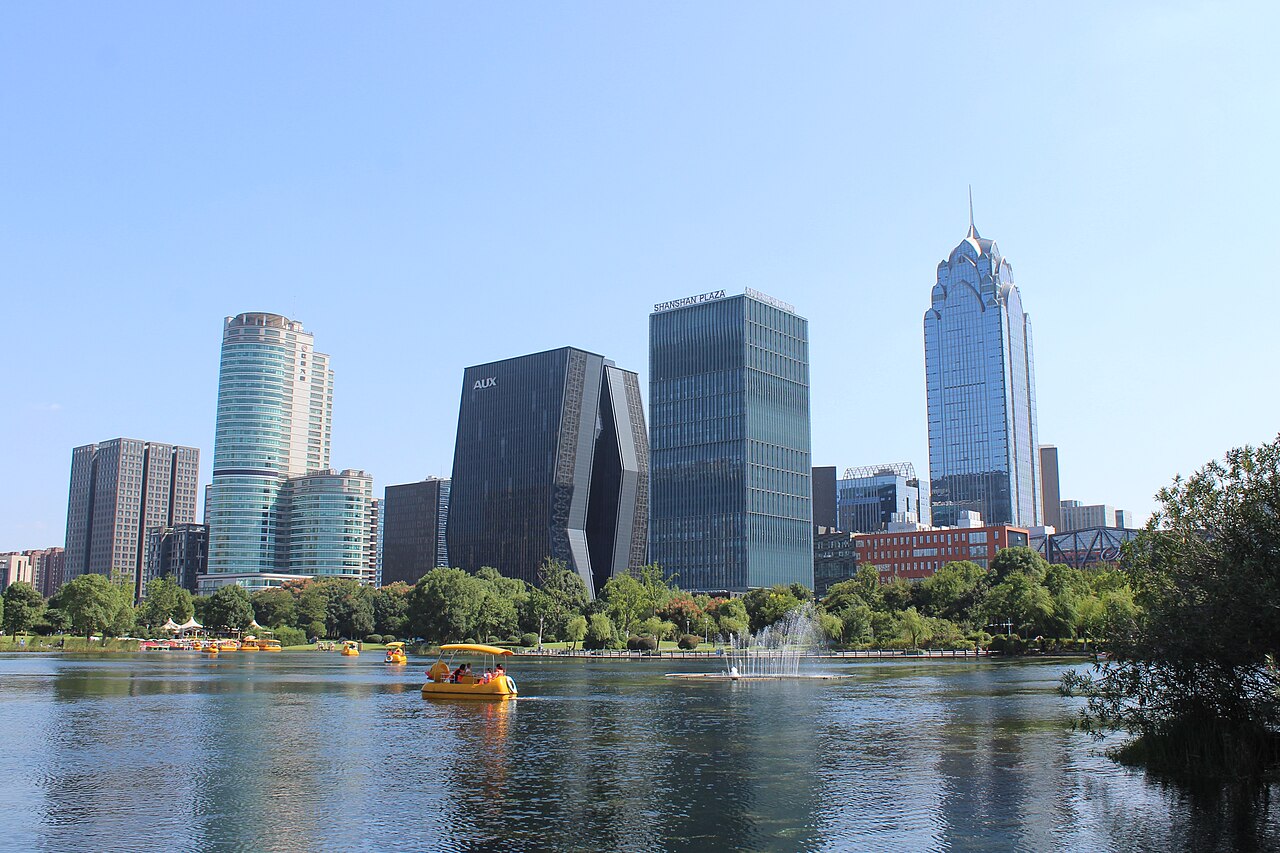
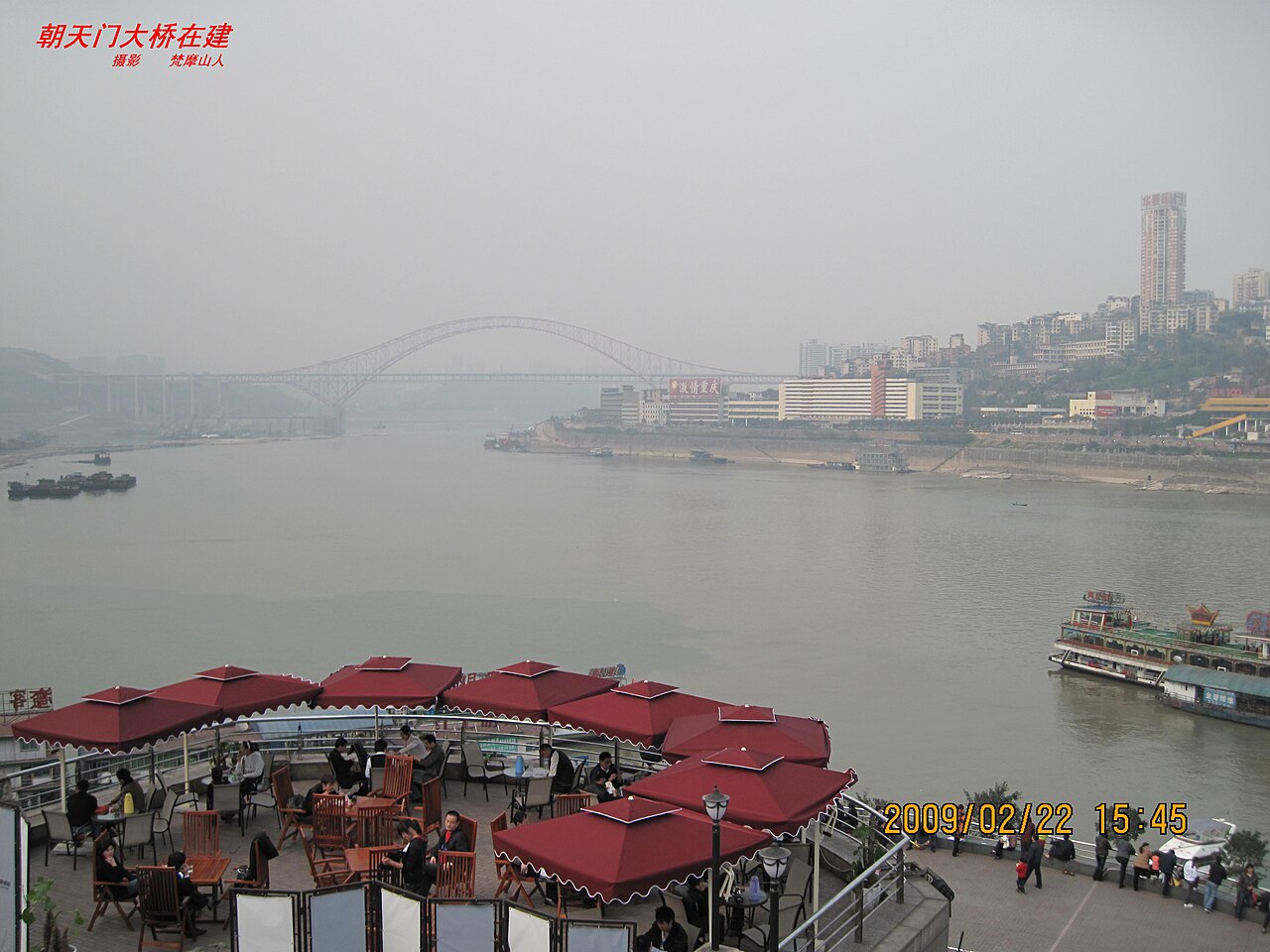
Zhenjiang sits in the south-centre of Jiangsu on the south bank of the lower Yangtze, at the point where the Yangtze and the Grand Canal — the golden cross of Chinese waterways — meet, with the Beijing–Shanghai railway running through it. The city covers 3,843 square kilometres and has around 2.69 million people across three districts and three counties. The climate is subtropical monsoon, close to that of Nanjing and Suzhou: four distinct seasons, a good deal of rain, hot summers, cold damp winters, and spring and autumn the comfortable times to be outside.
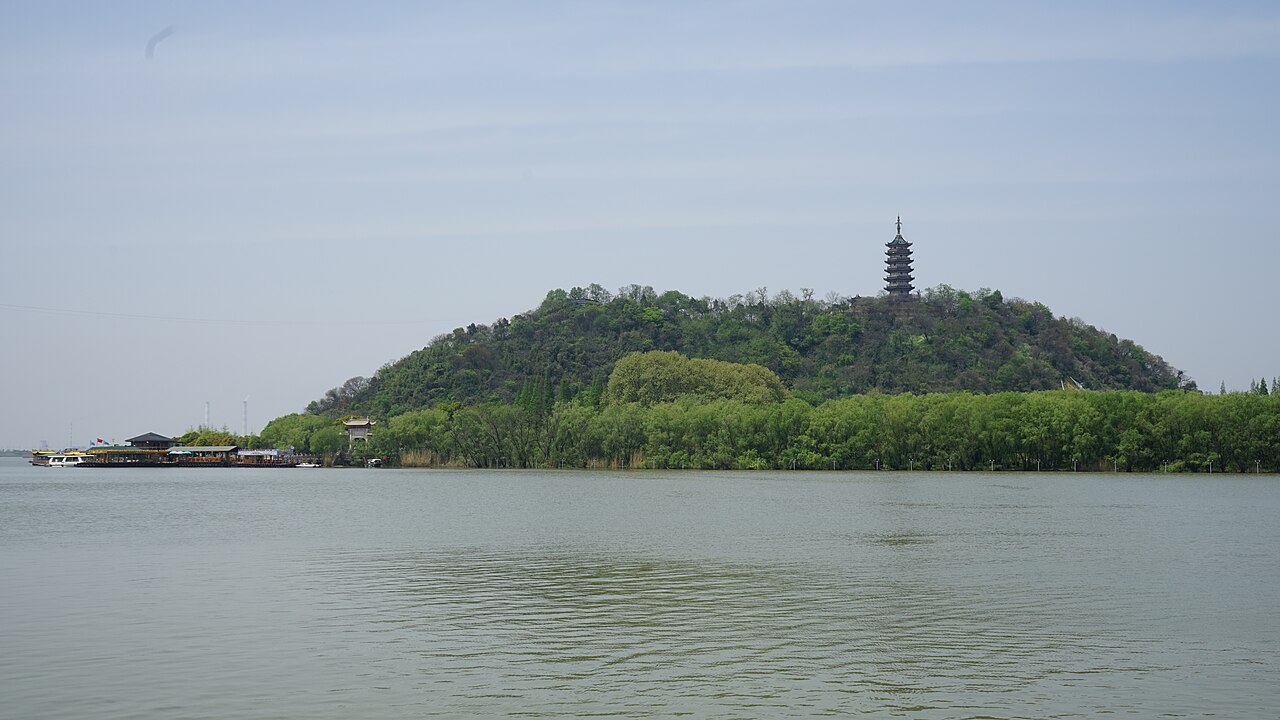
Two accounts of the name survive, and both are worth knowing. One says the low ground along the north bank of the river flooded so often that a lucky word was bolted onto the river's name as a charm against the water. The other says the Song rulers looked at the place — hills behind it, the Yangtze in front, the position formidably strong — and named it for the fact that it guards the crossing. Either way, the name has been in use for more than 800 years, and the sequence of older names behind it tells you what the place was: Yi, Zhufang, Dantu, Jingkou, Runzhou. Each change marks a period when it was a political centre and a prize.
Three thousand years of being fought over and written about
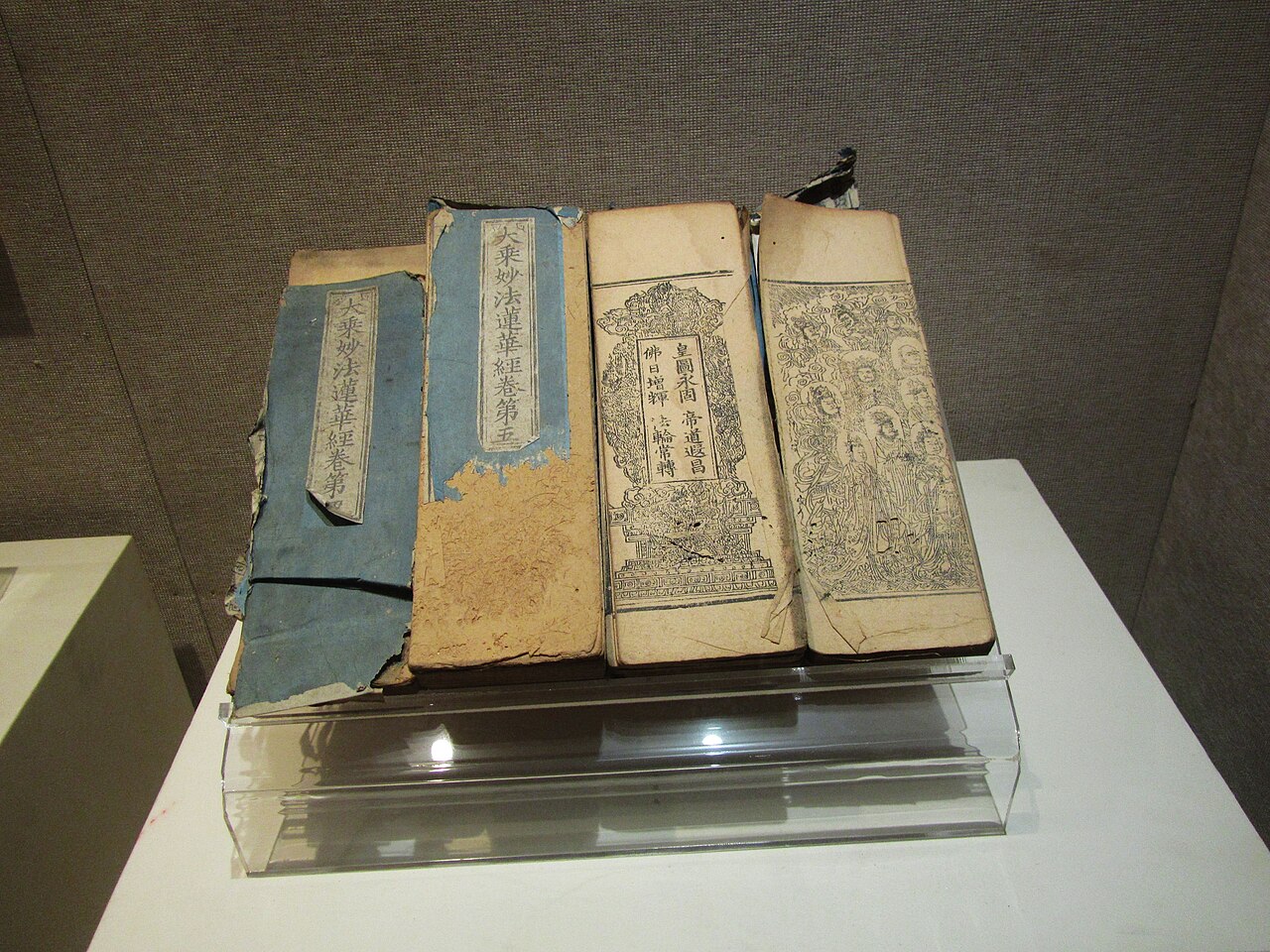
Zhenjiang is one of the important birthplaces of Wu culture, with more than 3,000 years of recorded history, and it is a designated national historical and cultural city. It is the origin of the legend of Sweet Dew Temple and Liu Bei's marriage, and of the white snake flooding Jinshan. It is also where three of the great books of Chinese letters were written or compiled: The Literary Mind and the Carving of Dragons, the Selections of Refined Literature, and the Brush Talks from Dream Brook.
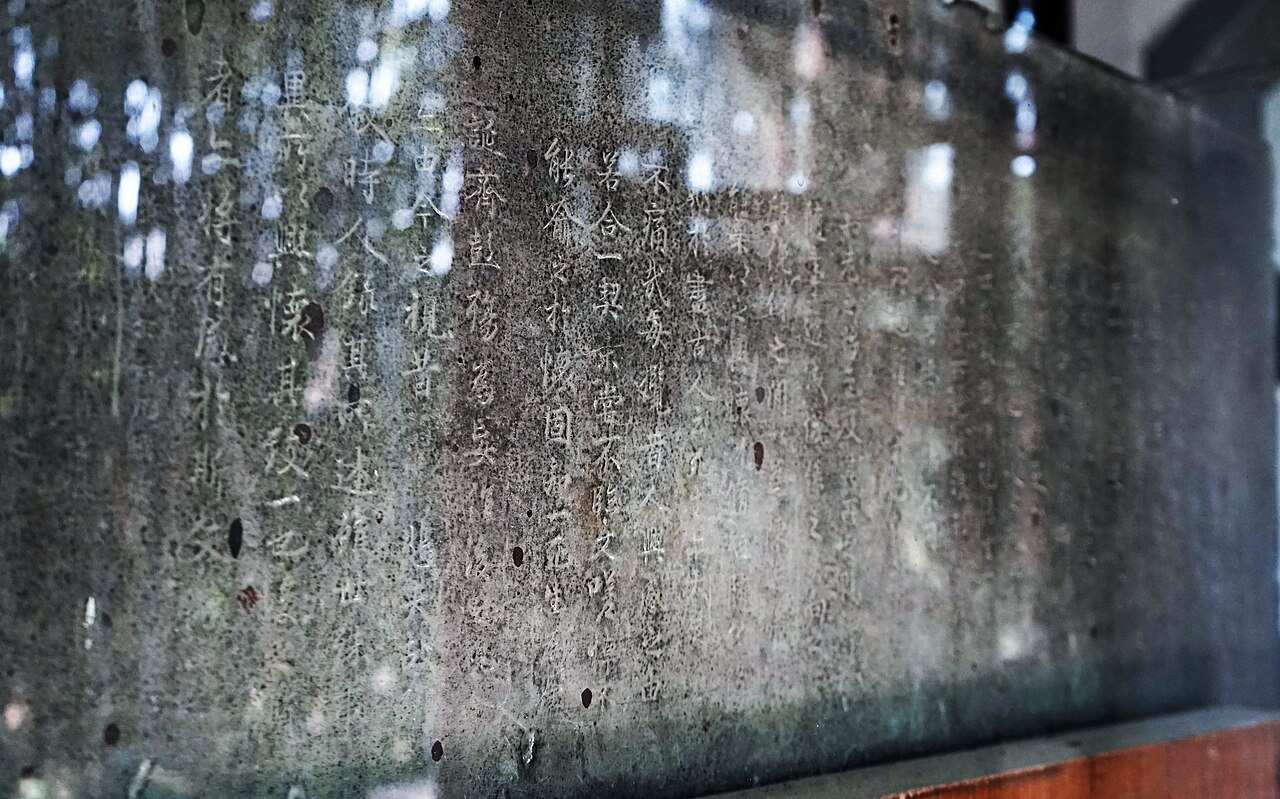
And it is where the poems came from. Where can I look for the lost heartland — the whole sweep of the land is Beigu Tower. If friends and kin in Luoyang should ask of me — a piece of ice-clear heart in a jade pot. I urge the lord of heaven to bestir himself and send down talent regardless of one mould. Every one of those lines was written here, and they are still recited.
The city is also a member of the Nanjing metropolitan circle, alongside Nanjing itself, Yangzhou, Huai'an, Ma'anshan, Wuhu and Chuzhou — seven cities in one commuting and economic region, which is why getting between them is so easy.
The literature of the ferry, and the festival calendar
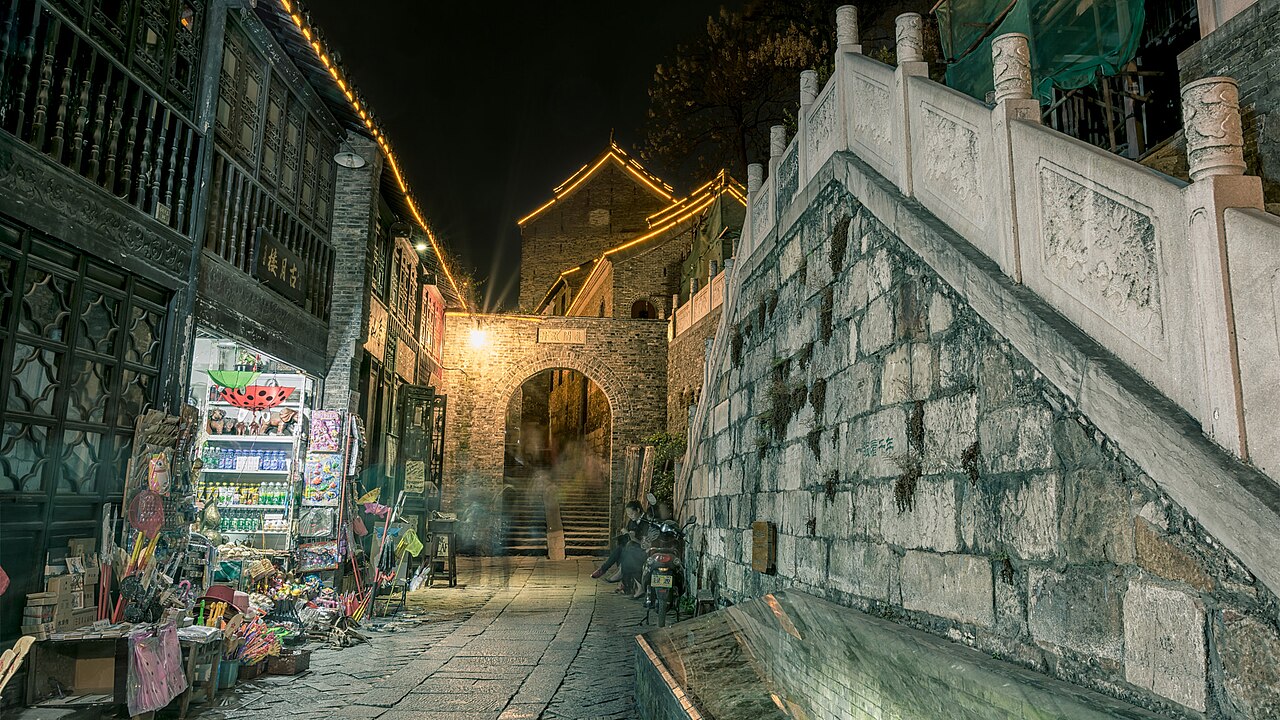
The four lines everybody knows were written by Zhang Hu, spending a night in a lodging house above the ferry: at the crossing by Jinling, a small hill tower; a traveller's night holds sorrow enough. The tide falls in the moonlit, slanting river; two or three sparks of light — that is Guazhou. The crossing had been there since the Tang and Song, and the street above it grew into the densest collection of monuments in the city.
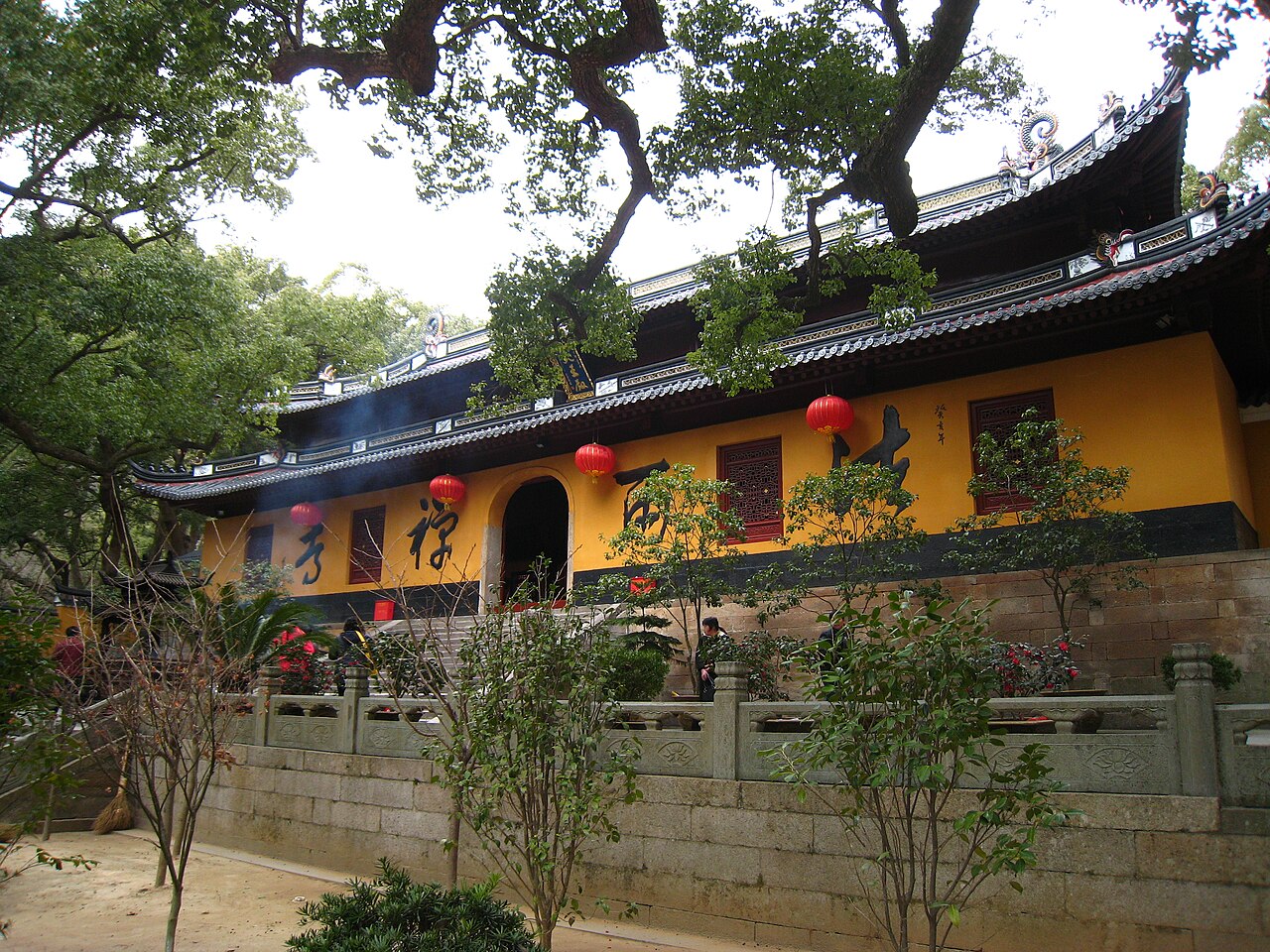
Two things about the religious calendar are worth planning around. Maoshan's incense season runs from the 24th day of the twelfth lunar month to the 18th of the third — three months during which hundreds of thousands of pilgrims come up the mountain, the incense never stops and the bells never stop. The season has its own programme: closing the fast, opening the mountain, seeing the new year in with the three Mao brothers, going up in devotion, coming down to ask for blessing, and closing the mountain.
At the other end of the year, the bell-ringing at Jinshan on New Year's Eve goes back to the Tang, and the sound has not stopped for more than a thousand years. Upwards of ten thousand people come: night visiting in the park, folk performances, a fair, and then queuing in turn to swing the wooden beam against the bell, pray for peace, and eat at the Foyinju vegetarian house afterwards.