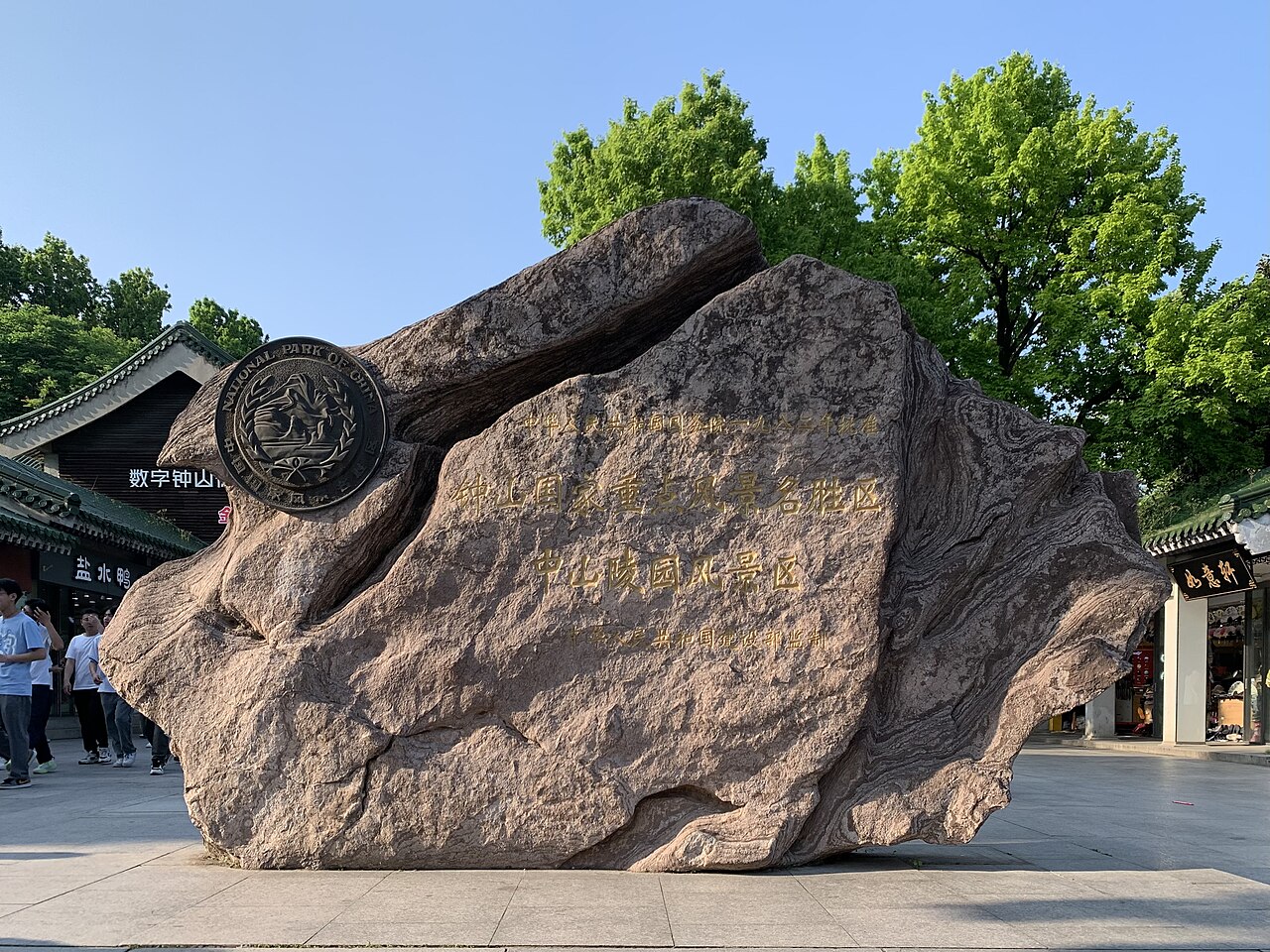
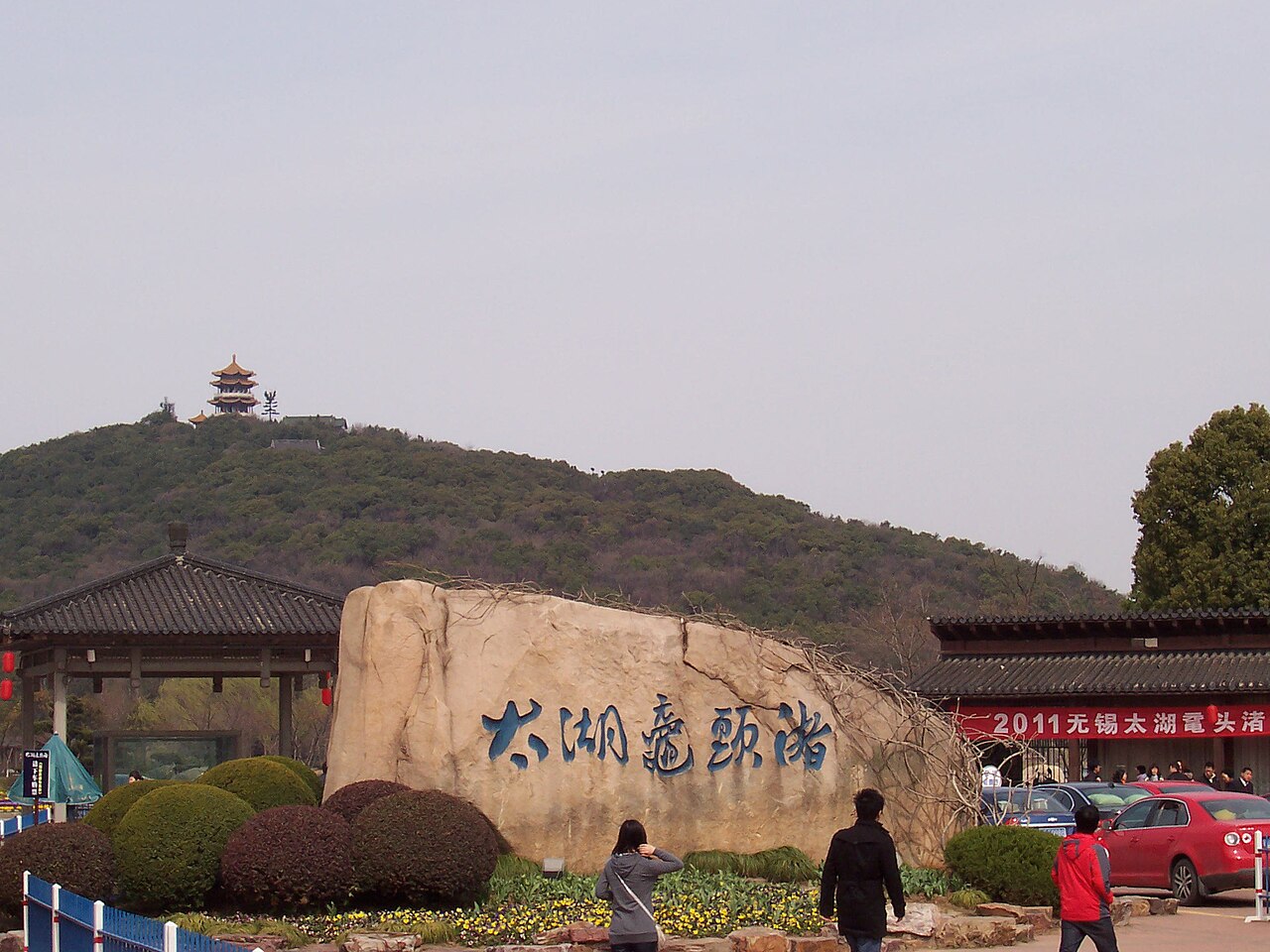
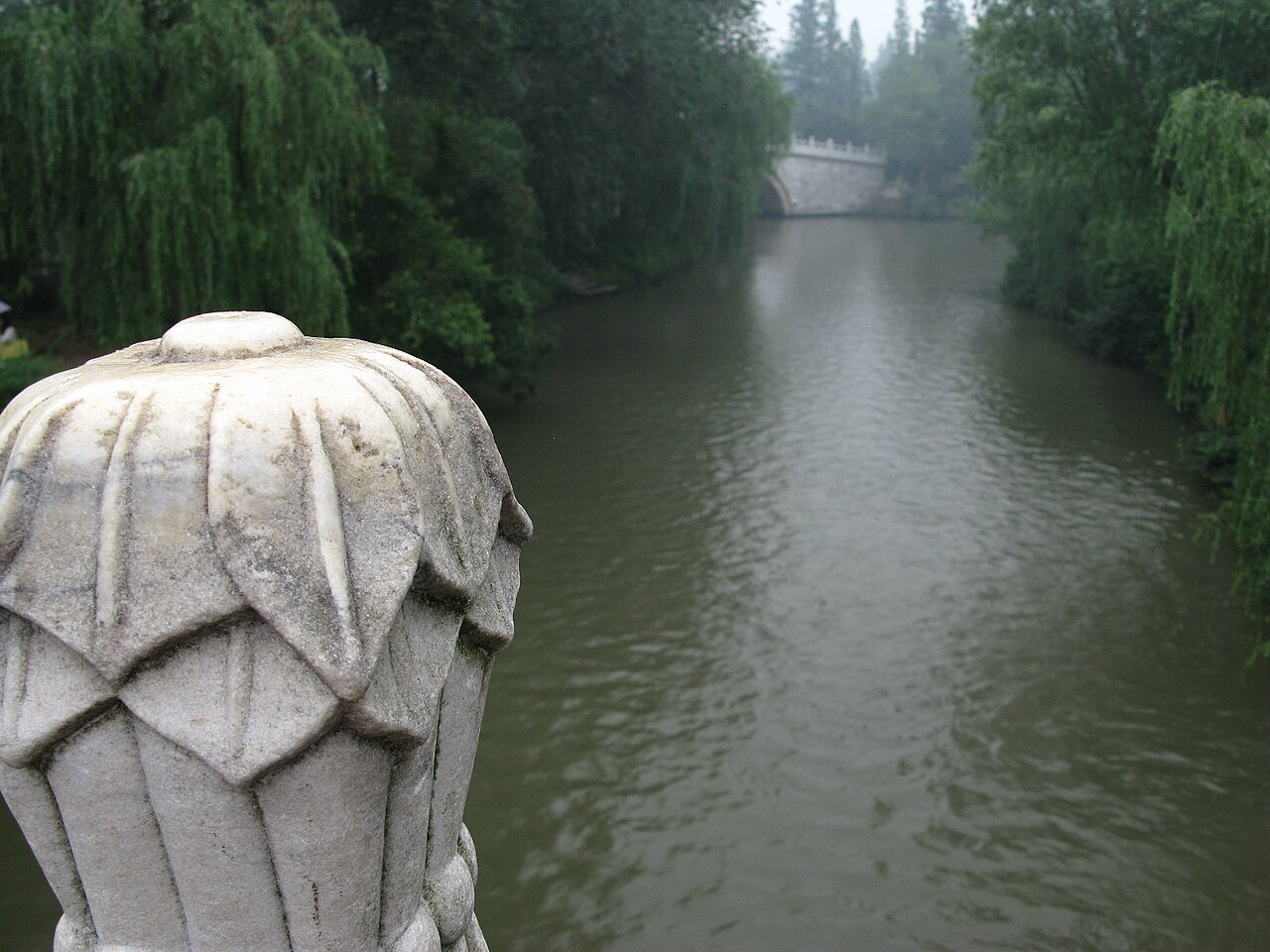
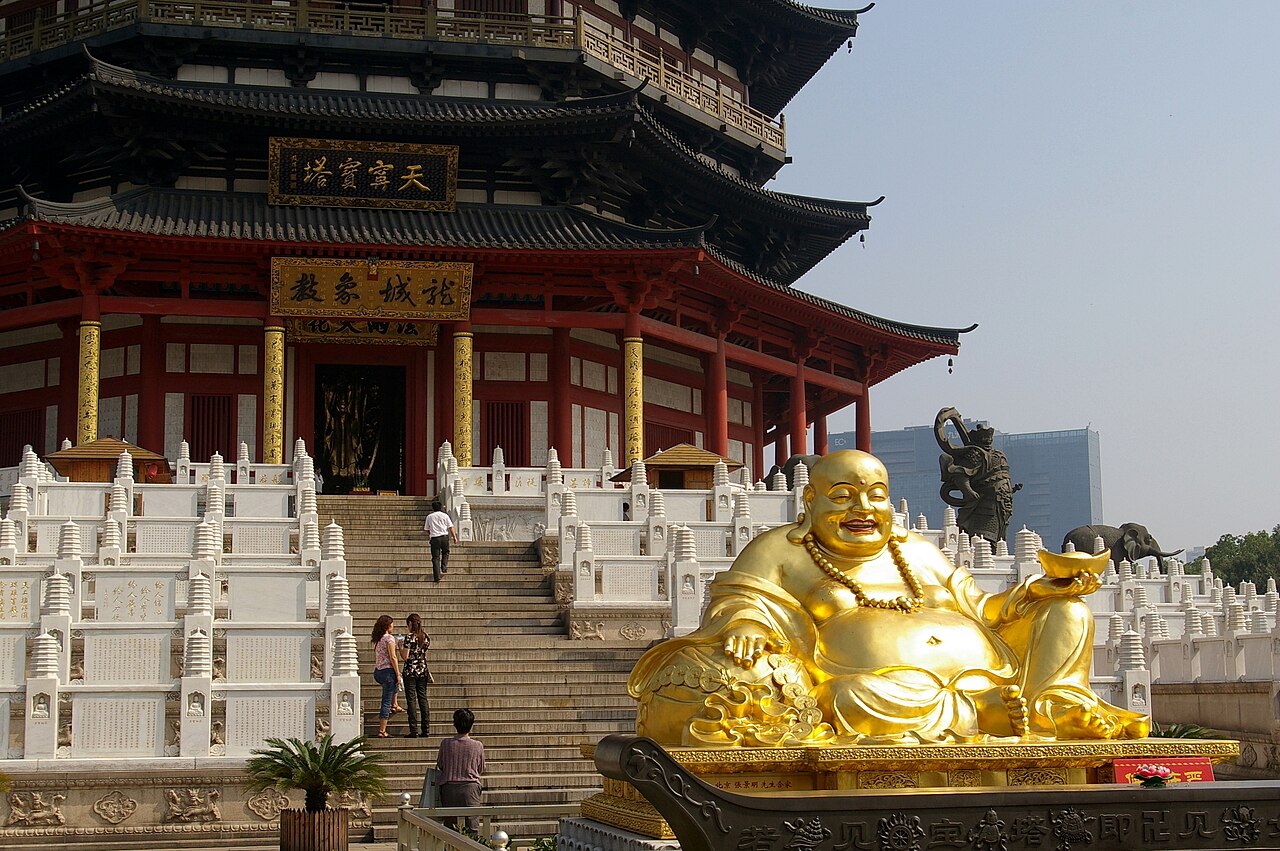
Zhenjiang is a city of hills and one ferry landing, and almost everything China remembers about it happened on those four pieces of ground. The abbot Fahai dug gold out of Jinshan and became the villain of the White Snake legend; Sun Quan stage-managed his sister's marriage on Beigu Hill and lost both the bride and the army; Xin Qiji stood on the same hill and asked who would still vouch for an old man's appetite; and the poet Zhang Hu spent a night in a lodging house above the ferry and wrote four lines that every schoolchild learns.
It sits where the Grand Canal meets the Yangtze, on the south bank, and that is why it was fought over for three thousand years. The name is either a prayer or a threat, depending on which story you believe: either it was added to the river's name as a lucky charm against flooding, or the Song court named it for the place that guards the river crossing. Either way it has been in use for over 800 years, and the older names — Yi, Zhufang, Dantu, Jingkou, Runzhou — are the ones you meet in poetry.
What you see now is a compact, unhurried city with a lot of literature attached to it and not much ceremony. The temples are working temples, the museum is free and closed on Mondays, the riverfront on Changjiang Road is where the city walks in the evening, and the old ferry street has been given over to restaurants and inns without being turned into a film set.
It is also a very cheap city to eat in. Breakfast is a bowl of pot-lid noodles, a plate of crystal pork, shredded ginger and a splash of the local vinegar, and the whole thing costs less than a ticket to anywhere.