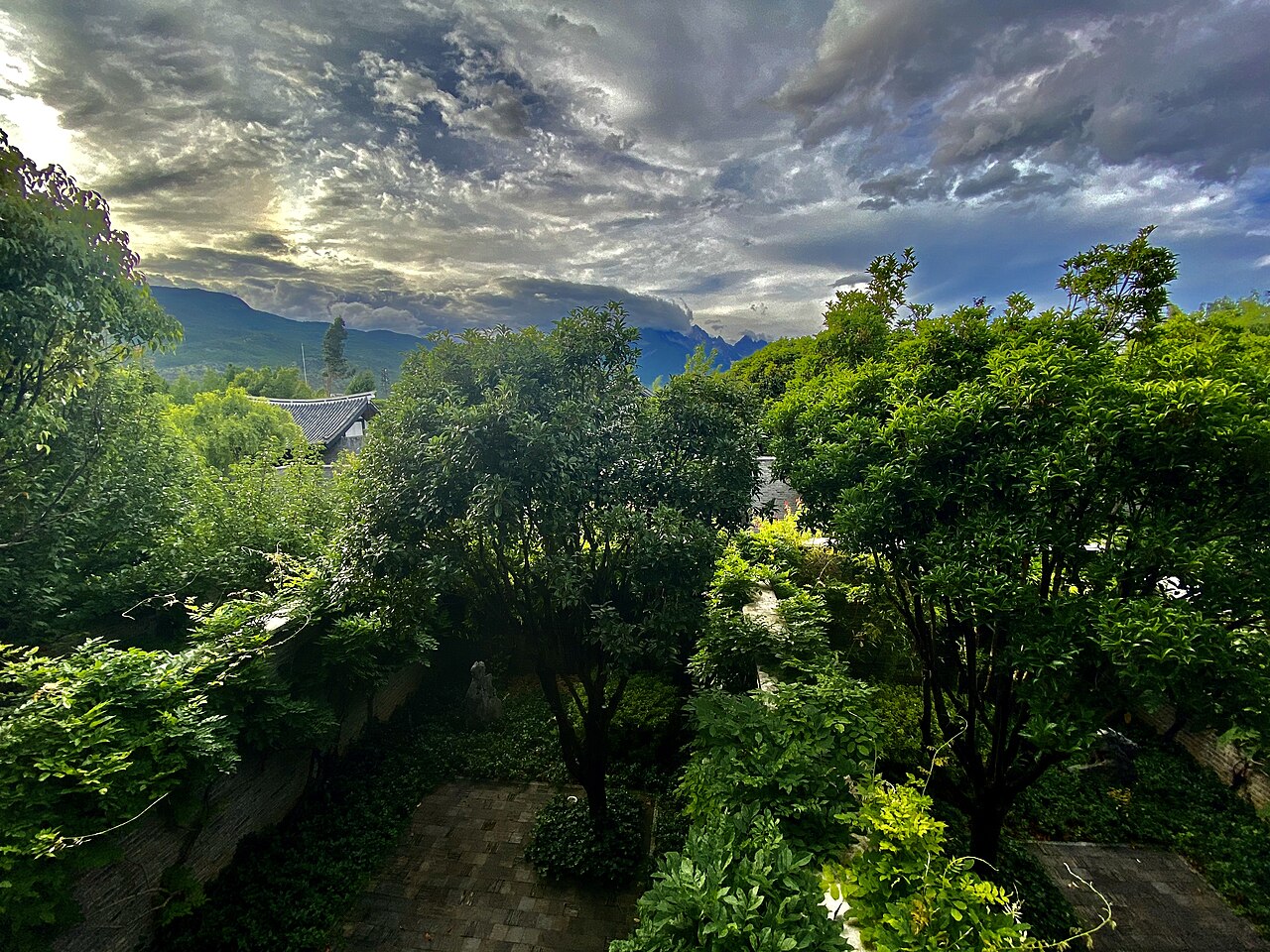
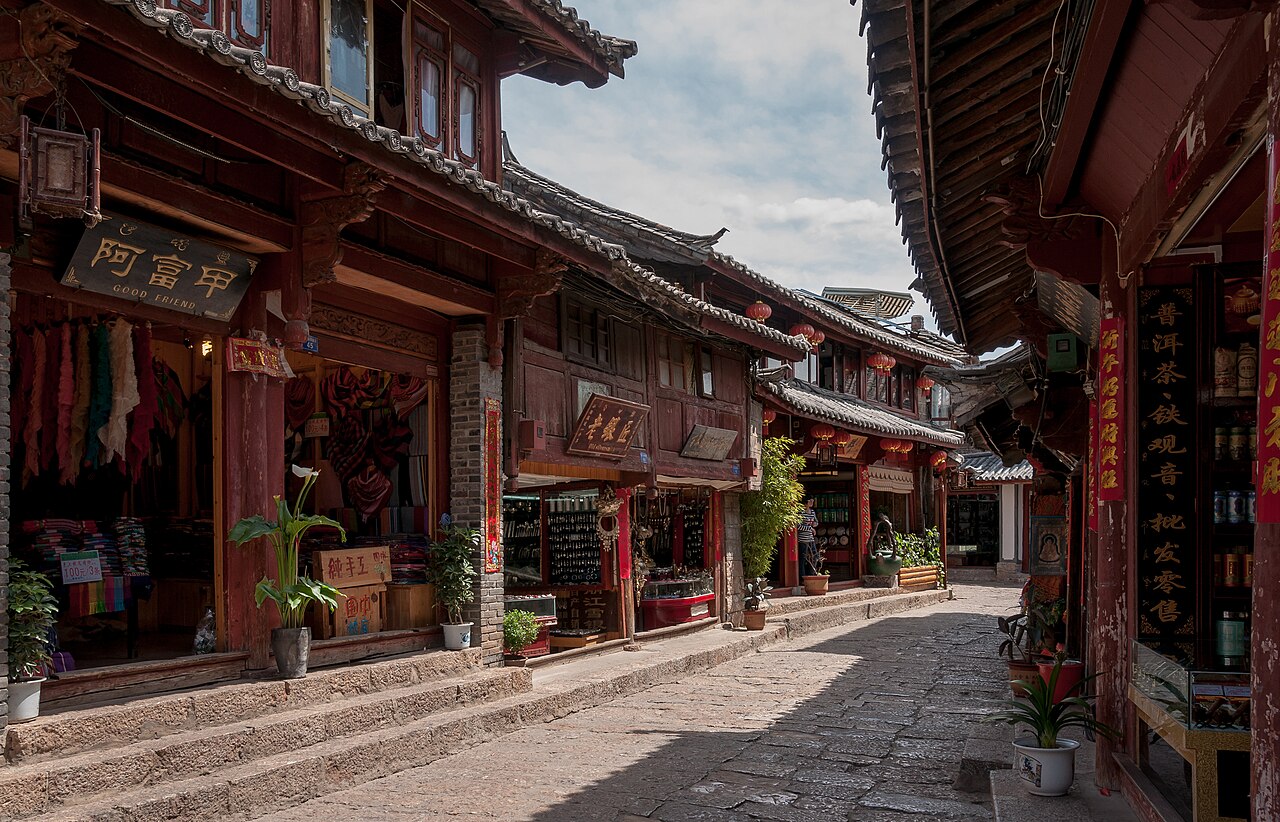
Dali is the gentler, less frantic cousin of Lijiang — a walled town of stone lanes, willow-lined canals and white Bai houses set between a great mountain and a great lake. The Cangshan range rises to 4,000 m behind it, Erhai Lake spreads for 250 km² in front, and between the two the old town sits at 1,900 m, mild enough to grow flowers all year.
The Chinese phrase for Dali is 'wind, flowers, snow, moon': the wind that howls through Xiaguan, the flowers of Shangguan, the snow that lingers on Cangshan through summer, and the moon reflected in Erhai. It is a romantic shorthand, but it also describes the real geography — this is a place shaped by its mountain and its water.
What has made Dali famous more recently is its people. Since the 1990s it has drawn writers, artists and drop-outs from China's cities, who came to slow down and stayed. They run the guesthouses, cafés and stalls along Renmin Road, and they give the town a lived-in, slightly bohemian feel that Lijiang lost years ago.
Beyond the old town, Bai culture is the main event: the tie-dye of Zhoucheng, the grand courtyard houses of Xizhou, the three-course 'three teas' ceremony, and a lakeside life that moves at the pace of the fishing boats. Come for the scenery; stay for the way of life.