Xilamuren grassland
90 km north of Hohhot, with ger camps, horse riding and a sunset that lasts an hour. The classic Inner Mongolia overnight.
Inner Mongolia · Inner Mongolia Autonomous Region
The Inner Mongolia Autonomous Region starts at Hohhot, its capital: Xilamuren grassland, the Kubuqi dunes, Dazhao Monastery and a Naadam festival every summer. Private Inner Mongolia tours from US$219 a day.
The short version
The place itself
Inner Mongolia is 2,400 km long and most of it is grass. The region stretches from the birch forests of the north-east to the Gobi in the west, and of its 24 million people roughly four-fifths are Han Chinese. The Mongolian culture that gives the place its name survives on the steppe itself, in the ger camps north of Hohhot.
Hohhot means the Blue City, and as a capital it is efficient rather than beautiful: wide roads, a Soviet-era grid, excellent lamb. What it offers is immediate access — Xilamuren grassland is 90 km north, and within two hours of leaving the airport you can be watching a herder bring horses in at dusk.
Timing is the whole game here. The grass is green only from July to early September, and the Naadam festivals of wrestling, horse racing and archery cluster in that window. Come in May or October and the steppe is brown, cold and largely closed.
Pins are plotted from real latitude and longitude on a 5° graticule. This is a schematic orientation diagram, not a political map — no boundaries are drawn.
90 km north of Hohhot, with ger camps, horse riding and a sunset that lasts an hour. The classic Inner Mongolia overnight.
A 1579 Tibetan Buddhist temple in Hohhot with a silver stupa and a 3 m bronze Buddha — the reason the city was founded here.
Mongolian wrestling, long-distance horse racing and archery, held across the grasslands through July and August.
Further north than Xilamuren, with fewer tour buses and families who will put you on a horse without a handler.
Dunes two hours west of Baotou, with camel treks and a railway running across the sand.
At Ejin Horo south of Baotou — a ceremonial shrine rather than a tomb, since the burial site was never disclosed.
Walk the restored battlements of Mutianyu, then camp overnight on a wild, unrestored stretch of the wall at Jinshanling.
From US$890/per person
View tourFive regions, one journey: imperial north, panda country, the karst rivers of Guilin and the skyline of Shanghai, with Hangzhou's West Lake.
From US$2,580/per person
View tourHohhot Baita International (HET) takes domestic services from Beijing, Shanghai, Xi'an and Guangzhou, plus regional flights to Ulaanbaatar. Most international visitors connect through Beijing.
High-speed rail from Beijing North takes about 3 hours, which makes Hohhot a genuine long-weekend trip from the capital.
Beyond Hohhot the distances are enormous. The grassland, the desert and the Gobi all require a private vehicle with a driver-guide; we plan these as loops rather than out-and-back runs.
| Month | Weather | Crowds | Verdict |
|---|---|---|---|
| January | 4°C / -4°C · dry, cold | Quiet | Avoid |
| February | 6°C / -1°C · dry, cold | Very busy | Avoid |
| March | 14°C / 5°C · dry, cold | Moderate | Good |
| April | 21°C / 12°C · clear and mild | Moderate | Best |
| May | 27°C / 18°C · clear and mild | Busy | Best |
| June | 31°C / 23°C · hot, humid | Moderate | OK |
| July | 32°C / 25°C · hot, humid | Busy | OK |
| August | 30°C / 24°C · hot, humid | Busy | OK |
| September | 26°C / 19°C · clear and mild | Moderate | Best |
| October | 20°C / 12°C · clear and mild | Very busy | Best |
| November | 12°C / 4°C · dry, cold | Quiet | Good |
| December | 5°C / -2°C · dry, cold | Quiet | Good |
Three days minimum: one in Hohhot for the monasteries and the museum, one overnight on the Xilamuren grassland, and one returning via the Kubuqi desert. Five days lets you reach Gegentala and the deeper steppe properly.
Plan these days properly
Beijing
National Tour Guide Certificate, English
★★★★★4.9214 reviews
Zhang Wei grew up in a hutong ten minutes' walk from the Drum Tower, and he still starts most Beijing days there, before the crowds, when the lane smells of fried dough and soy milk. He has walked the Great Wall more than 300 times and keeps a hand-drawn map of which stretches are restored, which are not, and which justify an extra hour of driving. Guests tend to remember that he explains a Ming emperor's decision by first describing what the weather was doing that year.
We had seen the wall in pictures; Zhang Wei took us to a stretch where we were the only people for two hours.
Sarah M., United Kingdom
 Planning
Best Time to Visit China: Month by Month, Region by Region
China is the size of Europe, so 'the best month' depends on where you stand. Here is the month-by-month answer for the north, the Yangtze valley, the south and the plateau.
8 min read
Planning
Best Time to Visit China: Month by Month, Region by Region
China is the size of Europe, so 'the best month' depends on where you stand. Here is the month-by-month answer for the north, the Yangtze valley, the south and the plateau.
8 min read
 Planning
What to Pack for China: The Complete 2026 Checklist
Twenty thousand steps a day, three climate zones and a phone that has to do everything. This is the list we give our own travellers, minus the things they never used.
7 min read
Planning
What to Pack for China: The Complete 2026 Checklist
Twenty thousand steps a day, three climate zones and a phone that has to do everything. This is the list we give our own travellers, minus the things they never used.
7 min read
 Traditions
Chinese Festivals: The Calendar, the Dates and the Crowds
Lunar dates mean the calendar moves every year — and two of the festivals move several hundred million people at once. Plan around them or plan into them, but never by accident.
8 min read
Traditions
Chinese Festivals: The Calendar, the Dates and the Crowds
Lunar dates mean the calendar moves every year — and two of the festivals move several hundred million people at once. Plan around them or plan into them, but never by accident.
8 min read
 Peoples
China's Ethnic Minorities: 55 Groups, and Where to Meet Them
Roughly one in twelve people in China is not Han. Their languages, crafts and festivals are the least visited part of the country, and in several regions the most rewarding.
8 min read
Beijing
Beijing Municipality · 6 tours
Beijing is China's capital and the most efficient place to start a first trip: the Forbidden City, the Great Wall, the Temple of Heaven and the hutong
Qinghai
Qinghai · 2 tours
Qinghai Province sits on the north-eastern edge of the Tibetan Plateau and is reached through its capital, Xining. It offers Qinghai Lake, Kumbum Mona
Peoples
China's Ethnic Minorities: 55 Groups, and Where to Meet Them
Roughly one in twelve people in China is not Han. Their languages, crafts and festivals are the least visited part of the country, and in several regions the most rewarding.
8 min read
Beijing
Beijing Municipality · 6 tours
Beijing is China's capital and the most efficient place to start a first trip: the Forbidden City, the Great Wall, the Temple of Heaven and the hutong
Qinghai
Qinghai · 2 tours
Qinghai Province sits on the north-eastern edge of the Tibetan Plateau and is reached through its capital, Xining. It offers Qinghai Lake, Kumbum Mona
 Gansu
Gansu · 1 tours
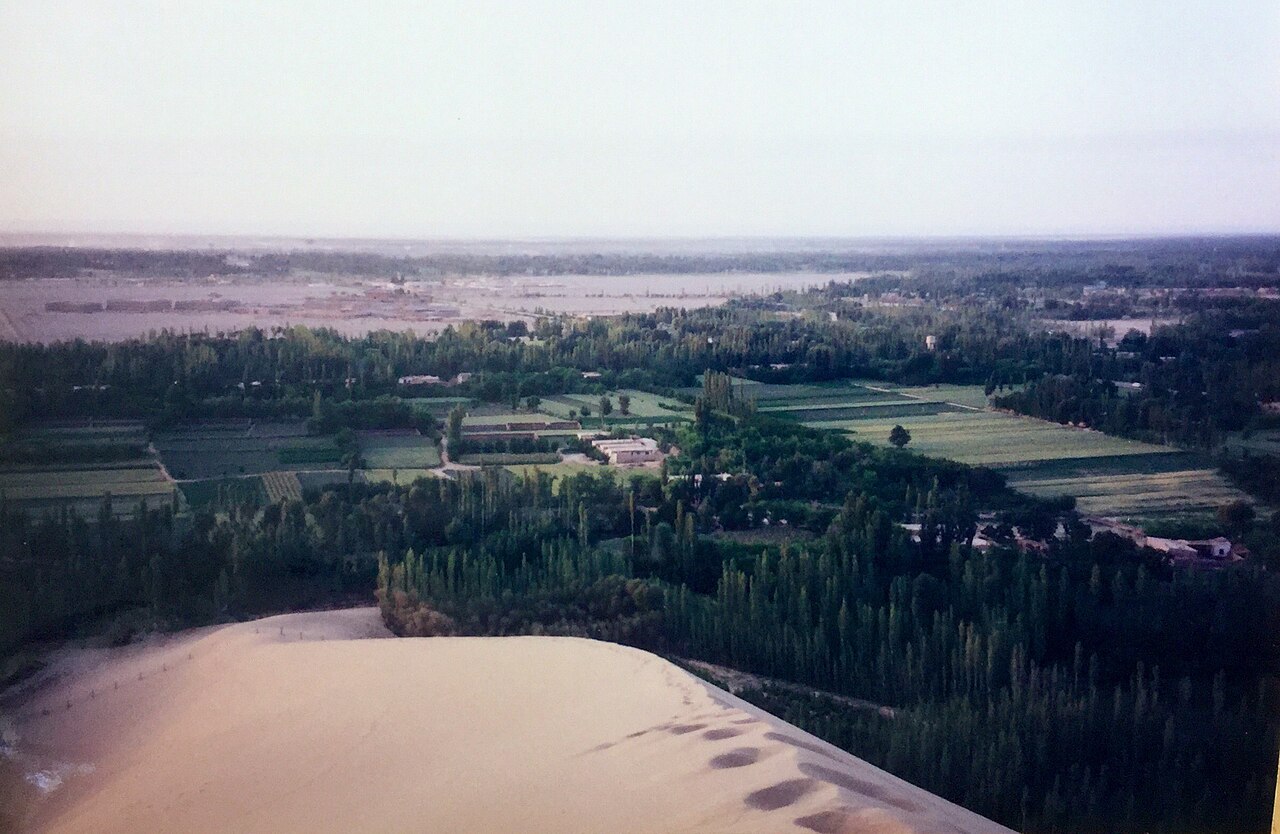
Gansu Province is the 1,600 km corridor that carried the Silk Road between China and Central Asia, and it is entered through Lanzhou, its capital. Wes
Gansu
Gansu · 1 tours
Gansu Province is the 1,600 km corridor that carried the Silk Road between China and Central Asia, and it is entered through Lanzhou, its capital. Wes
Hohhot, in the south-central part of the Inner Mongolia Autonomous Region. Hohhot is the transport and cultural hub — Dazhao Monastery, the Inner Mongolia Museum and the road north to the Xilamuren grassland ger camps all start here, and it is 3 hours by rail from Beijing.
Three minimum: one day in Hohhot, one night in a ger camp on the Xilamuren grassland, and one day back via the Kubuqi desert. Five days is better, and lets you reach Gegentala and the deeper steppe where there are far fewer visitors.
July to early September, and only then. The grass is green, the ger camps are open and the Naadam festivals run. Outside that window the steppe is brown and cold, and many camps close from October to May.
More than people expect. The camps we use have proper beds, electricity and attached bathrooms, with a shared fire and Mongolian music in the evening. The authentic herder gers are a separate, rougher experience that we can arrange for one night.
High-speed rail from Beijing North to Hohhot East takes about 3 hours, or fly from Beijing Capital in just over an hour. Most visitors combine Inner Mongolia with Beijing in the same trip, since the connection is so quick.
Free itinerary design, a revised plan within one working day, and nothing charged until you approve the final version.