Lanzhou
The provincial capital on the Yellow River: the Iron Bridge of 1909, a riverside park, and hand-pulled Lanzhou beef noodles at breakfast.
Gansu · Gansu
Gansu Province is the narrow corridor that carried the Silk Road: Lanzhou, its capital, then west to Dunhuang's Mogao Caves, the singing sand dunes and the Jiayuguan fortress in the Gobi. Private Gansu tours from US$219 a day.
The short version
The place itself
Gansu is a 1,600 km ribbon of inhabited land squeezed between the Tibetan plateau and the Gobi, and for a thousand years it was the only practical route out of China to the west. Every caravan passed through it, and every religion that came east — Buddhism, Manichaeism, Nestorian Christianity, Islam — left something behind.
The result is a province that reads like a timeline. At Tianshui the Maijishan grottoes cut Buddhist sculpture into a cliff from the 4th century. At Wuwei a Han dynasty bronze horse gallops on one hoof. At Jiayuguan the Ming wall simply stops, in the desert, with nothing beyond it.
And then Dunhuang. The Mogao Caves were painted continuously from 366 AD for a thousand years — 735 grottoes, 45,000 square metres of murals — then were sealed and forgotten until a Taoist priest found the library cave in 1900. It is the single strongest argument for coming to Gansu.
Pins are plotted from real latitude and longitude on a 5° graticule. This is a schematic orientation diagram, not a political map — no boundaries are drawn.
The provincial capital on the Yellow River: the Iron Bridge of 1909, a riverside park, and hand-pulled Lanzhou beef noodles at breakfast.
735 grottoes of Buddhist murals and sculpture, painted from the 4th to the 14th century. Entry is by timed guided group; we book the earliest slot.
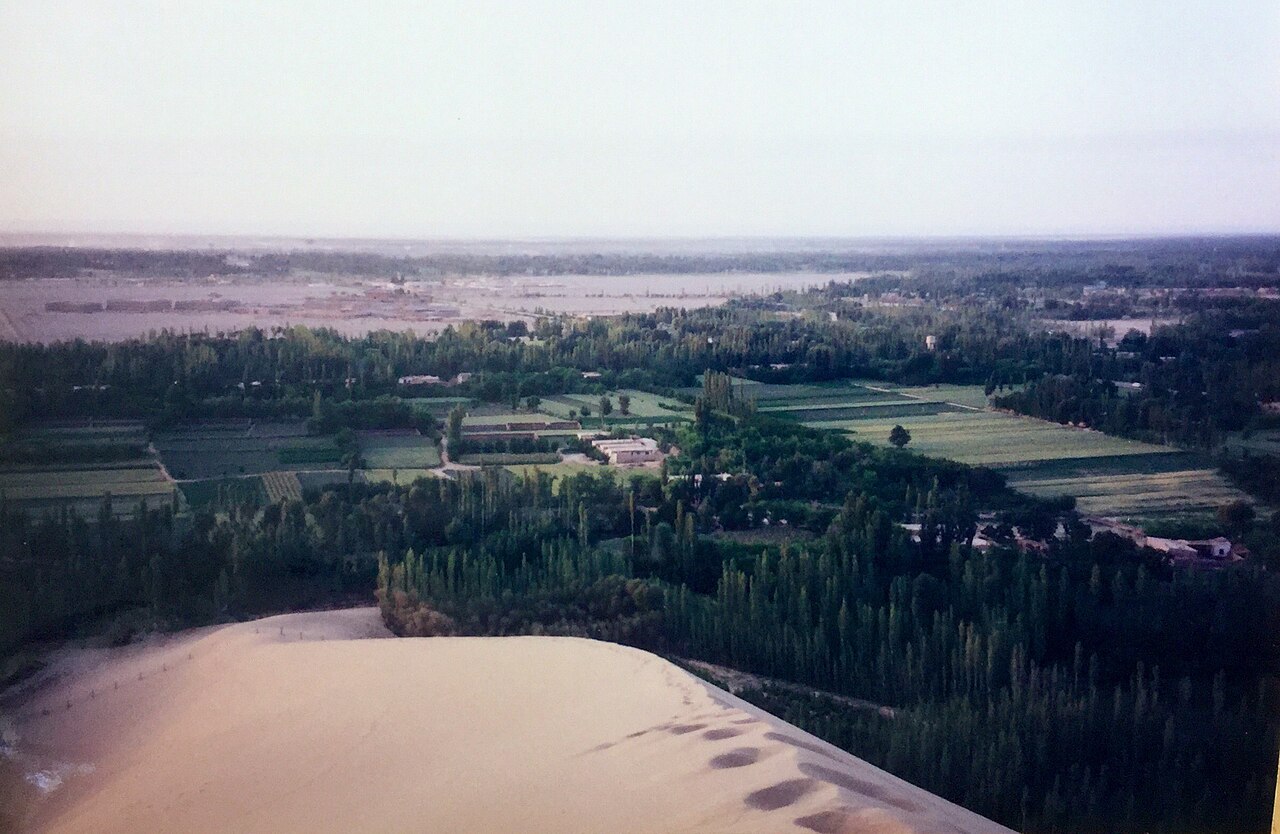
A 300 m dune field on the edge of the desert with a spring-fed lake at its foot. Camel rides, and a genuinely good sunset.
The western end of the Ming Great Wall, built in 1372, standing alone in the Gobi with the Qilian mountains behind it.
Banded sandstone hills 40 km from Zhangye, striped red, yellow and grey by mineral deposits.
Near Tianshui — 221 caves and around 7,800 sculptures stacked on a cliff face, reached by wooden walkways.
Xi'an to Dunhuang along the Hexi Corridor: desert fortresses, camel treks at Mingsha Shan and the caves of a Thousand Buddhas.
From US$2,690/per person
View tourFive regions, one journey: imperial north, panda country, the karst rivers of Guilin and the skyline of Shanghai, with Hangzhou's West Lake.
From US$2,580/per person
View tourLanzhou Zhongchuan International (LHW) is the main gateway, with domestic flights from Beijing, Shanghai, Xi'an and Chengdu. Dunhuang has its own airport, which saves a day of driving.
High-speed rail from Xi'an to Lanzhou takes about 3 hours, which makes Gansu the natural westward continuation of any Xi'an itinerary.
Along the Hexi Corridor the distances are long — Lanzhou to Dunhuang is 1,100 km. We break the journey at Zhangye and Jiayuguan rather than driving it in a day.
| Month | Weather | Crowds | Verdict |
|---|---|---|---|
| January | 1°C / -14°C · freezing, dry | Quiet | Avoid |
| February | 6°C / -9°C · freezing, dry | Very busy | Avoid |
| March | 14°C / -1°C · freezing, dry | Moderate | Good |
| April | 21°C / 7°C · freezing, dry | Moderate | Good |
| May | 27°C / 13°C · clear and mild | Busy | Best |
| June | 32°C / 18°C · clear and mild | Moderate | Best |
| July | 35°C / 21°C · very hot, dry | Busy | OK |
| August | 33°C / 19°C · very hot, dry | Busy | OK |
| September | 27°C / 13°C · clear and mild | Moderate | Best |
| October | 20°C / 5°C · clear and mild | Very busy | Best |
| November | 11°C / -4°C · freezing, dry | Quiet | Good |
| December | 3°C / -12°C · freezing, dry | Quiet | Avoid |
Seven days for the full corridor: Lanzhou, Zhangye, Jiayuguan and Dunhuang, with two nights in Dunhuang for Mogao and the dunes. Five days covers Lanzhou, Zhangye and Jiayuguan. Ten if you want Tianshui and the southern Tibetan monasteries as well.
Plan these days properly
Xi'an
National Tour Guide Certificate, English
★★★★★4.9276 reviews
Liu Yun worked two field seasons on an excavation team outside Xi'an before he ever led a tour, and he still carries a small trowel in his day bag in case someone asks what the soil looks like. He presents the Terracotta Army as an industrial project — kilns, quotas, quality control — rather than a miracle. Fifteen years in, he is the guide other Xi'an guides call when a museum curator comes to town.
He explained the army as a production line, not a legend. Our teenagers asked questions for two hours straight.
David K., Australia
 Safety
Is China Safe for Tourists? Honest Risks and How to Avoid Them
Violent crime against foreign visitors is rare. What actually goes wrong is smaller: a phone lifted on Line 1, a RMB 2,000 tea bill, a taxi that will not use the meter. Here is how each one starts and ends.
7 min read
Safety
Is China Safe for Tourists? Honest Risks and How to Avoid Them
Violent crime against foreign visitors is rare. What actually goes wrong is smaller: a phone lifted on Line 1, a RMB 2,000 tea bill, a taxi that will not use the meter. Here is how each one starts and ends.
7 min read
 Planning
Best Time to Visit China: Month by Month, Region by Region
China is the size of Europe, so 'the best month' depends on where you stand. Here is the month-by-month answer for the north, the Yangtze valley, the south and the plateau.
8 min read
Planning
Best Time to Visit China: Month by Month, Region by Region
China is the size of Europe, so 'the best month' depends on where you stand. Here is the month-by-month answer for the north, the Yangtze valley, the south and the plateau.
8 min read
 Arts
Chinese Calligraphy and Painting: Brush, Ink and Empty Space
In China, writing was the first art and painting grew out of it. Understanding that one fact makes every ink painting in every museum make sense.
8 min read
Arts
Chinese Calligraphy and Painting: Brush, Ink and Empty Space
In China, writing was the first art and painting grew out of it. Understanding that one fact makes every ink painting in every museum make sense.
8 min read
 Peoples
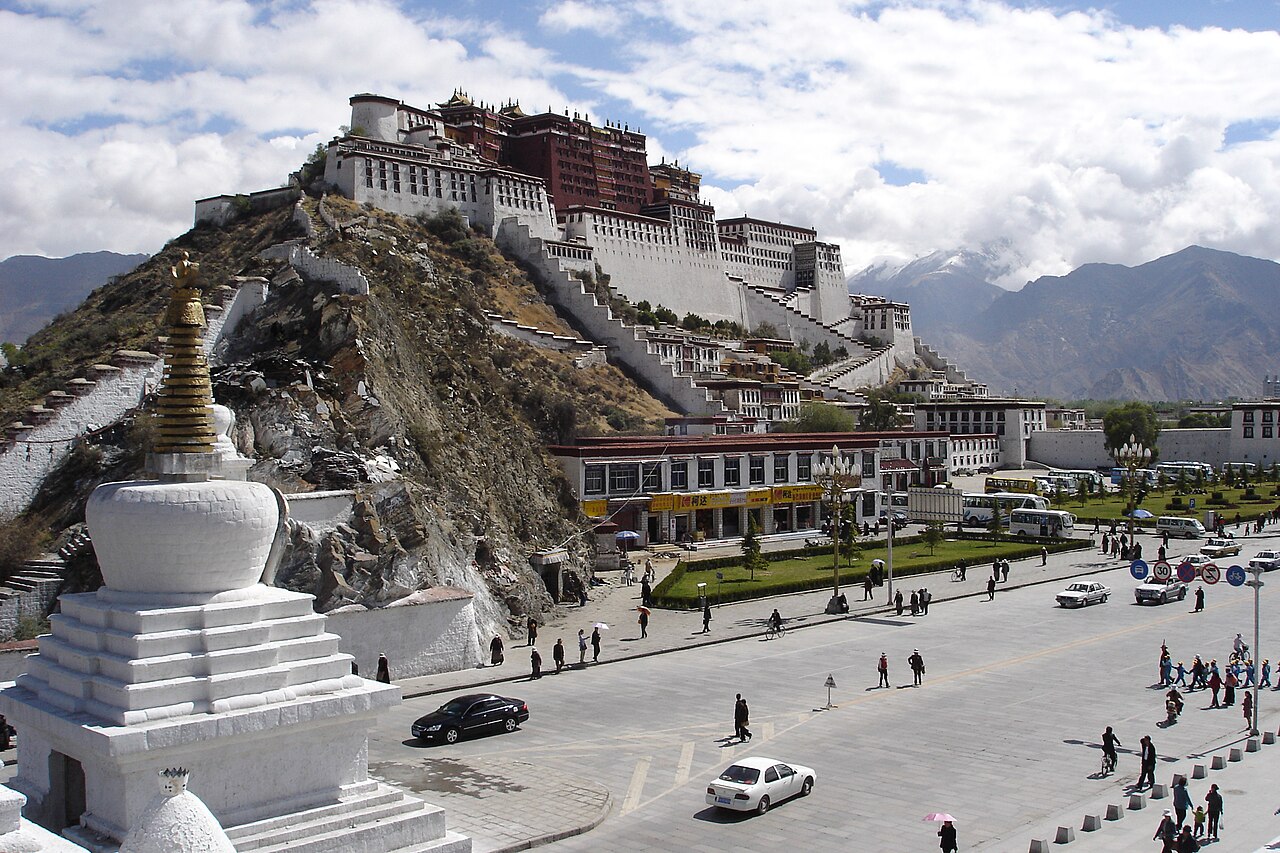
China's Ethnic Minorities: 55 Groups, and Where to Meet Them
Roughly one in twelve people in China is not Han. Their languages, crafts and festivals are the least visited part of the country, and in several regions the most rewarding.
8 min read
Peoples
China's Ethnic Minorities: 55 Groups, and Where to Meet Them
Roughly one in twelve people in China is not Han. Their languages, crafts and festivals are the least visited part of the country, and in several regions the most rewarding.
8 min read
 Xi'an
Shaanxi · 6 tours
Xi'an is the capital of Shaanxi Province and where the Silk Road began. Forty kilometres east of the city, 8,000 terracotta warriors have stood in for
Qinghai
Qinghai · 2 tours
Qinghai Province sits on the north-eastern edge of the Tibetan Plateau and is reached through its capital, Xining. It offers Qinghai Lake, Kumbum Mona
Xi'an
Shaanxi · 6 tours
Xi'an is the capital of Shaanxi Province and where the Silk Road began. Forty kilometres east of the city, 8,000 terracotta warriors have stood in for
Qinghai
Qinghai · 2 tours
Qinghai Province sits on the north-eastern edge of the Tibetan Plateau and is reached through its capital, Xining. It offers Qinghai Lake, Kumbum Mona
 Inner Mongolia
 Autonomous Region · 4 tours
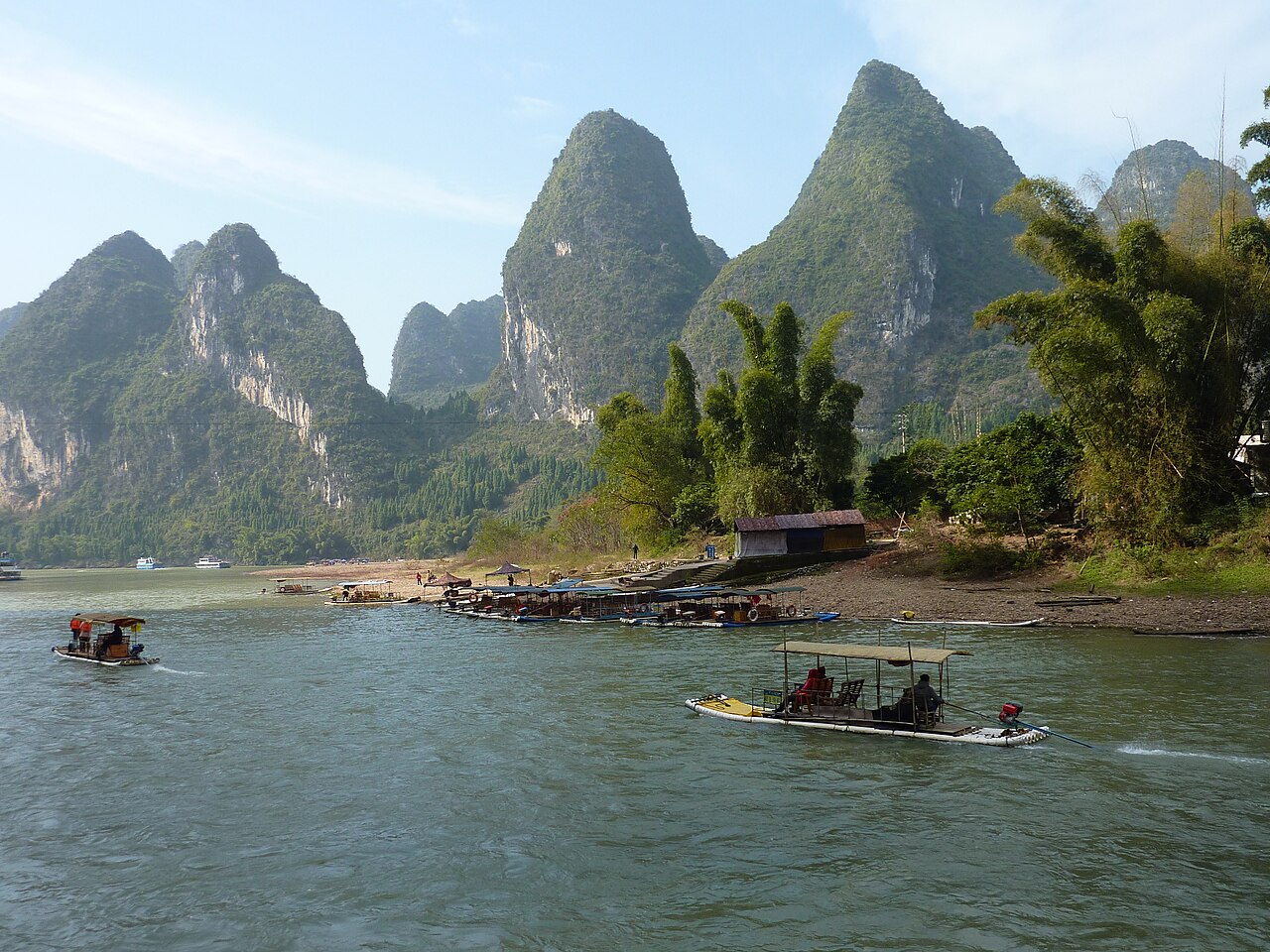
The Inner Mongolia Autonomous Region is entered through Hohhot, its capital, three hours north-west of Beijing. From there the Xilamuren and Gegentala
Inner Mongolia
Inner Mongolia Autonomous Region · 4 tours
The Inner Mongolia Autonomous Region is entered through Hohhot, its capital, three hours north-west of Beijing. From there the Xilamuren and Gegentala
Lanzhou, on the Yellow River in the south-east of Gansu Province. Lanzhou is where the Hexi Corridor begins and where most itineraries start, though Dunhuang has its own airport and can be flown into directly if you are short on time.
Seven for the classic Silk Road corridor: Lanzhou, Zhangye, Jiayuguan and Dunhuang, with two nights at Dunhuang for Mogao and the dunes. Five days reaches Zhangye and Jiayuguan. Ten adds Tianshui's Maijishan grottoes and the Tibetan monasteries of Xiahe.
A complex of 735 Buddhist cave temples at Dunhuang, carved and painted from 366 AD through the Yuan dynasty. Inside are 45,000 square metres of murals and around 2,400 painted sculptures. Only a fraction is open, entry is by timed guided group, and photography is prohibited.
Yes. High-speed rail puts Lanzhou 3 hours from Xi'an, and the two pair naturally: Xi'an is where the Silk Road began; Gansu is the corridor it ran down. Five to seven days covers both without flying.
May to October. Dunhuang is hot in July and August — over 35°C — but dry and clear, which is when the dunes are at their best. Winter in the corridor is cold and stark, with most tourist services reduced.
Free itinerary design, a revised plan within one working day, and nothing charged until you approve the final version.