Red Stone Gorge (Hongshixia)
The signature walk — a one-way, 1.5 km slot canyon between walls of crimson rock, with a river rushing along the bottom and the 'sky line' crack overhead. About 1.5 hours, and best done early before the shuttles fill up.
Yuntai Mountain · Henan
Yuntai Mountain in Henan's Jiaozuo is a UNESCO Global Geopark of red-stone gorges, a 314 m waterfall and the 1,308 m Zhu'yu Peak. Private Yuntai tours from US$119 a day.
The short version
The place itself
Yuntai Mountain is the water-and-stone masterpiece of the North China plain. It rises in Xiuwu county, Jiaozuo, in the far north of Henan, where the Taihang range drops toward the Yellow River. Its draw is not a single peak but a whole system of gorges cut into red quartz sandstone, fed by springs that never dry, and threaded with more than 100 waterfalls — three steps, a spring; five steps, a cascade; ten steps, a pool, as the local saying goes. UNESCO listed it as one of the first Global Geoparks for its northern karst landform.
The gorges are the heart of it. Red Stone Gorge squeezes a river into a slot barely wide enough for one path, between walls of deep red rock; Tanpu Gorge throws waterfall after waterfall across the walk; Quanpu Gorge ends at the Yuntai Sky Waterfall, which drops 314 m in a single fall. Above them all stands Zhu'yu Peak at 1,308 m, where Wang Wei wrote the poem every Chinese child learns about missing home at festival time.
It is also built for the crowds it gets. Private cars are banned; everyone rides the same green shuttle, which runs to 22 stops, and the signposts, boardwalks and numbered check-in gates are all so orderly that even on a public holiday you can move through quickly. Go mid-week and out of season if you can, but Yuntai handles a busy day better than almost any mountain in China.
Pins are plotted from real latitude and longitude on a 5° graticule. This is a schematic orientation diagram, not a political map — no boundaries are drawn.
The signature walk — a one-way, 1.5 km slot canyon between walls of crimson rock, with a river rushing along the bottom and the 'sky line' crack overhead. About 1.5 hours, and best done early before the shuttles fill up.
At the end of Quanpu Gorge, water falls 314 m in one plunge — the highest waterfall in China — thundering down a sheer cliff into a green pool. The 3 km gorge takes about 2.5 hours to walk and has an electric cart for part of it.
The gentlest and most playful gorge, a 2 km walk where waterfalls and pools follow one another in quick succession — favourites include the Lovers' Waterfall and the Y-shaped waterfall. About 1.5 hours, and a good warm-up for the harder walks.
At 1,308 m this is the mountain's summit, reached by a long flight of steps and, higher up, a cable car. Wang Wei wrote his famous festival poem here, and on a clear day the view runs north into the Taihang and south over the plain.
A road of 19 linked tunnels and hairpin bends drilled through the mountain between 1977 and 1987, climbing 912 m in 4.8 km. You ride it by bus, watching the plain unfold between tunnels — 20 to 30 minutes of the best views on the mountain.
A reserve for the northernmost macaques in China, with a troop of wild monkeys and free shows six times a day. It is an easy, hour-long stop with children, just below the Xiaozhaigou car park.
Yuntai has no airport; the practical gateway is Zhengzhou Xinzheng (CGO), the big international airport for Henan, about 2 hours away by road via the Zheng-Jiao-Jin expressway. By train, most people come to Jiaozuo or Xiuwu: there are direct services from Beijing, Shanghai, Xi'an, Wuhan and Jinan, and a train-and-bus combination via Zhengzhou, Luoyang or Kaifeng works just as well. The Jiaozuo railway-station tourist bus to Yuntai runs 37 km in about 1.5 hours for ¥4, with four departures a day (leaving about 06:20, 07:20, 15:20 and 15:50, returning 08:00, 09:00, 17:00 and 17:30). Direct buses also run from Zhengzhou's tourist bus station (08:30, ¥45) and Luoyang (09:00, ¥45).
Inside the scenic area there is no private driving at all. You park at the gate — a 5,000-space lot — and ride the green sightseeing shuttle, which has 22 stops and a guide on board. The shuttle ticket, ¥60, is normally bundled into the park ticket; activated on first use, you simply show it at each stop to hop on and off. Some gorges also have small electric carts (about ¥5 a leg) for the flatter stretches.
| Month | Weather | Crowds | Verdict |
|---|---|---|---|
| January | 4°C / -4°C · dry, cold | Quiet | Avoid |
| February | 6°C / -1°C · dry, cold | Very busy | Avoid |
| March | 14°C / 5°C · dry, cold | Moderate | Good |
| April | 21°C / 12°C · clear and mild | Moderate | Best |
| May | 27°C / 18°C · clear and mild | Busy | Best |
| June | 31°C / 23°C · hot, humid | Moderate | OK |
| July | 32°C / 25°C · hot, humid | Busy | OK |
| August | 30°C / 24°C · hot, humid | Busy | OK |
| September | 26°C / 19°C · clear and mild | Moderate | Best |
| October | 20°C / 12°C · clear and mild | Very busy | Best |
| November | 12°C / 4°C · dry, cold | Quiet | Good |
| December | 5°C / -2°C · dry, cold | Quiet | Good |
Two days is right, and the ticket is valid for two days anyway. Day one takes the gorges — Tanpu, Quanpu with the Sky Waterfall, and Red Stone Gorge — which is a full walking day. Day two is the mountain: up to Zhu'yu Peak and back down via the Diecai Caves road, with Macaque Valley and Wanshan Temple if you have time. A third day extends to the surrounding sights — Qingtian River, Shennong Mountain, the Fenglin Gorge and the Jiaozuo film studio — or you simply slow the two core days down.
Plan these days properly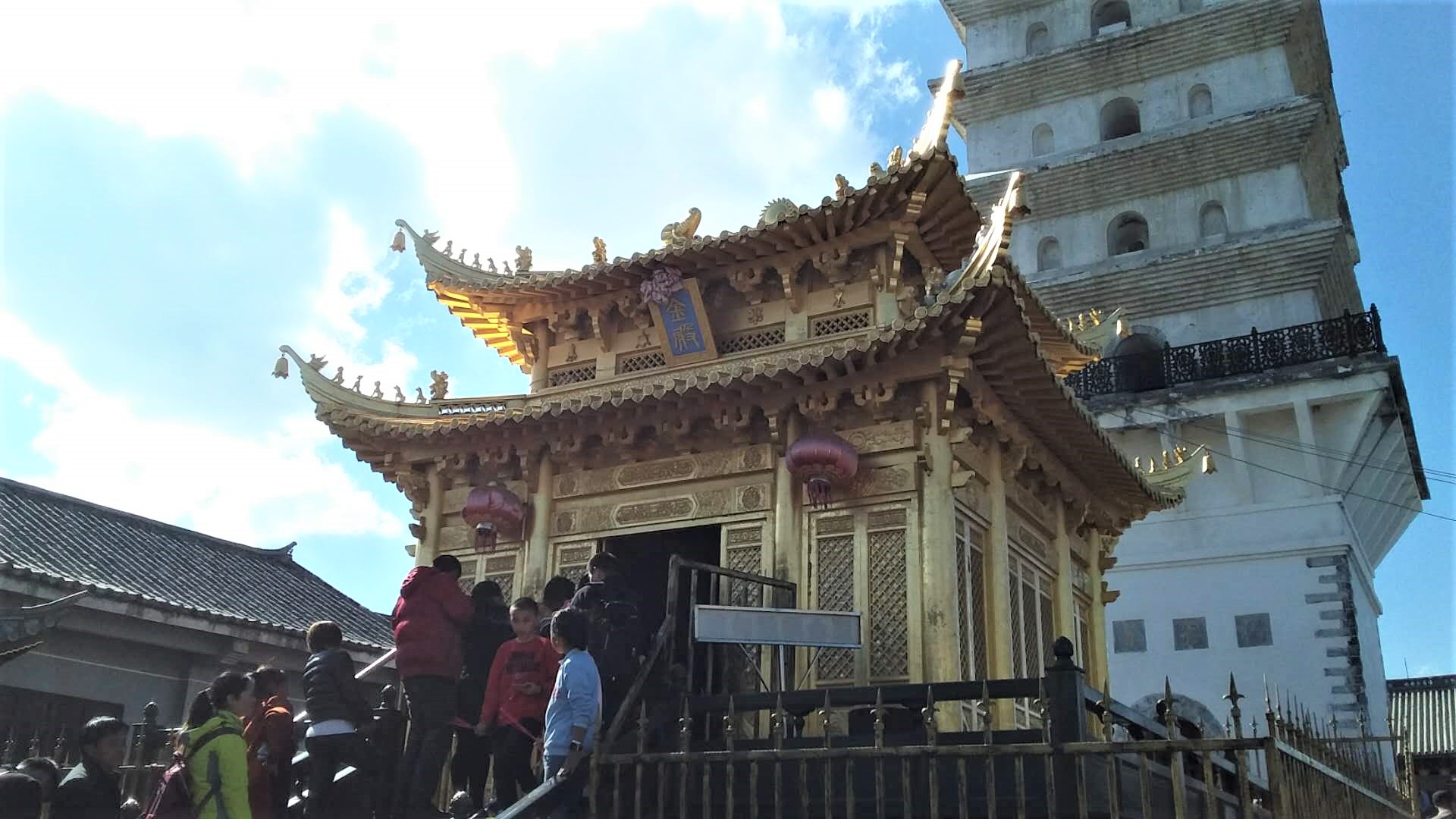 Wudang Mountain
Hubei · 4 tours
Wudang Mountain is the Taoist holy mountain of Hubei and a UNESCO World Heritage site, famous as the birthplace of tai chi and for the largest bronze
Wudang Mountain
Hubei · 4 tours
Wudang Mountain is the Taoist holy mountain of Hubei and a UNESCO World Heritage site, famous as the birthplace of tai chi and for the largest bronze
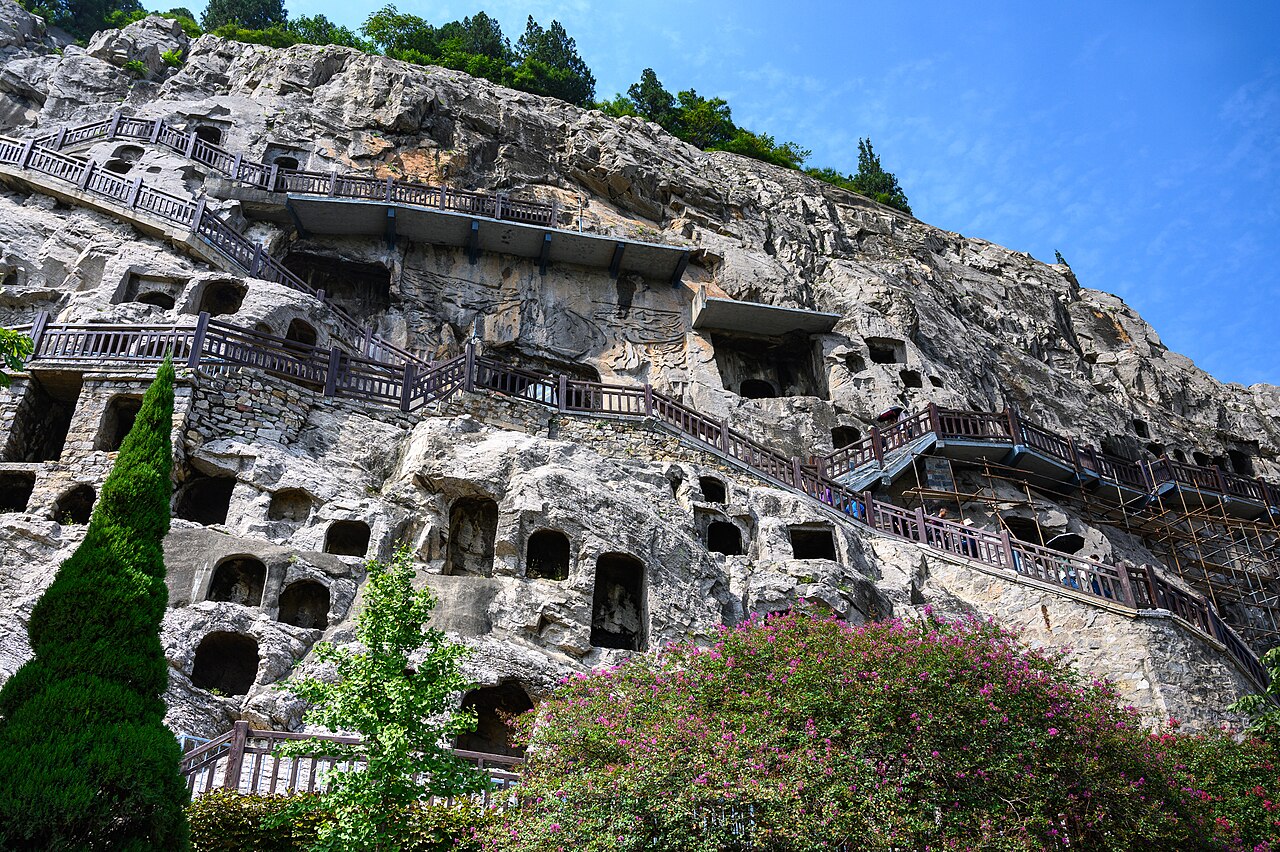 Luoyang
Henan · 4 tours
Luoyang is the ancient capital of thirteen dynasties in western Henan, and it holds three of the great sights of central China — the Longmen Grottoes
Luoyang
Henan · 4 tours
Luoyang is the ancient capital of thirteen dynasties in western Henan, and it holds three of the great sights of central China — the Longmen Grottoes
Two days, and the ticket is valid for two days from purchase. Give day one to the gorges — Tanpu, Quanpu with the 314 m waterfall, and Red Stone Gorge — and day two to Zhu'yu Peak and the Diecai Caves road, with Macaque Valley and Wanshan Temple fitted in. A third day adds the surrounding sights such as Qingtian River and Shennong Mountain.
No. Yuntai has a strict internal-traffic policy: all private cars park at the gate, and everyone switches to the green sightseeing shuttle, which has 22 stops and on-board guides. The shuttle is usually bundled into the park ticket at ¥60, and you show the ticket each time you board a different section.
April to May and September to October, when the water is full and the weather is mild; the crowds swell on the May Day and National Day holidays. Summer is the liveliest for waterfalls but hot and busy, and winter turns the gorges into ice sculptures with far fewer people and a cheaper ¥135 ticket.
It gets very busy on Chinese public holidays and summer weekends. The trick is to start early — be at Red Stone Gorge before 9am — and to work the gorges in the reverse direction to the tour groups, doing the harder walks first. The shuttle and ticket system is efficient, so most of the delay is at the gorge entrances, not the buses.
By road, about 2 hours. A direct bus runs from Zhengzhou's tourist bus station at 08:30 for ¥45, or you drive the Zheng-Jiao-Jin expressway and exit at Xiaoxugang, following signs to the gate. By train, come to Jiaozuo station and take the tourist bus, ¥4 and about 1.5 hours, leaving at 06:20, 07:20, 15:20 and 15:50.
Jiaozuo and Huaiqing cuisine. Do not miss the 'noisy-broth' donkey meat (naotang lürou), 'four Huai medicines' dishes built on local yam and rehmannia, mountain vegetables with free-range chicken, and the ten-legged scorpion — a local delicacy that tastes better than it sounds. Simple Henan hui mian noodles cost about ¥10 a person; hot dishes run nearer ¥50.
Free itinerary design, a revised plan within one working day, and nothing charged until you approve the final version.