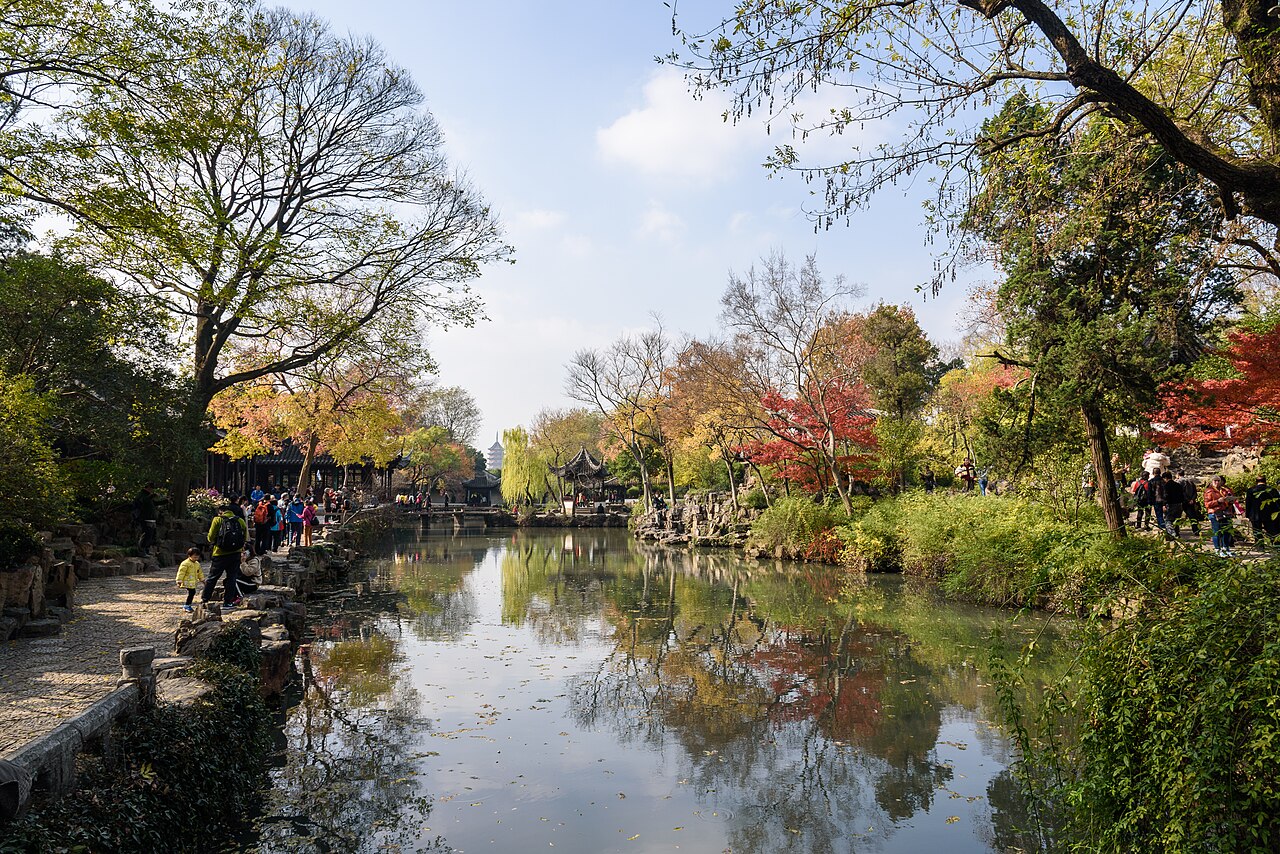
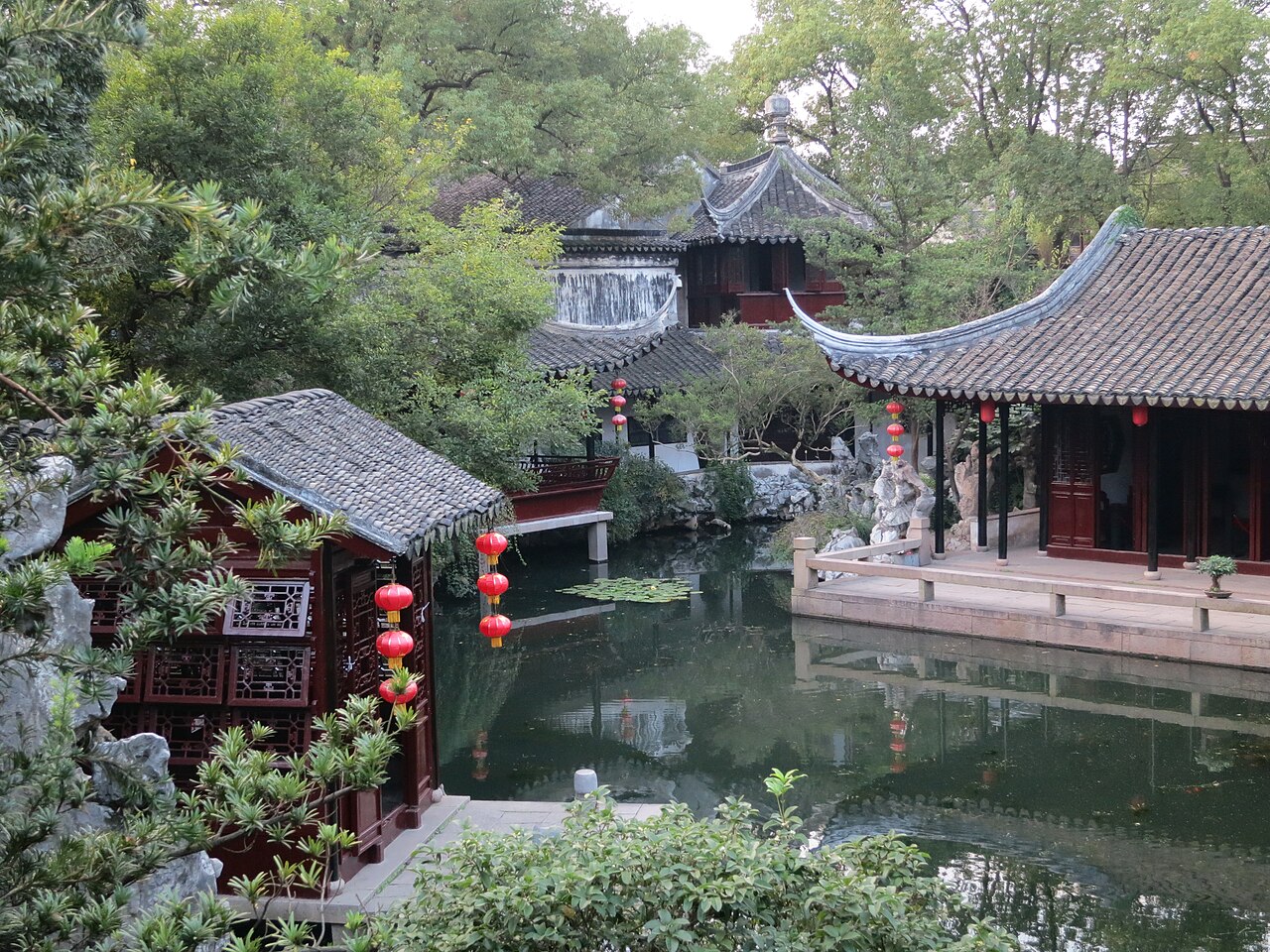
Zhouzhuang sits on water the way a water lily does — the town is ringed by lakes and cut through by canals laid out in the shape of the Chinese character for 'well'. Where there is a canal there is a street, and where there is a street there is a bridge: the bridges made the streets, the bridges made the market. Fourteen of them survive, each different, and the whole place reads as the most complete surviving example of the southern pattern of little bridges, running water and riverside homes.
It is nine hundred years old and it got its name by accident. In 1086 a man named Zhou Digong donated two hundred mu of his land — more than thirteen hectares — to the temple of Quanfu; the people, grateful, named the place after him. Before that it had been Zhenfeng li, the fief of a Wu king's youngest son. Under the Ming and Qing it grew rich on the trade of Shen Wansan, the richest man in the south, who ran grain, silk and handicrafts out through the Baixian river to the sea.
What you come for is not a list of sights. It is the hour before the tour buses arrive and the hour after they leave. Stay inside the town — a bed in a courtyard house costs from ¥35 — and you get the dawn, when the locals wash vegetables at the water steps and the coal stoves smoke into the mist, and you get the night, when the painted boats go out under the lanterns and the sound of strings carries off the water.
It is an easy place to reach and an easy place to leave. Suzhou is 38 km away with a coach every 20 minutes; Shanghai is 60 km and just over an hour. Combine it with Tongli, an hour on, for a two-town loop, or treat it as a day trip and be back in Shanghai for dinner.