Xixi is what happens when a city grows around a marsh and then decides to keep it. Ten square kilometres of channels, fish ponds, reed beds and persimmon trees sit inside Hangzhou's western districts, less than five kilometres from West Lake, and the water grid is old enough that the Song court put a town here in 988. It is the first national wetland park in the country to hold urban wetland, farming wetland and cultural wetland in one boundary.
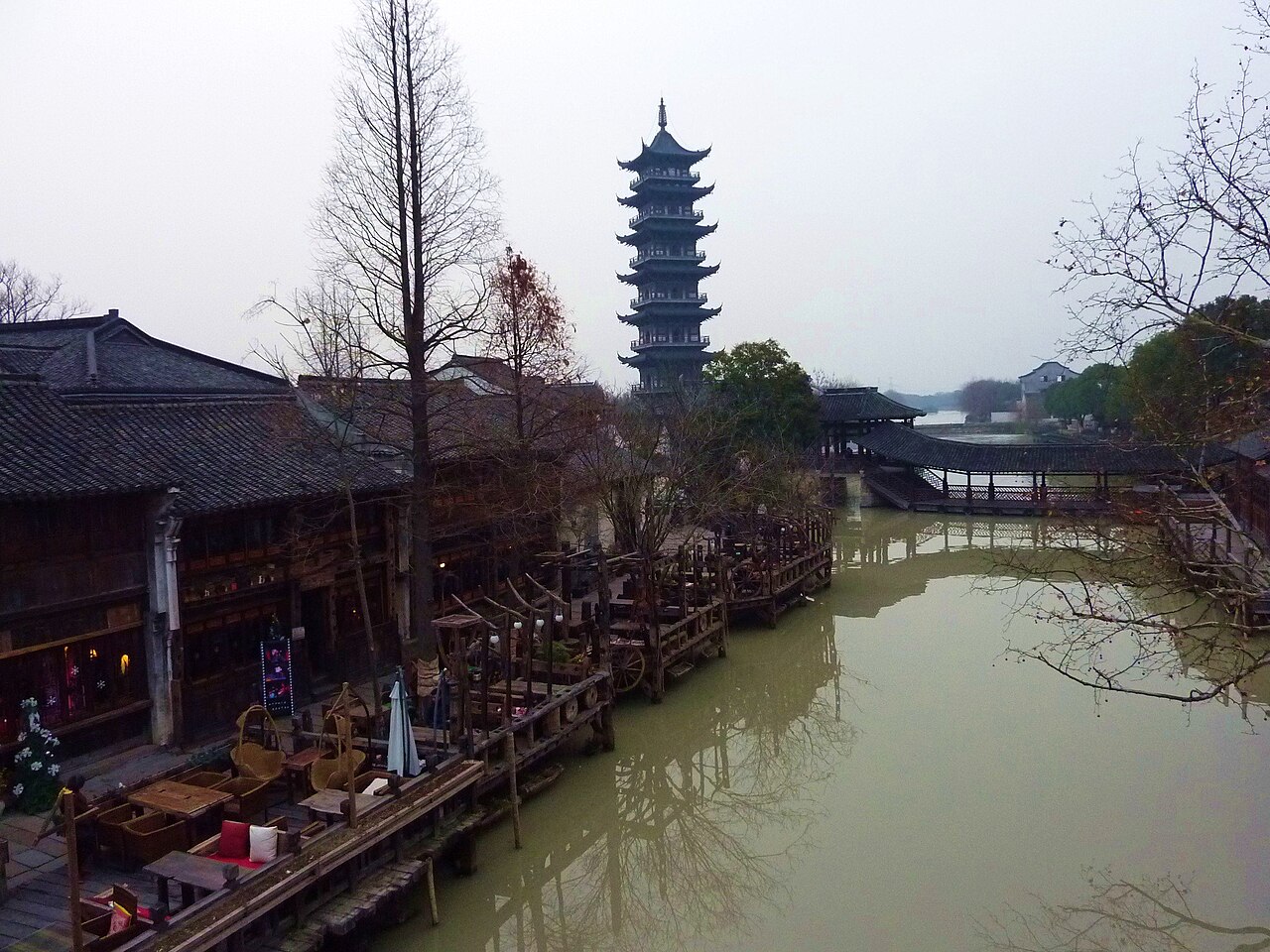
Four words describe it locally — cold, wild, spare, elegant — meaning understated rather than showy. What you actually see is water: broad channels that narrow into ditches too tight for anything but a sculled boat, dykes planted with mulberry and bishop's-wood, reeds that turn white in autumn, and stone slab bridges so low and flat that a farmer with a carrying pole could cross without climbing.
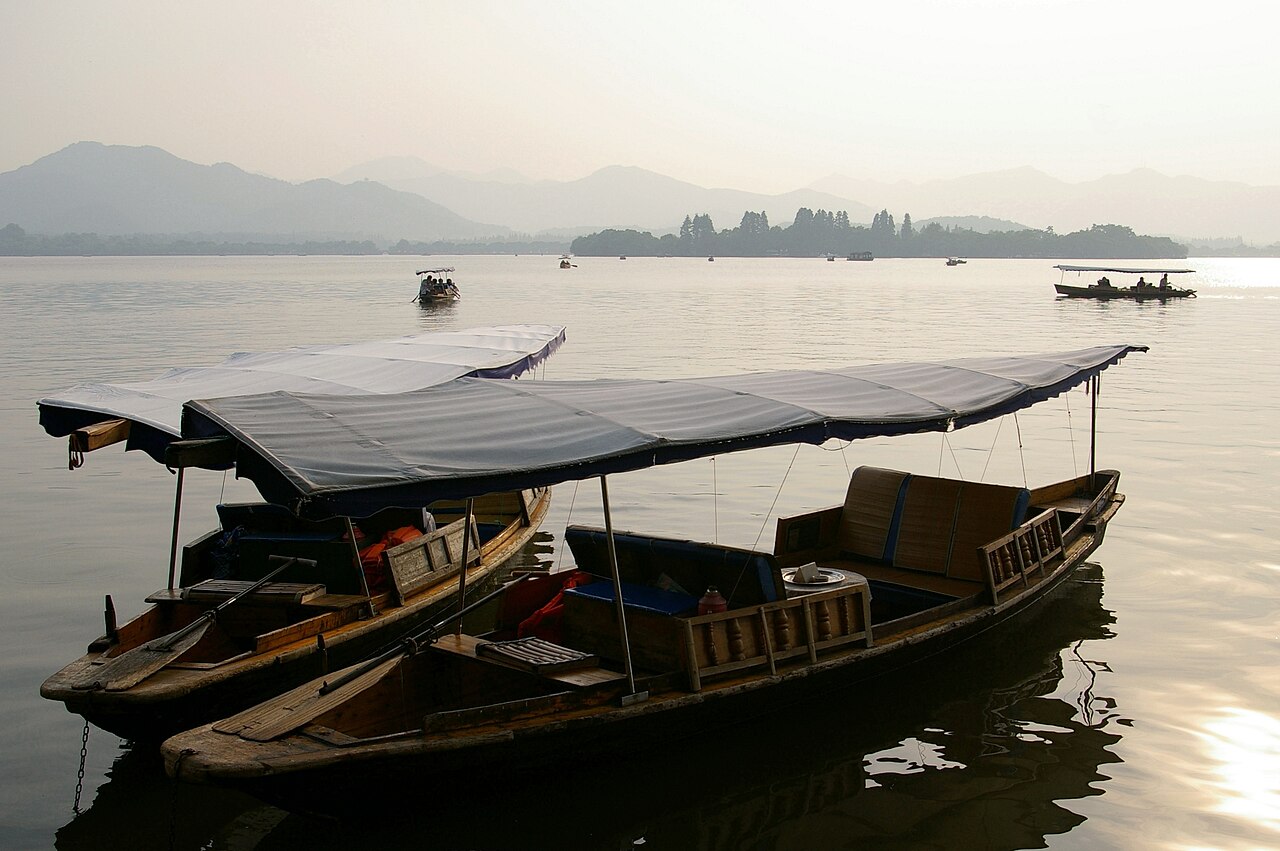
It is a place people visit in one of two ways, and the difference matters. By boat you get the sense of the thing: the boatman points out which boat Ge You sat in and which Shu Qi and Alex Fong took, and you slide through channels where the reeds close overhead. On foot you get the stone paths, the old cottages and the gardens — Meizhu Villa, Xixi Thatched Hall, Gao's Manor — and you can spend an hour on a bench with a ¥1 bowl of tea.
The two combined are the answer, which is why the park's own suggested routes mix them. Give it a day, start at opening, and do not treat it as a checklist: the marsh is the sight, and the people who enjoy it most are the ones who stop counting the named spots.