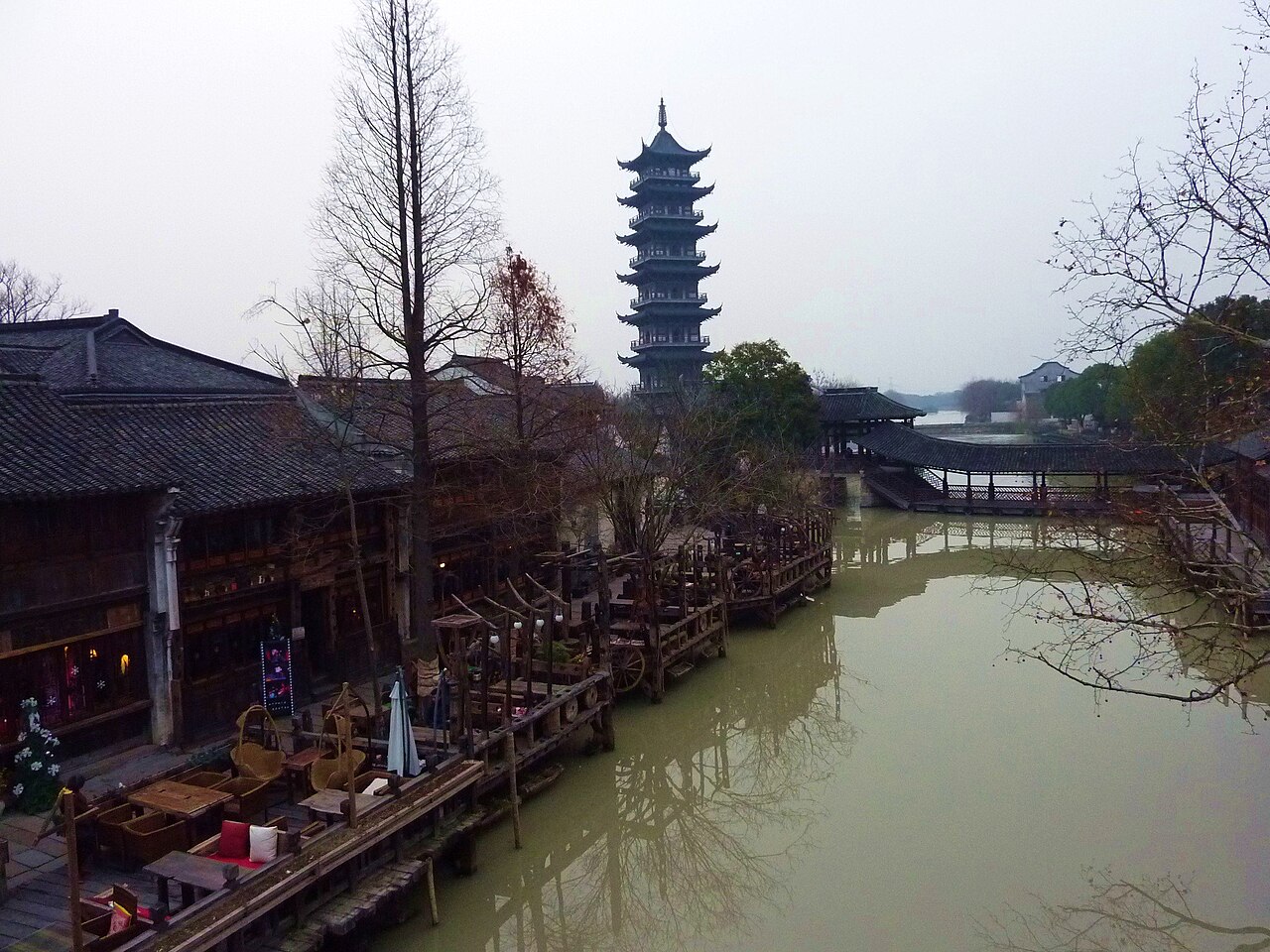
Xitang has the shape of a water town and the pace of a village. Nine rivers cross in the town and cut it into eight pieces, stitched back together by bridges; the locals have a name for it — nine dragons cradling a pearl, eight directions of wind. Where most canal towns are now run as attractions, Xitang is still lived in: people get up at dawn and shut the door at dusk, and the shops serve neighbours as much as visitors.
Three things define it. Bridges, and there are many — plain beam, arch and zigzag, all within sight of one another. Lanes, 122 of them, some no wider than a single person. And corridors — the long roofed riverside walk known as the Mist and Rain Long Gallery, built piecemeal by the houses yet rising to the same height line, so that it hides neither wealth nor poverty. Rain is when it makes sense: you walk dry beneath the eaves and watch the water come off the roof.
What people come for here is not a checklist but a state of mind. The guide you will read before you go says it plainly: come to Xitang and behave like a person who lives here — eat a bowl of small wontons at the roadside in the morning, lie on a riverside lounger all afternoon, lose an hour in a teahouse, and stay up for the bars on Tangdong Street at night.
It is also easy to reach, which makes it an easy first water town: about 1.5 hours by coach from Shanghai, 2 from Hangzhou, and an hour from Suzhou. Wuzhen is 45 minutes away by road if you want to pair the two, but the two do different jobs — Wuzhen for polish and a show, Xitang for an ordinary morning.