Shangri-La is a name from a 1933 novel — James Hilton's Lost Horizon — that a Yunnan town took for itself in 2001, and for once the marketing has something behind it. At about 3,300 m, this is genuine Tibetan highland: white-walled houses with painted eaves, yak grazing the grassland, a great monastery across the valley, and air so clean and thin that the light looks different. The Chinese name, Xianggelila, is the local Tibetan for 'the sun and moon in the heart'.
The town itself, Dukezong, is a Tibetan old town on the old tea-horse road, its lanes climbing around a hillside crowned by a 21 m gilded prayer wheel — the largest of its kind, and heavy enough that visitors are invited to help haul it round. Parts of the old town burned in a fire in January 2014 and were rebuilt; the atmosphere survives, and the surrounding streets in the new town are where daily life now happens.
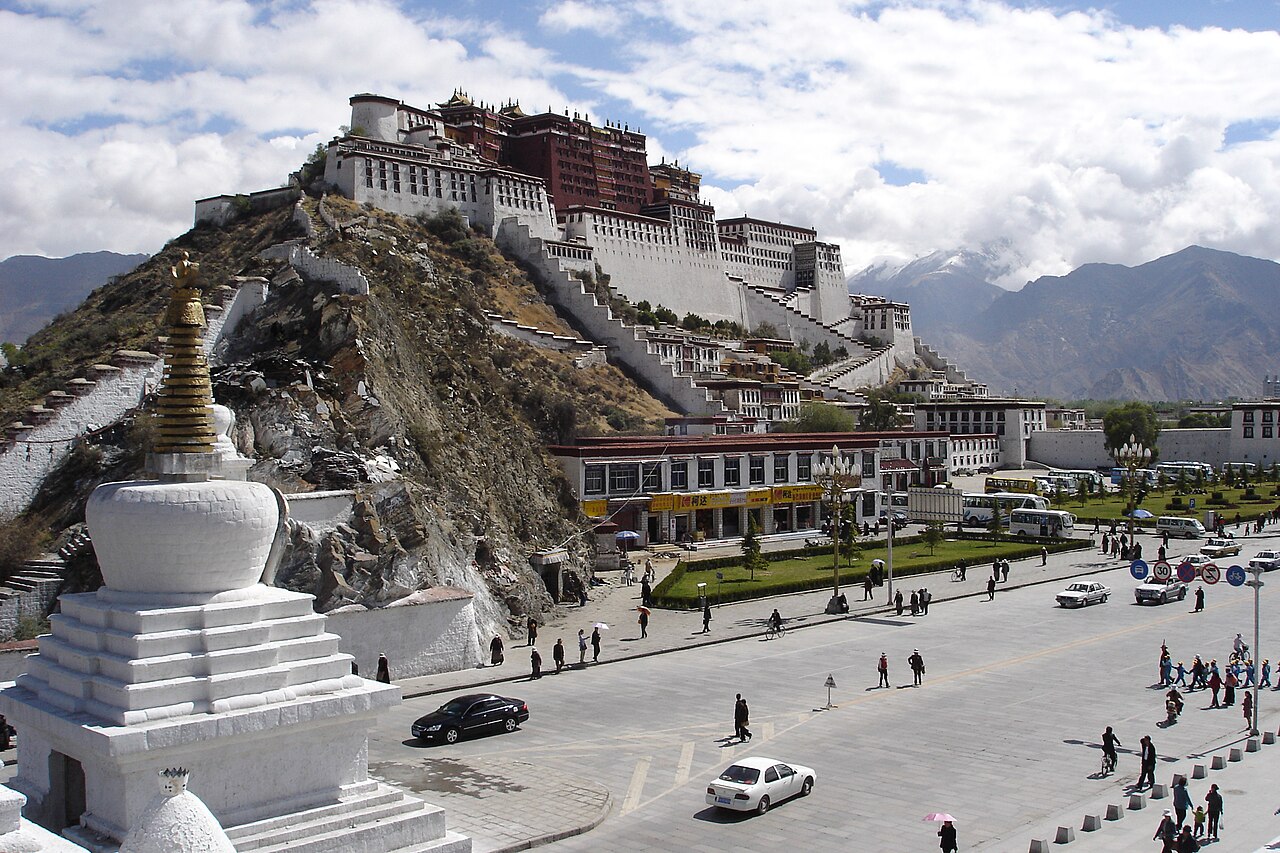
Across the valley stands Songzanlin, the 'little Potala', the largest Tibetan Buddhist monastery in Yunnan, founded in 1679 and home to hundreds of monks. Beyond it lies the real landscape of the plateau: Pudacuo National Park with its two lakes and old-growth forest, and the Napa Lake grassland, which floods in summer and dries to pasture in winter, with Shika Snow Mountain rising behind it.
Deeper into Diqing, the road runs west for four hours to Deqin and the Meili Snow Mountain range, whose main peak, Kawagebo, has never been summited. The sunrise over its peaks — 'golden mountain in sunlight' — is the sacred experience of the region, and the reason many travellers come this far at all.